Tag Archives: Kaunda

25Aug/26

Substantive Justice vs. Locked Gates: Chief Justice Malila and the Email That Shook Lusaka

The 2026 Constitutional Standoff: Bypassing Police Barricades with an Electronic Petition

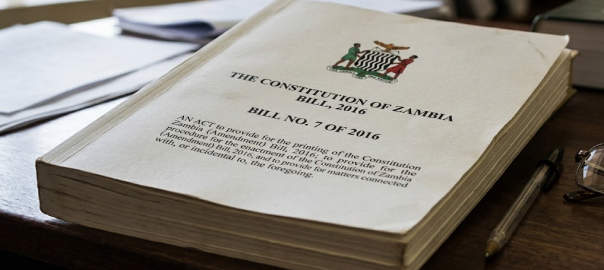
Tue, Aug 25 2026 /Mpelembe Media/ — On August 24, 2026, a major constitutional crisis emerged in Zambia when state authorities physically closed the country’s superior courts—including the Supreme, High, and Constitutional Courts—citing unspecified security concerns. This unilateral administrative shutdown occurred on the final day of the strict seven-day window mandated by Article 105 of the Zambian Constitution to file a presidential petition challenging the August 13, 2026 election results. Incumbent President Hakainde Hichilema had been declared the winner with over 2.9 million votes against challenger Brian Mundubile’s 1.8 million votes. Across Lusaka and multiple provinces, court buildings were cordoned off with police tape and guarded by armed police units, physically blocking the opposition and other litigants from accessing judicial registries to file their challenges before the deadline. Continue reading


07Aug/26

From Zamrock to Internet Kill-Switches

The Rise of Zed Beats and the Digital Music Revolution

Fri , Aug 0& 2026 /Mpelembe Media/ — Zed Beats, which takes its name from the letter “Z” in Zambia, represents a dynamic hybrid music genre that emerged in the late 1980s. Young, self-taught producers began using affordable computer software to blend indigenous Zambian elements with popular global sounds like R&B, reggae, rap, hip-hop, Jamaican dancehall, Afrobeats, and amapiano. The rise of this digital movement was catalyzed by a major cultural void in the late 1980s and 1990s, when the devastating HIV/AIDS epidemic claimed the lives of a generation of veteran musicians who had anchored traditional live genres like Kalindula and Zamrock. To fill this void, which had left radio and television heavily dominated by foreign music, young enthusiasts utilized newly accessible computer technology to resurrect local music and forge a modern urban identity. Continue reading

04Aug/26

Five Elders Guarding Africa’s Borderless Future

Institutionalizing Peace: The African Union, NEPAD, and the Future of Continental Governance

Tue , Aug 04 2026 /Mpelembe Media/ —The provided sources collectively chronicle Africa’s historical journey from colonial subjugation toward liberation, heavily emphasizing the enduring spirit of Pan-Africanism. A central figure in this narrative is Dr. Kenneth Kaunda, the first president of Zambia, who led his nation to independence in 1964 and became a patriarch of the continent’s anti-colonial struggles. Through his philosophical framework of Zambian Humanism and the unifying national slogan “One Zambia, One Nation,” Kaunda sought to build a cohesive, multi-ethnic society free from the exploitation of man by man. Internationally, he—alongside contemporaries like Julius Nyerere and Kwame Nkrumah—offered crucial support to regional liberation movements fighting against apartheid and minority rule in Southern Africa. While Kaunda’s legacy involves complex debates regarding his period of one-party rule and post-colonial economic challenges, his published works, such as the seminal 1962 autobiography “Zambia Shall Be Free,” remain foundational texts that articulate the ethical and political defense of African self-determination. Continue reading

10Feb/26

Kenneth Kaunda: The Legacy of a Pan-African Patriarch

10 Feb. 2026 /Mpelembe Media  — Based on the provided sources, there is no evidence that Kenneth Kaunda explicitly envisioned mpelembe.net as a network for the Pan-African movement. Instead, the sources describe Mpelembe Secondary School and the Mpelembe Network (mpelembe.net) in the following ways: Continue reading

13Jul/23

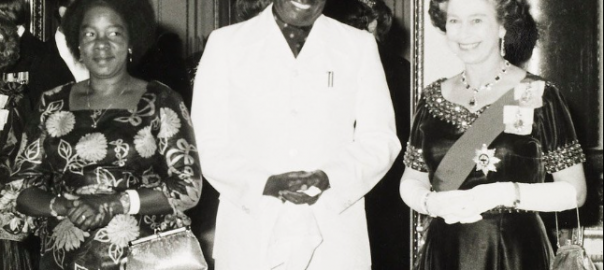
Kenneth Kaunda’s wife was a Tumbuka

July 13, 2023 /Human Interest/ —Kenneth Kaunda was a Bemba, which is one of the largest ethnic groups in Zambia. His father, David Kaunda, was born in Nyasaland, which is now Malawi. The Tumbuka are a Bantu ethnic group that is also found in Malawi. Mama Betty, Kaunda’s wife, was a Tumbuka from Malawi.

So, when it is said that Kaunda was a Bemba who married a Tumbuka lady, it means that he was born into a Bemba family, but his wife was from a Tumbuka family. Mama Betty came from the Tumbuka family in Malawi, which is why she is referred to as a Tumbuka lady. Continue reading