From Reform to Repression: Zambia’s Authoritarian Turn Under the Shadow of Digital Neo-Colonialism
Mon, Aug 01 2026 /Mpelembe Media/ — The abrupt cancellation of RightsCon 2026 in Lusaka, Zambia, just days before its scheduled opening in May 2026, has exposed the profound intersection of foreign coercion and domestic democratic erosion. Although the Zambian government officially claimed the postponement was to ensure alignment with “national values,” organizers and independent reports revealed that the cancellation was directly triggered by immense pressure from the Chinese Communist Party. Chinese diplomats essentially leveraged their vast economic investments in the country to demand the exclusion of Taiwanese civil society delegates and the moderation of panels critical of Beijing’s digital authoritarianism. Because the conference was slated to be held in a facility donated by the Chinese government, and coincided with negotiations over critical development grants, the Zambian state capitulated to these extraterritorial censorship demands.
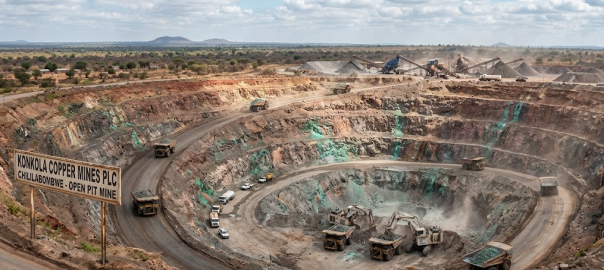
This geopolitical veto is rooted in Zambia’s deep structural and financial dependency on Chinese capital, which heavily shields Chinese corporations from accountability, as starkly demonstrated by the February 2025 Sino-Metals Leach Zambia dam disaster. A tailings dam collapse released 1.5 million tons of highly toxic and acidic mining waste into the Kafue River system, devastating the local ecosystem, destroying agricultural livelihoods, and cutting off the water supply to 700,000 residents in Kitwe. Rather than facing severe penalties, the Chinese state-owned enterprise was fined a mere $50,000, allegedly covered up the extent of the environmental catastrophe, and coerced affected locals into signing non-disclosure agreements for meager compensation. The Zambian government’s failure to protect its citizens from this ecological catastrophe underscores the degree to which massive foreign investments compromise the nation’s sovereignty and the rule of law.
Internally, the capitulation to foreign pressure aligns with a severe regression in Zambia’s democratic environment under President Hakainde Hichilema, whose administration has actively suppressed civil society ahead of the 2026 elections. The Hichilema government has weaponized the legal system to silence dissent, notably passing the restrictive Cyber Security and Cyber Crimes Acts of 2025, which mandate unwarranted surveillance pipelines, data-localization, and criminalize online defamation. Furthermore, authorities have routinely cracked down on journalists, disrupted peaceful opposition assemblies under the guise of security, and introduced legislation like the NGO Bill of 2025 to exert suffocating political control over non-governmental organizations. Together, the adoption of Chinese-supplied mass surveillance technologies and the suppression of democratic rights mark a disturbing shift toward digital neo-colonialism and authoritarianism, wherein fundamental human rights are sacrificed for regime survival and foreign financial patronage.
The Hidden Toll of Copper: 5 Surprising Truths About Zambia’s Double Crisis
Zambia is a global titan in the copper industry, currently ranked among the top ten producers worldwide. This mineral wealth is the engine of its economy, yet for the citizens living in the shadow of these mines, the price of prosperity is often paid in a currency they never agreed to. Zambia is currently the testing ground for a new brand of transnational repression, where the cost of Chinese investment is paid in both toxic silt and silenced speech.The nation currently finds itself at a strange and troubling crossroads. In 2024, Zambia was a celebrated co-chair of the UN Global Digital Compact, positioning itself as a leader in global digital rights. However, within two years, that reputation has been marred by two converging crises: the catastrophic Sino-Metals dam collapse in February 2025 and the sudden, forced cancellation of RightsCon—the world’s premiere digital rights summit—in May 2026. These events reveal a deeper narrative about how a nation can champion rights on the global stage while simultaneously allowing them to be eroded by the weight of massive foreign debt.
1. The Math of a Cover-Up (30x Worse Than Admitted)
On February 18, 2025, a containment structure at the Sino-Metals Leach Zambia facility failed, sending a wave of toxic effluent into the Kafue River system. The “official” narrative provided by the company—a subsidiary of the state-run China Nonferrous Metal Mining Group—claimed that 50 million liters (roughly 50,000 cubic meters) of waste had escaped.However, an independent investigation by the environmental cleanup firm Drizit revealed a massive discrepancy. According to Drizit, the spill actually involved 1.5 million tons of toxic material—at least 30 times the volume admitted by Sino-Metals. This wasn’t a mere estimation; the finding was based on a rigorous dataset of 3,500 samples indicating a disaster of unprecedented scale. The most damning evidence of a cover-up lies in the corporate response: Sino-Metals terminated Drizit’s contract on the very eve of the final report’s submission. This move did not stop the fallout; by September 2025, 176 local farmers had filed a staggering $80 billion lawsuit against the Chinese-linked firms for the total destruction of their livelihoods.
2. When a River “Dies Overnight”
The scale of the ecological destruction following the Sino-Metals collapse was immediate and absolute. The spill devastated the Kafue River ecosystem for at least 100 kilometers downstream. This waterway is the lifeblood of Zambia, providing drinking water to five million people and supporting 60% of the national population.The “cocktail” of toxins released represents a long-term bioaccumulation nightmare. Beyond concentrated acid, investigators found dangerous levels of cyanide, arsenic, lead, chromium, cadmium, and zinc. The human and environmental impact was captured in the haunting descriptions of those on the front lines:”The previously ‘vibrant and alive’ river appeared to have ‘died overnight’…”The desperation of the response highlighted the government’s lack of prepared infrastructure. The Zambian Air Force was deployed not for combat, but to drop hundreds of tons of lime into the water. Speedboats raced along the river course, attempting to neutralize the acid before it could destroy the remaining aquatic life. Despite these efforts, fish mortality was total in affected areas, and birdlife vanished from previously thriving habitats.
3. The Six-Month Warning Gap
While the Zambian government eventually declared the water quality “under control” and “returning to normal,” international data suggested a much grimmer reality. This skepticism was validated by a startling “delayed alarm” from the United States Embassy.It was not until August 6, 2025—six months after the initial spill—that the US Embassy ordered all American government personnel to evacuate the area. The embassy cited new information regarding “hazardous and carcinogenic substances” and “airborne hazards” that persisted in the environment. This six-month gap highlights a profound betrayal of the local population; while the Zambian government publicly insisted the water was safe for its citizens to drink and use for crops, foreign diplomats were being pulled out due to risks of organ damage and birth defects.
4. The Invisible Hand of the CCP in Lusaka
The crisis in Zambia is not merely environmental; it is a case study in “meeting warfare”—the use of the logistics of international gatherings as a tool of state-sponsored silencing. In May 2026, the Zambian government abruptly canceled RightsCon 2026 just days before 2,600 attendees were set to arrive in Lusaka.Statements from the George W. Bush Institute and conference organizers reveal that the cancellation followed direct pressure from the Chinese Communist Party (CCP). Beijing demanded that the government moderate topics related to surveillance and internet censorship, and specifically insisted on the exclusion of Taiwanese participants. Rather than admit to foreign interference, the Zambian government used a vague pretext to justify the shutdown:
- Alignment with national values: Claiming the summit’s topics did not match domestic cultural standards.
- Broader public interest considerations: Citing unspecified security or administrative clearances.
- Disclosure of critical information: Demanding full disclosure of thematic discussions as a condition for the event to proceed.
5. The “Hybrid Regime” Paradox
Zambia presents a political paradox. Though often cited as one of Africa’s more stable democracies, it has undergone significant backsliding since 2011, with the Economist Intelligence Unit now classifying it as a “hybrid regime.” This shift is codified in two major pieces of legislation: the NGO Bill of 2025 , which grants the state excessive oversight of civil society, and the Cyber Crimes Act , which uses significant criminal penalties to chill digital expression.The underlying catalyst for this regression is economic. Zambia currently holds over $4 billion in debt to China. As the nation strives to triple copper production for the global EV battery market, it has effectively traded its sovereignty for solvency. In this light, the ecological death of the Kafue River and the political silencing of RightsCon are not separate events; they are the “interest payments” on that debt—one paid in the environment, the other in democratic freedom.The events of 2025 and 2026 serve as a warning that environmental safety and digital rights are vulnerable to the same systemic failures of accountability. When a government prioritizes the comfort of its creditors over the safety of its waterways and the freedom of its forums, the infrastructure of democracy begins to erode.If the infrastructure of our digital rights is as fragile as a mining tailings dam, who is actually responsible for the cleanup when it collapses?