
Losing the Coalition: How Domestic Immigration Raids and Foreign Conflicts Alienated Key Voters
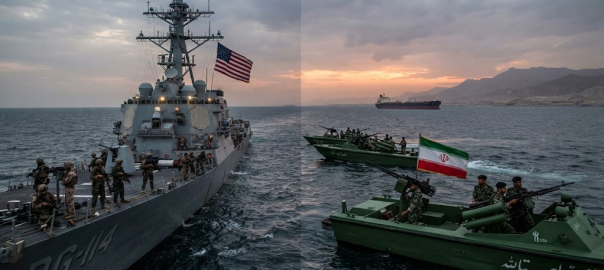
Fri Oct. 23, 2026 /Mpelembe Media/ — The Republican Party faces an intensifying political and governance crisis heading into the November 3, 2026 midterm elections, driven by President Donald Trump’s career-low approval ratings between 32% and 35%. Broad public disapproval stems from an unfulfilled campaign promise to avoid endless foreign conflicts and lower consumer prices. Instead, the ongoing war with Iran—now in its seventh month despite initial predictions of a four-to-five-week duration—has combined with a persistent domestic affordability crisis to severely weaken GOP majorities in Congress.
Economic discontent is anchored in severe energy disruptions and mounting inflationary pressures. The war-related blockage of the Strait of Hormuz has pushed national retail gasoline prices above $4.28 per gallon and highway diesel to record highs above $6.28 per gallon, severely impacting key constituencies like rural farmers who face surging fuel and fertilizer costs. Overall consumer price inflation remains elevated between 3.4% and 3.8%, leaving nearly half of American voters feeling financially worse off than a year ago. In a bid to boost turnout, President Trump proposed a $1 trillion “$5,000 Trump Dividend” for American adults contingent on Republicans retaining Congress, though voters and political analysts widely view the proposal as an unfunded, unrealistic election gimmick.
Within the White House, severe policy failures have triggered fierce inner-circle recriminations and factional strife. Deputy Chief of Staff Stephen Miller has blamed Special Envoys Jared Kushner and Steve Witkoff for diplomatic incompetence, arguing that their non-traditional negotiation tactics failed to secure an off-ramp with Tehran and dragged the nation into war. Conversely, Kushner’s faction blames Miller’s aggressive domestic agenda—marked by workplace raids, family separations, and expanded ICE enforcement—for alienating critical voter demographics, causing Trump’s approval among Hispanic voters to plummet from 38% down to 24%.
Compounding the executive branch’s troubles, Defense Secretary Pete Hegseth faces mounting legal vulnerabilities, formal articles of impeachment, and an impending Pentagon revolt. Hegseth is under heavy congressional scrutiny over “Signalgate”—the transmission of classified operational war plans over an unencrypted commercial messaging app—and a controversial September 2025 “double-tap” strike in the Caribbean that killed shipwrecked survivors of an alleged drug boat. With House Democrats preparing post-midterm investigations and current Pentagon officials reportedly willing to act as whistleblowers, lawmakers from both parties are raising doubts about Hegseth’s tenure, with some predicting Trump may be forced to dismiss him to avoid months of damaging testimony.
The Anatomy of a High-Stakes Failure: 5 Impactful Takeaways from the 2025–2026 U.S.–Iran Crisis
1. Introduction: A Diplomacy of High Pressure and Volatility
Geopolitical diplomacy can turn into open military conflict with terrifying speed. In early 2025, international efforts to address Iran’s advancing nuclear program transitioned from decades of quiet intelligence monitoring and stalled negotiations into an acute, high-pressure standoff. The catalyst was a direct letter from U.S. President Donald Trump to Iranian Supreme Leader Ali Khamenei, delivering a rigid 60-day ultimatum: agree to a comprehensive nuclear peace deal dismantling all enrichment facilities, or face devastating military consequences.
What unfolded over the subsequent 16 months was a masterclass in the inherent fragility of coercive statecraft. As hard deadlines lapsed, initial indirect negotiations mediated by Omani, Qatari, and Pakistani envoys rapidly devolved into a ruinous cycle of kinetic airstrikes, high-profile strategic assassinations, brief ceasefires, and broken agreements. Rather than forcing a durable settlement, maximum pressure repeatedly triggered dangerous counter-escalations, pushing the Middle East to the brink of broader systemic collapse.
Examining this crisis reveals how maximalist demands, rapid military escalation, and domestic political friction interact to torpedo peace efforts. By deconstructing this volatile conflict, we gain vital insight into how modern coercive bargaining fails and why military leverage rarely substitutes for sustained, baseline diplomacy. Here are the five most critical takeaways from the 2025–2026 U.S.–Iran crisis.
2. Takeaway 1: Iran Offered to Help Revitalize the U.S. Nuclear Industry
During early negotiation rounds in mid-2025, Tehran presented a counter-intuitive economic proposal that attempted to reframe a point of intense military friction into a commercial joint venture. As part of its negotiation terms, Iran offered to construct at least 19 new nuclear power reactors and invited direct American corporate involvement, arguing that U.S. participation could help revitalize the domestic American nuclear sector.
By May 2025, as Washington demanded the complete dismantlement of Iranian enrichment infrastructure at Natanz, Fordow, and Isfahan, Iranian negotiators put forward an alternative: a joint nuclear-enrichment project alongside regional Arab states funded by U.S. investment. Rather than accepting unilateral disarmament, Tehran sought a compensated transaction that would preserve its access to peaceful nuclear technology while integrating foreign capital to alleviate daily rolling blackouts across Iran. Underscoring how abruptly diplomatic channels were severed, Foreign Minister Abbas Araghchi was scheduled to formally unveil this proposal at the Carnegie International Nuclear Policy Conference, but his appearance was abruptly cancelled as tensions mounted.
This bold attempt to convert a non-proliferation standoff into a commercial arrangement ultimately floundered under the weight of deep institutional mistrust and incompatible baseline demands. U.S. officials rejected any framework that preserved domestic enrichment capabilities, maintaining that facilities must be fully dismantled.
“He speaks of an olive branch, but we see only barbed wire.” — Ali Shamkhani , Senior Advisor to Supreme Leader Ali Khamenei, responding to U.S. negotiation terms.
3. Takeaway 2: A Naming Dispute’s Brief Unification of an Anti-Regime Populace
In May 2025, a symbolic cultural flashpoint unexpectedly disrupted the diplomatic environment. Ahead of President Trump’s trip to Saudi Arabia, U.S. officials announced plans for federal agencies to officially designate the Persian Gulf as the “Arabian Gulf” or “Gulf of Arabia.” The incident illustrated how symbolic cultural missteps can alter geopolitical dynamics:
- The U.S. Proposal: Federal agencies prepared to formally adopt “Arabian Gulf” in official communications, with a public announcement planned during President Trump’s visit to Saudi Arabia.
- Domestic Iranian Response: The proposed name change touched a deeply sensitive nationalistic nerve, igniting fierce outrage across the political spectrum inside Iran. The move temporarily bridged deep political divides, creating rare national unity among pro-government factions and anti-regime opposition figures in a shared rejection of the U.S. proposal.
- Presidential Hesitation: Shocked by the intensity of the backlash within Iran, President Trump publicly hesitated, telling reporters, “I don’t want to hurt anybody’s feelings,” and ultimately withheld any official renaming announcement during his Middle Eastern tour.
Diplomatic pressure tactics can produce unintended consequences when they challenge core national identity symbols. Instead of isolating the Iranian leadership, the naming dispute temporarily unified a deeply divided populace against an external power.
4. Takeaway 3: Diplomacy by Ultimatum—38 “Imminent Deals” and Escalating War
The period between March 2025 and June 2026 revealed a chaotic pattern of optimistic public declarations juxtaposed against kinetic military action. A tracking analysis conducted by CNN revealed that between March 23 and June 9, President Trump claimed at least 38 separate times that a deal with Iran was “imminent.” Yet, behind these declarations lay a relentless cycle of rigid deadlines, demands for “unconditional surrender,” and severe military strikes.
Diplomatic Claims & Ultimatums,Corresponding Military & Escalatory Actions
March 2025: President Trump sends a 60-day ultimatum letter to Khamenei demanding a complete end to uranium enrichment and proxy support.,”June 2025: Israel launches large-scale strikes on Iranian military leaders and scientists (June 13); U.S. later bombs Fordow, Natanz, and Isfahan nuclear sites (June 21).”
“February 20, 2026: U.S. issues a rigid 10-day deadline for Iran to accept peace terms or face direct military attack.”,”February 28, 2026: U.S. and Israel initiate the 2026 Iran War, executing strikes that kill Supreme Leader Ali Khamenei and senior negotiator Ali Larijani.”
“March–April 2026: Public demands shift toward “”UNCONDITIONAL SURRENDER!”” alongside threats to destroy Iranian power plants and oil wells if the Strait of Hormuz remains closed.”,April 2026: U.S. establishes a formal naval blockade of Iranian ports (April 13) and conducts mine-clearing operations in the Strait of Hormuz.
“April 7, 2026: Rhetoric reaches a peak with warnings that “”A whole civilization will die tonight…”” if an agreement is not reached immediately.”,”April 7–8, 2026: U.S. and Iran announce a temporary two-week ceasefire, halting active strikes to facilitate preliminary negotiations in Islamabad.”
“Late May – June 2026: Administration signals a memorandum of understanding is near finalization, while warning against ceasefire violations in the Persian Gulf.”,”Late May – June 2026: CENTCOM conducts defensive retaliatory strikes against Iranian missile launch sites, coastal radars, and minelaying vessels following maritime friction.”
“There will be no deal with Iran except UNCONDITIONAL SURRENDER!” — President Donald Trump , social media statement during the 2026 conflict.
5. Takeaway 4: The Versailles-Tehran Accord That Collapsed in Weeks
The signing of the Islamabad Memorandum on June 17, 2026, produced surreal diplomatic imagery. Following intense third-party mediation led by Pakistan and Qatar, President Trump digitally signed the memorandum during a formal dinner with French President Emmanuel Macron at the Palace of Versailles following the G7 summit. Simultaneously, Iranian President Masoud Pezeshkian signed the agreement in Tehran.
To translate this high-level outline into operational reality, U.S. and Iranian technical teams engaged in detailed follow-up negotiations during the Lake Lucerne and Bürgenstock summits in Switzerland. The resulting framework established a 60-day ceasefire, outlined mechanisms for reopening the Strait of Hormuz under a High-Level Committee, and initiated technical discussions regarding the release of up to $25 billion in frozen Iranian assets in exchange for strict limits on enriched uranium stockpiles.
However, peace built primarily under extreme military leverage without underlying trust or technical guarantees is inherently fragile. By July 8, 2026—just three weeks after the digital signatures were affixed—the ceasefire collapsed entirely. Iran resumed attacks on commercial vessels in the Strait of Hormuz to assert its territorial sovereignty, shattering the brief diplomatic calm and plunging the region back into active naval warfare.
6. Takeaway 5: Deepening Discontent on Both Domestic Fronts
Beyond the immediate theater of war, the prolonged crisis created severe domestic political and economic strain inside both nations:
- U.S. Domestic Impact:
-
- Public Opposition: A Quinnipiac University national poll (July 2026) found that 6 in 10 voters opposed U.S. military action in Iran, while an Associated Press poll revealed that 65% of Americans disapproved of President Trump’s handling of the war. A Reuters/Ipsos poll indicated that only 24% of Americans felt the war was worth it.
- Financial Strain: The Quinnipiac poll showed that 49% of Americans felt financially worse off than a year prior, driven by post-war economic shifts—including a 40% jump in global fertilizer costs—and a Department of War expenditure that spent $40 billion and requested an additional $87.6 billion in emergency funding.
- Political Fallout: Declining presidential approval ratings reflected growing voter fatigue over foreign military involvement and rising domestic living costs.
- Iranian Domestic Impact:
- Economic Distress: An Iranian government poll from June 20, 2026, revealed that nearly 60% of Iranians reported being financially unable to sustain daily living requirements.
- Public Demands: The same government poll indicated that 70% of the Iranian population demanded structural political changes in governance.
- Systemic Crisis: The civilian population faced persistent rolling blackouts, severe currency devaluation, strict internet blackouts, and widespread economic paralysis brought on by cumulative sanctions and kinetic conflict.
7. Conclusion: The Real Costs of Broken Diplomacy
The 2025–2026 U.S.–Iran crisis serves as a stark case study in the structural limits of coercive statecraft. Relying on maximalist ultimatums, public rhetoric, and overwhelming military force failed to yield a permanent non-proliferation agreement. Instead, it produced a destruction loop: fragile ceasefires, catastrophic economic fallout, and structural instability across the Middle East.
When leverage replaces structured, long-term diplomatic engagement, tactical concessions rarely convert into lasting security. As regional maritime routes remain precarious in the wake of collapsed treaties, one fundamental question remains: Can coercive leverage ever achieve long-term non-proliferation goals, or is it doomed to repeatedly spiral into cyclic warfare?