March 26, 2026 /Mpelembe Media/ — Agentic payment protocols like x402, MPP, and L402 are fundamentally reshaping the internet economy by enabling machines to transact seamlessly without human intervention, user accounts, or traditional subscriptions. By allowing software to autonomously negotiate and settle micro-transactions, a wide variety of real-world use cases have emerged across several distinct categories: Continue reading
Tag Archives: Agentic Web
How AI agents spend your money
The Rise of the Agentic Economy and Machine-to-Machine Commerce
March 23, 2026 /Mpelembe Media/ — The digital economy is undergoing a massive paradigm shift from human-centric web browsing to an “Agentic Web,” where autonomous AI agents act as the primary economic participants. These agents are evolving beyond simple chatbots into sovereign entities capable of discovering services, negotiating, and executing transactions at machine speed without human intervention. This multi-trillion dollar market expansion is being powered by blockchain infrastructure and stablecoins, utilizing specialized protocols like x402, which revives the HTTP 402 “Payment Required” status code to enable seamless, sub-cent micro-transactions for APIs, compute power, and data access. Continue reading
The “Agentic” Era: How AI, Biometrics, and Shifting Demographics Are Rewriting the Global Travel Map by 2050
The Future of the Stay: A Student’s Primer on AI & IoT in Hospitality
Feb 18, 2026 /Mpelembe media/ — The travel industry is undergoing a structural metamorphosis driven by the transition from generative to “Agentic AI,” the rise of the Asia-Pacific (APAC) region as the dominant market, and a shift toward hyper-personalized, “zero-touch” experiences. While technology promises to erase logistical friction, it introduces new challenges regarding algorithmic bias, data privacy, and the “complexity tax” of managing massive scale. Continue reading
Building the Agentic Enterprise: From Multi-Agent Orchestration to Ethical Governance
The Dawn of Agentic Commerce and Autonomous Retail AI
Jan. 27, 2026 /Mpelembe Media/ — The emergence of agentic commerce is a transformative phase in retail where autonomous AI agents move beyond basic interactions to execute complex, multi-step tasks. Google Cloud is spearheading this shift by introducing Gemini Enterprise for Customer Experience, a platform that integrates shopping and service into a unified, intelligent system. Major global brands like The Home Depot, Papa Johns, and Gap Inc. are already adopting these tools to streamline internal operations and provide personalized digital concierges for their customers. By utilizing advanced reasoning and multimodal capabilities, these AI agents can autonomously manage the entire buyer journey, from initial product discovery to post-purchase support. Ultimately, this technology aims to bridge the gap between physical and digital storefronts, creating a seamless, proactive shopping environment that anticipates consumer needs. Continue reading
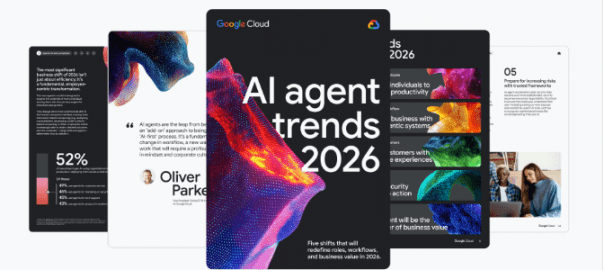
AI Agent Trends 2026
Dec. 20, 2025 /Mpelembe Media/ — The Google Cloud 2026 report describes a major transition from basic automated assistants to agentic AI, which can plan and execute complex tasks with human oversight. This shift moves technology from simple instruction-based computing to intent-based systems that understand and achieve specific goals. Key trends highlight how these agents will soon be integrated into every employee’s workflow, acting as specialized digital team members that handle repetitive duties. Beyond individual productivity, the report explores how integrated agent networks will manage entire business processes, such as customer service, security, and supply chain logistics. Human roles are expected to evolve into strategic orchestration, where people focus on high-level decision-making while AI agents manage the underlying data. Ultimately, the document serves as a strategic guide for business leaders to prepare for a future where AI is a fundamental, always-on collaborator. Continue reading
Agentic Marketing: Reshaping the CMO Operating Model
Dec. 03, 2025 /Mpelembe Media/ — This report from Boston Consulting Group (BCG) addresses the critical need for marketing leaders to rapidly adopt Agentic AI, characterizing the shift as a necessary race for competitive advantage. Unlike previous automation tools, these autonomous systems promise to fundamentally reconfigure the entire marketing workflow, enabling them to make decisions and learn across cycles. The primary benefit highlighted is the potential to triple marketing ROI, speed, and volume through extensive automation, spanning everything from generating market insights to personalizing customer actions at scale. To successfully implement this transformation, the marketer’s role must evolve from a specialist to an orchestrator in chief of intelligent agents, backed by robust data architecture and governance. BCG advises CMOs to abandon slow pilots in favor of a focused 9- to 12-month roadmap to achieve enterprise-level integration and define the next era of growth. Continue reading
Agentic AI Reshapes SEO and Autonomous Search
Nov. 23, 2025 /Mpelembe Media/ — The emerging field of agentic artificial intelligence (AI) has a profound implications for search engine optimisation (SEO) strategies. Agentic AI are systems that can autonomously plan, decide, and execute complex, multi-step tasks, moving beyond the reactive nature of traditional AI tools. Crucially, the text outlines the human-AI agent collaboration model, emphasising that human strategists are still essential for high-level strategy, quality validation, and ethical oversight, operating under a “human in the loop” principle. The article also discusses various practical applications of agentic AI in SEO, such as topic ideation, competitive analysis, and content clustering, while warning against significant challenges like data quality issues, hallucination risk, and over-reliance on automation. Ultimately, the source suggests that the future of SEO lies in leveraging agentic systems to gain a competitive advantage through smarter, more adaptive workflows. Continue reading