Tag Archives: Middle Eastern crisis

08Apr/26

The Fragile 2026 Iran War Ceasefire

Global Markets Rally as U.S. Halts Operation Epic Fury for Islamabad Negotiations

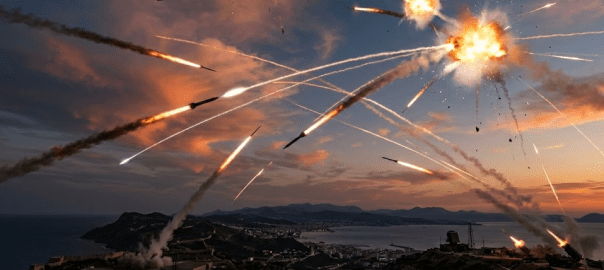
April 8, 2026 /Mpelembe Media/ — The 2026 war in the Middle East has reached a critical diplomatic turning point following a provisional two-week ceasefire between the United States and Iran, agreed upon on April 7, 2026. The truce, brokered through the mediation of Pakistani officials, was reached less than two hours before President Donald Trump’s deadline to launch devastating strikes against Iranian power plants and bridges. Prior to the agreement, Trump had escalated his rhetoric to unprecedented levels, warning that “a whole civilization will die” if Iran did not reopen the vital Strait of Hormuz to global shipping.
Continue reading

06Apr/26

Why Friction Prevents Escalation

U.S. politicians across the political spectrum have reacted with intense alarm to the President’s recent expletive-laden threats toward Iran, with several questioning his mental fitness for office.

April 6, 2026 /Mpelembe Media/ — The current conflict between the United States, Israel, and Iran began in late February 2026 with joint U.S.-Israeli “preemptive” military strikes on Iran, aiming to either eliminate the country’s nuclear capabilities or force regime change. In retaliation, Iran launched drones and ballistic missiles against Israel, as well as U.S. military targets located in the Gulf States and Jordan. Now in its sixth week, the war has severely destabilized the Middle East, killing over 3,500 people across the region—including more than 1,900 in Iran and 1,400 in Lebanon—while displacing millions. Continue reading

07Mar/26

How is the U.S.-Israel-Iran conflict reshaping the global economy?

March 7, 2026 /Mpelembe Media/ — Geopolitical Risk Report: The 2026 West Asian Realignment and the Collapse of Regional Diplomacy

The U.S.-Israel-Iran conflict is triggering severe shocks across the global economy, primarily through disruptions to energy supplies, international trade routes, financial markets, and critical technology infrastructure.

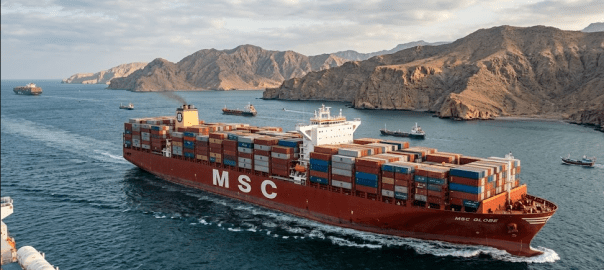
Energy Market Upheaval The most immediate economic threat stems from rising energy prices due to the disruption of the Strait of Hormuz—a crucial maritime chokepoint that normally handles about one-fifth of the world’s oil and liquefied natural gas (LNG). Following Iranian threats, commercial shipping through the strait has slowed to a near-standstill, with tanker traffic dropping by about 90% and multiple insurance firms canceling coverage for Gulf vessels. Continue reading

02Mar/26

A Region on the Brink: Stranded Civilians, Evacuation Chaos, and Suspended Aid in the Middle East

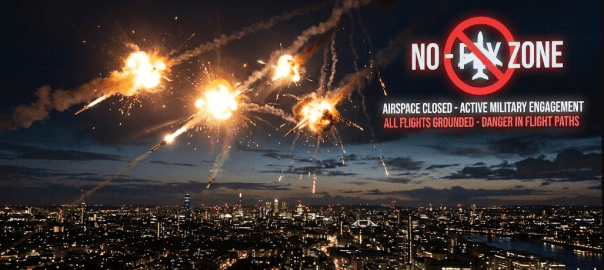
Hundreds of Thousands Stranded: Middle East Airspace Shutdown and Strait of Hormuz Closure Paralyze Global Transit

March 2, 2026 /Mpelembe Media/ — The United States and Israel launched a massive, coordinated military campaign—codenamed Operation Epic Fury and Operation Lion’s Roar—against the Islamic Republic of Iran. The coalition conducted nearly 900 strikes in the first 12 hours, targeting Iranian air defenses, missile production facilities, and IRGC command centers. The strikes successfully assassinated Supreme Leader Ali Khamenei and dozens of top Iranian military and government officials. In retaliation, Iran launched “Operation True Promise 4,” firing waves of ballistic missiles and drones at Israel and US military installations across the Persian Gulf, including bases in Qatar, Bahrain, Kuwait, and the UAE.

Continue reading

28Feb/26

Global Markets Brace as US-Israeli Strikes on Iran Compound Tariff and Inflationary Pressures


The 2026 Global Pivot: 5 Surprising Realities Reshaping the Middle East and Beyond

28 Feb. 2026 /Mpelembe Media/ —  The geopolitical landscape has drastically deteriorated, culminating in joint “pre-emptive” military strikes launched by the United States and Israel against Iran in late February 2026. The US military announced “major combat operations” aimed at razing Iran’s missile industry and naval capabilities. This severe escalation follows a previous 12-day war in June 2025, during which Israel and the US targeted Iranian nuclear facilities, including Fordow and Natanz, fundamentally altering the region’s risk profile. Continue reading