Digital Crate-Digging: Combining Visual Metadata, Embedded Streaming, and Sample Discovery
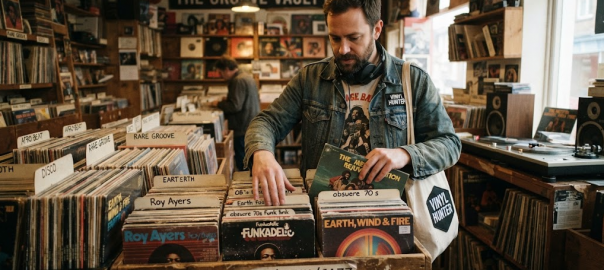
Mon, July 26 2026 /Mpelembe Media/ — Digital music archivism plays a vital role in safeguarding 20th-century sound recordings, bridging physical vinyl history with interactive digital crate-digging platforms. A prime exemplar in this domain is a digital repository indexing over 3,282 rare vinyl releases centered on 1970s soul and 1980s boogie, funk, R&B, and jazz. This collection documents a major transition in popular music, capturing the shift from 1970s analog studio arrangements with rich strings and live rhythm sections into 1980s electro-funk, synth-driven boogie, and early digital recording techniques. The underlying platform utilizes multi-tiered indexing by release year, sub-genre taxonomy, and physical release format, including LPs, rare 7-inch 45s, and extended 12-inch maxi-singles crucial to club mix culture. Furthermore, high-resolution front and back cover photography preserves essential historical documentation such as personnel credits, studio locations, track durations, mastering etchings, and sleeve conditions. To link static metadata with active listening, the archive incorporates embedded YouTube playback alongside an algorithmic “Random Spin” discovery feature that replicates the serendipity of digging through physical record bins. Continue reading