
The Webhook and Metering Playbook: Scaling Gemini Applications with Resilient Stripe Architecture
Fri Aug 27 2026 /Mpelembe Media/ — Integrating Stripe into generative AI applications powered by Google Gemini requires a strict architectural separation between user-facing interfaces and backend payment pipelines to protect sensitive keys and prevent exploitation.
Storing Stripe secret keys, Gemini API credentials, or performing payment orchestrations directly on the client side introduces critical security vulnerabilities, allowing malicious actors to manipulate price details, bypass paywalls, or run unauthorized, high-volume model executions. To build a resilient defense, developers must funnel all checkout, subscription, and credential-heavy actions through a server-side intermediary, such as a FastAPI backend or a serverless environment like Firebase Cloud Functions. This intermediary securely handles Stripe Checkout Session creation with server-side price validation, returning a hosted, pre-built payment URL to redirect the customer safely.
To keep database permissions, subscriptions, and AI entitlements in sync, developers must implement a highly secure, four-layer webhook handling pattern.
First, the incoming webhook endpoint must parse the unmutated, raw request body, as standard JSON pre-parsing middleware changes payload structures and silently breaks cryptographic validations. Second, the server must verify the event signature using Stripe’s official SDK and unique environment secrets within a strict five-minute tolerance window to stop replay attacks. Third, to defend against network retries sending identical payloads, developers should write the event ID to a dedicated database deduplication table before initiating fulfillment, preventing duplicate transactions. Finally, to bypass Stripe’s strict twenty-second HTTP timeout and avoid retry loops, the handler should immediately push verified events to an asynchronous background task queue and return a fast success status, allowing separate workers to handle long-running operations like database syncs or sending confirmation emails.
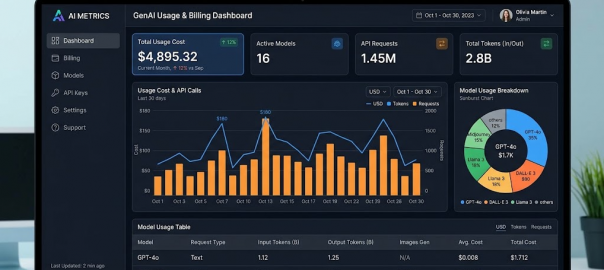
Because generative AI costs fluctuate significantly based on individual user behaviors, flat-rate subscriptions are often risky, making metered usage-based billing a crucial monetization model.
By configuring meters, prices, and subscriptions, developers can track specific consumption items—such as generating text or consuming model tokens—without modifying application code. Proxy gateways, such as the Vercel AI Gateway, can streamline this by routing model queries, automatically capturing input/output token counts, and sending non-blocking, idempotent billing events straight to Stripe using restricted access keys. Additionally, integrating automated credit tools like Metronome allows systems to manage pre-paid commits, auto-recharge user balances, and pause access dynamically if a transaction fails. This decoupled architecture enables scaling AI-native startups with minimal engineering overhead, aligning operational platform costs directly with customer value..
Why the Traditional “Build vs. Buy” Choice is Killing AI Startups (and How to Fix It)
The rapid pace of AI innovation has created a paradoxical friction: engineering teams can ship groundbreaking features in a weekend, but updating the pricing for those features often takes weeks of specialized work. For many founders, “vibe-coding” a quick billing integration using AI assistants like Cursor or Claude seems like the path of least resistance. However, this shortcut creates massive maintenance debt. These tools frequently generate code that skips critical reliability layers, resulting in brittle infrastructure that cannot survive the shifting reality of AI unit economics. In this environment, pricing is no longer a back-office function—it is a core component of product design.
The Build-vs-Buy Binary is Obsolete
The traditional framework for selecting software is failing AI companies. Usually, the decision is viewed as a binary choice: build what is core to your product and buy what is not. However, monetization infrastructure for AI does not fit cleanly into either category.As noted in recent industry analysis:”The conventional wisdom around whether to build or buy your business software is fairly simple: if you’re trying to solve a problem that is core to your product and may prove to be a differentiator, build it yourself. If you’re trying to solve a problem that has nothing to do with your core product, buy a tool and move on.”In the AI sector, building a billing stack from scratch is rarely a core differentiator, yet the tools must be flexible enough to handle constant iteration. The solution is a “Third Option”: adopting flexible, composable infrastructure. This allows engineers to focus on strategic pricing decisions rather than reinventing invoicing. Building from scratch is no longer the move because maintenance and future adaptability remain open questions that can drain resources for years.Strategic Insight: Composable infrastructure ensures that engineering talent is spent on capturing value, not maintaining the plumbing.
The $4,000 “Power User” Nightmare
The danger of rigid pricing is best illustrated by Chipp.ai. The company, which helps businesses run custom AI agents, originally utilized a standard $29/month SaaS subscription model. They quickly discovered that flat-fee models are a liability when facing variable token costs. One user generated $4,000 in token costs in a single month—far exceeding their subscription revenue.For early-stage startups, runway is precious. A single “power user” on a mismatched plan can erode months of funding. Flexible billing is not just a convenience; it is a risk-mitigation tool. To survive, AI companies must shift toward usage-based metering that aligns with the unit economics of LLM tokens. This ensures that every point of customer value is matched by a corresponding point of margin.Strategic Insight: Mismatched pricing models in AI aren’t just inefficient—they are a direct threat to your company’s survival.
Pricing as a Fast-Moving Product Feature
The ability to pivot pricing is now as critical as the ability to ship code. Statistics show that 92% of AI companies with usage-based billing have changed their model at least once since launch. Elena Verna, head of growth at Lovable, reports making 10 pricing updates within a single year.If your billing system is hard-coded, these 10 updates represent 10 potential engineering bottlenecks. Only composable infrastructure turns these pivots into a strategic advantage, allowing you to test market hypotheses in real-time. If you cannot iterate on pricing as fast as you ship features, your monetization strategy will always lag behind your product’s value.Strategic Insight: Your first pricing model is a hypothesis. Infrastructure is what allows you to test and refine it without halting your roadmap.
The Lean Engineering Advantage (Scaling with One Engineer)
Infrastructure acts as a force multiplier for engineering teams. ElevenLabs managed rapid global expansion and complex geographical tax requirements with just a single billing engineer by using foundational infrastructure that “absorbed the complexity” of integrated tax engines and revenue recognition.Contrast this with the early struggle at Retell AI. Before adopting a robust system, a team of 16 was bogged down by manual invoicing and errors. The lack of auto-billing resulted in high rates of missed payments, and constant errors began to erode customer trust. Moving to enterprise-grade infrastructure allowed them to offload the “plumbing” and focus on their core support agent technology.Strategic Insight: High-performing teams use infrastructure to stay lean. If you need a squad of engineers just to keep the invoices running, you’ve built an anchor, not a product.
The “Four-Layer” Safety Net for Billing Reliability
To move from “hobbyist” integrations to enterprise-grade systems, architects must implement a four-layer reliability playbook. Skipping these layers—a common side effect of AI-generated “shortcut” code—leads to catastrophic billing failures at scale.
- Verify: Confirm that every event actually originated from your payment provider by validating signed headers (e.g., Stripe-Signature).
- Queue: Immediately hand off events to a background worker (using tools like Inngest or BullMQ) so the HTTP response is sent fast, preventing timeouts during high-volume spikes.
- Dedupe: Use a unique event ID in your database to ensure a retried event does not double-charge a user. Use the pattern: INSERT INTO stripe_events (…) ON CONFLICT (id) DO NOTHING.
- Reconcile: Run a nightly cron job that checks the last 26 hours (to account for clock skew) against the provider’s source of truth to catch events missed during downtime or network failures.Strategic Insight: Reliability is an economic imperative. A 1% failure rate in your billing queue is a 1% leak in your top-line revenue.
Server-Side Validation: Never Trust the Client
A critical security best practice often skipped in “vibe-coded” integrations is the isolation of price logic. Many AI-generated samples dangerously allow a client-side request to control the amount field in a checkout session.The “Bad Example” to avoid: app.post(“/checkout”) async def checkout(amount: int): … (The client defines the price).Instead, you must use server-side validation. Define a PRODUCTS dictionary on the server and have the client send only a product_id. The server then looks up the immutable price. Never trust the client-side to tell you what a product costs; if you do, your most “enterprising” users will eventually find a way to pay zero.Strategic Insight: Security in billing is about more than just encryption; it’s about maintaining the integrity of your price book.
Conclusion: Beyond the Checkout Page
Foundational billing infrastructure is not about outsourcing your strategy—it’s about maximizing your engineering impact. In the AI era, where costs are variable and value is discovered through iteration, your monetization stack must be a strategic lever, not a technical burden. As you look at your current roadmap, ask yourself: Is your billing system allowing you to pivot tomorrow to capture a new market opportunity, or is it an engineering anchor holding you back from your next major release?