
Tag Archives: Energy development

28Feb/26

The 2026 Geo-Economic Fault Line: Energy, Logistics, and the Great Divergence

Contextualizing the 2026 Escalation: From Trade Tensions to Kinetic Warfare

28 Feb. 2026 /Mpelembe Media/ —  The global strategic landscape has transitioned from the “unpredictable” trade volatility of 2024–2025—characterized by a century-high effective tariff rate and fiscal “haze”—into a state of “major combat operations” initiated in February 2026. This shift represents an existential threshold for regional stability; geopolitical risk is no longer an occasional variable but a foundational structural baseline. The previous era’s focus on trade countermeasures has been superseded by a period of kinetic escalation that fundamentally alters the movement of global capital and commodities.The tactical environment of the 2026 conflict was defined by the U.S. and Israeli “preventative strikes” launched on February 28, targeting Iranian nuclear and missile infrastructure. These operations necessitated the immediate closure of Iranian, Israeli, and Iraqi airspace to civilian traffic. The U.S. administration has adopted a posture of total naval dominance, explicitly declaring an intent to “annihilate” the Iranian navy and “raze” its missile industry to the ground. This transition to high-intensity warfare aims to neutralize regional proxies and prevent nuclear breakout, yet its execution has invalidated previous economic projections. The April 2025 “haze” projections—which anticipated a gradual decline in oil prices toward $65 per barrel—have been rendered obsolete by supply-side shocks that prioritize hard security over soft demand fundamentals. Continue reading

23Nov/25

Decarbonising the Built Environment Through Technology and Energy Innovation

A new Special Report by Sustainability Magazine titled ‘Technology & Energy: Decarbonising the Built Environment’, focuses on how global property and real estate leaders are deploying innovative technologies to reduce carbon emissions, since buildings are responsible for a significant percentage of global energy use and carbon emissions. Key companies like Cushman & Wakefield, CBRE, and Johnson Controls are featured for their efforts in leveraging smart systems, electrification, and clean energy to achieve net-zero commitments. The report highlight that smart building technologies are instrumental in reducing energy consumption and underscore the growing market value of green building practices. Continue reading

12May/25

Leading Companies Reshaping Europe’s Energy Future

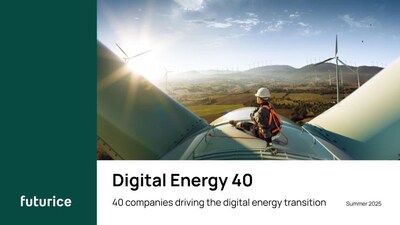
A recent press release from Futurice announces the publication of their first Digital Energy 40 report, which highlights companies at the forefront of transforming Europe’s energy sector through digital technology and clean power. The report ranks leading companies based on metrics like market execution, innovation, and technological impact, noting that AI and other digital tools are crucial for managing increasingly decentralised and diversified energy systems. Prominently featured are firms like **Octopus Energy**, Tibber, and E.ON, recognised for their contributions to areas such as smart grids, demand management, and battery storage, showcasing how companies are using scalable tech and innovation to address the climate challenge and accelerate the shift to net zero. The source provides details on the report’s methodology and key themes, including the increasing role of private investment and the need for greater grid resilience. Continue reading

24Jan/25

Envision’s Net-Zero Industrial Park: A Global Benchmark

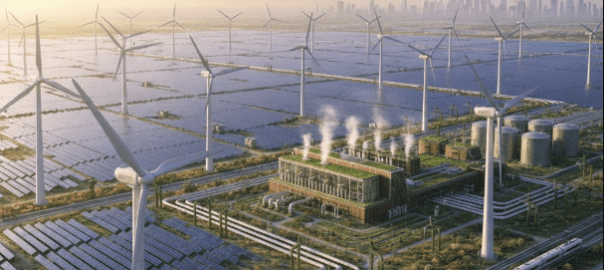
Jan. 24, 2025 /Mpelembe Media/ —  The World Economic Forum (WEF) highlights Envision Energy’s Ordos-Envision Net-Zero Industrial Park as a global benchmark for sustainable industrial development. This pioneering project, featured in a WEF white paper, showcases a comprehensive clean energy solution using wind, solar, and hydrogen power, achieving net-zero emissions. Continue reading

13Jan/25

Cleantech Investment Surpasses Fossil Fuels in 2025

Jan. 10, 2025 /Mpelembe Media/ —  An S&P Global Commodity Insights report forecasts a significant shift in 2025, with cleantech investments exceeding fossil fuel investments for the first time, reaching $670 billion. Solar PV is predicted to dominate cleantech investment. Continue reading

25Sep/24

AI supercharges data center energy use – straining the grid and slowing sustainability efforts

Ayse Coskun, Boston University

The artificial intelligence boom has had such a profound effect on big tech companies that their energy consumption, and with it their carbon emissions, have surged.

Continue reading

08Jul/22

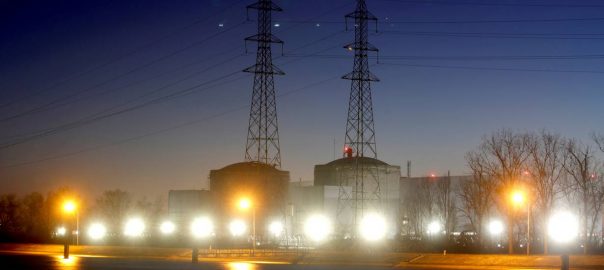
OPINION: Europe classifying gas and nuclear power as green is greenwashing

Esther Bollendorff and Olivier Vardakoulias are policy experts with Climate Action Network (CAN) Europe.

Earlier this week, the European Parliament adopted the Delegated Act on Taxonomy classifying fossil gas and nuclear as “green” activities for private investors.

This highly controversial act developed by the European Commission, pushed by French President Emmanuel Macron, and supported in early stages by German Chancellor Olaf Scholz illustrates how politics can overrule science.
Continue reading