Tag Archives: Situmbeko Musokotwane

07Nov/26

Zambia Mega Budget Triggers Taxpayer Backlash

Zambia’s K284.8 Billion Gamble: Self-Reliance Meets Tax Hikes Under the Grow Zambia Agenda”;Macroeconomic Framework and Domestic Funding Shift

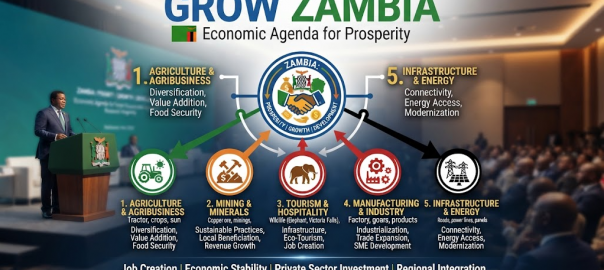
Sat, Nov 07 2026 /Mpelembe Media/ — On November 6, 2026, Minister of Finance and National Planning Dr. Situmbeko Musokotwane presented Zambia’s record K284.8 billion 2027 National Budget to Parliament under the theme “Grow Zambia: From Stabilisation to Unlocking Opportunities, Creating Jobs and Improving Livelihoods for All”. The budget marks a structural transition from emergency post-drought crisis management toward domestic self-reliance, with domestic revenues projected to fund K233.7 billion, or 82.1% of total public expenditure. Under the medium-term macroeconomic framework, the government aims to accelerate real GDP growth to 4.9% while sharply narrowing the overall fiscal deficit to 3.0% of GDP, down from 5.9% in 2026. Sovereign debt obligations remain a significant factor in fiscal management, with debt servicing absorbing K67.6 billion (23.7% of the total budget), while net domestic borrowing is budgeted at K37.3 billion. Continue reading →
03Nov/26

How Zambia Recovered From Historic Drought

Moody’s Upgrade Marks Turning Point for Zambia, Yet Household Relief Remains Ahead

Tue 03 Sept 2026 /Mpelembe Media/ — On October 30, 2026, Moody’s upgraded Zambia’s sovereign credit rating from Caa2 to Caa1 with a positive outlook, citing substantial, sustained progress in government debt management following the nation’s 2020 default. This rating action follows earlier upgrades by S&P Global Ratings and Fitch Ratings, alongside a staff-level agreement reached on October 9, 2026, for a US$1.472 billion, 36-month IMF Extended Credit Facility. Over time, these improved assessments are expected to lower sovereign borrowing costs and help attract financing for major infrastructure initiatives such as the Lobito Corridor. Continue reading →

19Oct/26

Why Zambia National Budget Needs Local Accounting

You Can’t Share Poverty: Reconciling Fiscal Discipline with Local Empowerment in Emerging Economies

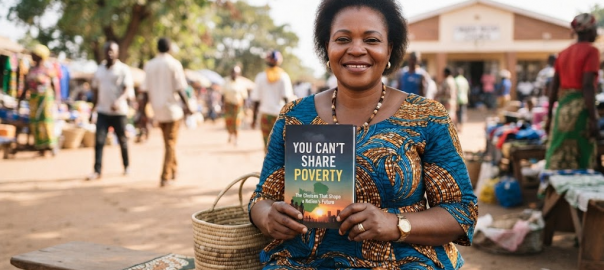
Mon Oct. 19, 2026 /Mpelembe Media/ — Hakainde Hichilema’s political memoir and reform playbook, You Can’t Share Poverty: The Choices That Shape a Nation’s Future, sets forth a structural growth doctrine that redefines the social contract in developing nations. The foundational premise argues that state-driven wealth redistribution in low-income or heavily indebted economies serves merely to socialize scarcity and dilute existing capital without building productive capacity. Sustainable poverty reduction and employment creation cannot be achieved through consumption subsidies or state patronage, but require expanding national output (GDP) by attracting foreign direct investment, expanding the industrial tax base, and establishing predictable regulatory frameworks where the state acts as a facilitator rather than a controller of commercial enterprise.
Continue reading →

08Jan/26

2026 Risk Report: Zambia’s Economic & Political Outlook

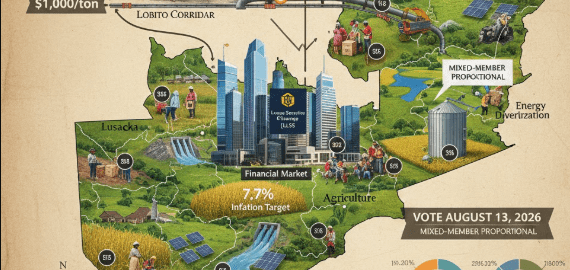
Jan. 8, 2026 /Mpelembe Media/ — In 2026, Zambia is positioned at a critical crossroads, transitioning from a period of climate-induced shocks (2024–2025) into a high-growth phase. The economy is projected to expand by 6.4%, a “rebound” driven primarily by a resurgence in the mining sector as copper production targets 1 million metric tons. This growth is supported by a more stable agricultural season and a strategic pivot toward renewable energy to mitigate future power deficits. Continue reading →