
Tag Archives: Open-source intelligence

25Oct/26

How Sewage Tomatoes Beat the AI Web

Mapping the Neighborhood: Reimagining Wikipedia as a Proximity-Based Experience

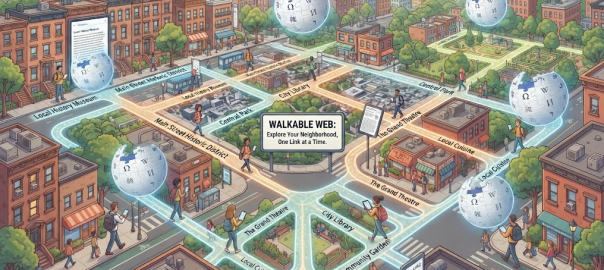
Sat Oct. 24, 2026 /Mpelembe Media/ — Local Wikipedia is an independent, unofficial web application developed by journalist, software developer, and data specialist Ed Jefferson that turns Wikipedia into a proximity-focused, ambient spatial encyclopedia. Conceived during lockdown and released in late 2026, the application operates on the core thesis of displaying geotagged Wikipedia articles located within a thirty-minute walk from the user. Users can set their location using native browser geolocation or manual text queries such as town names, landmarks, and UK postal codes. To balance visual clutter and system performance across varying geographic densities, the platform automatically adjusts its operational scope, expanding up to six miles in low-density rural areas or capping results at five hundred items in dense urban centers. Designed with client-side privacy in mind, positioning coordinates remain strictly within temporary local browser memory, and exported links are sanitized to ensure physical location data is never shared. Continue reading →

25Sep/24

1.2 Million More Homes in England Will Be at Risk of Subsidence by 2050

Analysis of British Geological Survey data from LexisNexis® Risk Solutions, the data, advanced analytics and technology provider to the insurance market, reveals that with the current climate trajectory, approximately 1.2 million more homes in England are at risk of subsidence issues by 2050ii. This is a 27% increase to the estimated 4.5 million households already at subsidence risk today. Continue reading

13Jan/23

2022 wasn’t the year of Cleopatra – so why was she the most viewed page on Wikipedia?

Taha Yasseri, University College Dublin

At the end of every year, I gather statistics on the most viewed Wikipedia articles of the year. This helps me, a computational social scientist, understand what topics captured the most attention and gives me a chance to reflect on the major public events of the year. I try to use data to determine how the public (and more specifically here, English-language Wikipedia readers) will collectively remember the past year.

Continue reading →