
The Rise of Zed Beats and the Digital Music Revolution
Fri , Aug 0& 2026 /Mpelembe Media/ — Zed Beats, which takes its name from the letter “Z” in Zambia, represents a dynamic hybrid music genre that emerged in the late 1980s. Young, self-taught producers began using affordable computer software to blend indigenous Zambian elements with popular global sounds like R&B, reggae, rap, hip-hop, Jamaican dancehall, Afrobeats, and amapiano. The rise of this digital movement was catalyzed by a major cultural void in the late 1980s and 1990s, when the devastating HIV/AIDS epidemic claimed the lives of a generation of veteran musicians who had anchored traditional live genres like Kalindula and Zamrock. To fill this void, which had left radio and television heavily dominated by foreign music, young enthusiasts utilized newly accessible computer technology to resurrect local music and forge a modern urban identity.
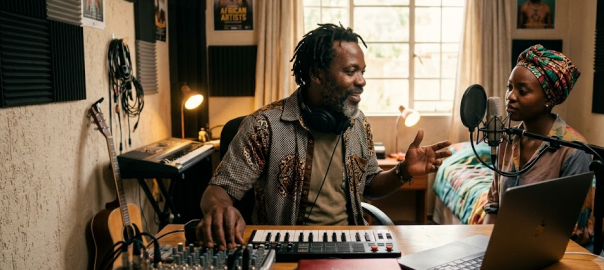
This transition reformed the country’s musical labor economy. The 1991 economic liberalization and privatization policies under the Movement for Multi-Party Democracy (MMD) had caused a decline in traditional parastatals, the removal of subsidies on corn meal, and the closure of major corporate-funded record labels. However, free trade also allowed retail chains to sell affordable electronics, computers, and accessories, which enabled young creators to construct low-cost home studios in their neighborhoods. Young artists could now improvise lyrics and multi-track vocals rapidly in their bedrooms on Digital Audio Workstations (DAWs). Daddy Zemus pioneered this vernastic shift with his 1997 album Salaula. Jordan Katembula (JK) then cemented the style with his 2001 self-titled debut and the massive hit Balekuzembeleka, paving the way for today’s prominent stars like Yo Maps, Slap Dee, Macky II, and Chef 187 to build a thriving, self-sustaining music economy.
The Evolution of Political Song: From Freedom Anthems to Digital Battles
Political music in Zambia has served as an alternative public sphere since the colonial era. During the 1950s independence struggle, nationalist movements developed “portable counter-archives” in the form of vernacular freedom songs like Abasungu chenjela and Tenze nase kale anthu, which inverted colonial timelines and fostered cross-ethnic solidarity. Activists also adapted Congolese Afro-Cuban rumba tracks, such as “Chachacha Independence,” to humorously portray shaking the colonial government out of office. In regions like Luapula, the anti-colonial song Bwelelenimo (go back) targeted colonial natural resource injustices, providing a powerful recruitment tool for nationalist leaders like Kenneth Kaunda. Following independence, President Kaunda used his signature acoustic guitar anthem Tiyende Pamodzi at political and diplomatic rallies to unite the nation’s seventy-three distinct ethnic groups under State Humanism. This nation-building project was supported by a strict 95% local content radio quota that inadvertently spurred the fuzzy, psychedelic rise of Zamrock in the 1970s.
With the re-introduction of multi-party democracy in 1991, campaign music transitioned to recorded formats. PK Chishala’s satirical kalindula masterpiece Common Man was co-opted by the opposition MMD to expose the food shortages and economic hardships under Kaunda’s administration. This trend of using catchy campaign tracks to challenge incumbents grew increasingly sophisticated; in 2011, the Patriotic Front (PF) used Dandy Crazy’s Donchi Kubeba to instruct voters to accept ruling-party material bribes but secretly vote for change. In 2016, the PF deployed Dununa Reverse, a supergroup anthem that used a signature backward-kicking dance and childhood nostalgia for the hide-and-seek game chidunune to mobilize voters for Edgar Lungu. By the 2021 election, when physical rallies were prohibited due to COVID-19, home studios rapidly produced sixty-two campaign tracks shared over digital spaces. The UPND countered state repression with Cavman’s Tatwafola (we are not yet paid) to highlight delayed public wages, while utilizing a covert “watermelon” campaign strategy—urging supporters to wear PF green on the outside but keep the UPND red in their hearts—to bypass cadre violence and secure a historic victory.
The Rhythms of Redemption: 5 Surprising Truths from the Legacy of Kenneth Kaunda and the Zambian Struggle
Bureaucracy records the dates, but music records the pulse. In the historiography of Southern African liberation, the archives of the state often tell a sterile story of treaties and borders. Yet, there exists a “counter-memory”—a series of subaltern recollections preserved not in stone, but in the vibrations of the guitar and the collective breath of the choir. To understand Dr. Kenneth Kaunda (KK), the “Baobab of African politics,” one must first understand that he was a musician before he was a president.A guitarist and choirmaster by training, Kaunda understood music not as entertainment, but as a political weapon. He realized early on that while a regime can seize a printing press, it cannot easily arrest a melody. This longform exploration moves beyond the hagiography of a founding father to examine the counter-intuitive ways his legacy shaped a continent—from the economic price of Pan-African solidarity to the modern digital battlefields where his slogans are still tested.
1. The “Safe Haven” Strategy and the Massive Economic Debt of Solidarity
It is a rare political phenomenon for a newly independent, landlocked nation to intentionally invite economic ruin for the sake of its neighbors. Yet, this was the defining logic of Kaunda’s “Safe Haven” strategy. Under his leadership, Lusaka became the nerve center for every major liberation movement in the region: the ANC (South Africa), FRELIMO (Mozambique), SWAPO (Namibia), and ZANU/ZAPU (Zimbabwe).This was not merely symbolic. The geopolitics of the era were brutal; because Kaunda offered Zambia as a base, the country became a target for the Rhodesian and apartheid regimes. Lusaka was ruthlessly and regularly bombed, and the economy was strangled by sabotage. However, the city’s significance remains etched in the region’s DNA. It was here that the Lusaka Agreement of 1974 was brokered, a pivotal moment that secured Mozambique’s independence from Portuguese rule. Kaunda operated on the radical principle that Zambia’s freedom was a hollow victory if its neighbors remained in chains.”We will never be able to pay the debt we owe you, thank you for the great work done.” — Cyril Ramaphosa, President of South Africa, speaking at Kaunda’s memorial.
2. Freedom Songs as “Portable Counter-Archives”
When the colonial state controls the physical archives, resistance must become portable. For the Zambian people, songs were “portable counter-archives”—vessels of history that moved with the body when political organizing was banned. Kaunda, understanding the power of the airwaves, passed a transformative law requiring 95% of all music played on the radio to be Zambian . This was the “smoking gun” for the cultural explosion known as Zamrock, forcing a generation to stop imitating Western pop and start recording the pulse of their own struggle.Songs like Abasungu chenjela (Bemba) and Kaunda Wize (Lozi) functioned to invert official colonial chronologies. By using music to reclaim the narrative, activists ensured that the struggle lived in everyday spaces—the kitchen, the field, the mine—beyond the reach of the censor. These songs utilized specific stylistic devices:
- Satire: Using wit to undermine and “shrink” the perceived authority of colonial officials.
- Metaphorical Compression: Distilling complex political grievances into short, relatable imagery that could bypass censorship.
- Collective Naming: Re-centering African agency by naming local heroes, thereby reclaiming the land through language.
3. The “Facebook Loophole” and the Counter-Intuitive Logic of Internet Shutdowns
The battle for liberation has migrated from shortwave radio to the digital slipstream, revealing a new crisis: digital colonialism. During the 2021 Zambian election—a high-stakes contest between Edgar Lungu and the eventually victorious Hakainde Hichilema—the government implemented an internet shutdown. While incumbents often frame these as “security measures,” the reality is a nuanced fracture in global tech.This is the “Facebook Loophole.” Tech giants prioritize content moderation in “high-priority” markets like the US, Taiwan, and South Korea, while leaving countries in the Global South vulnerable. In places like Honduras, Ethiopia (specifically in the Tigrinya language), and Uganda , a lack of local language moderation allows misinformation to weaponize ethnic tensions. In the 2021 Zambian election, the deployment of the military to several provinces alongside the digital blackout highlights a provocative tension: are shutdowns a blunt, “proportionate response” to global platforms’ failure to police local language disinformation, or are they simply a refined tool for incumbents to suppress competitive elections under the guise of “national security”?
4. The Global Bridge of “I Shall Be Released”
Perhaps the most striking synthesis of the liberation era was the role of a Bob Dylan folk song. In 1967, “I Shall Be Released” became a rhythmic bridge between the US Civil Rights movement and the South African struggle. Miriam Makeba (Mama Africa) and Nina Simone transformed this folk cover into a universal anthem of resistance.Makeba, who spent 30 years in exile and frequently performed with Kaunda, used her “South African sound” to reinterpret the song. Sociologically, this is defined as “a happy sound that comes from a place of hurt.” It is a form of musical alchemy—taking the sorrow of dispossession and turning it into collective joy through choral harmony. While Makeba’s version was banned by the apartheid state, it reached the masses via Radio Freedom , the illegal pirate station of the ANC, proving that a song can unite two worlds even when the singers are thousands of miles apart.”We were bringing two worlds together, South Africa and the United States, both music and artists.” — Miriam Makeba
5. The Philosophy of the White Handkerchief and Life After Power
Kaunda was defined by the symbol of the white handkerchief, which he used to “dry the eyes” of the suffering. This was the physical manifestation of his “Philosophy of Humanism”—a belief system rooted in mutual aid and community loyalty. Yet, a clean-aesthetic history must also acknowledge the shadows. By the end of his 27-year tenure, Kaunda’s rule was marked by economic errors and increasingly autocratic behavior that led to his electoral defeat in 1991.However, the “surprising truth” of Kaunda lies in his redemption. Unlike many of his contemporaries, he refused to be “trapped in power.” He transitioned from an “autocratic Baobab” to a beloved elder statesman, walking among the people as a civilian. He dedicated his final decades to a new liberation struggle: the fight against HIV/AIDS, a cause he championed with transparency after losing his own son to the disease. His transition remains a blueprint for leadership: the realization that one’s most important act of power is the willingness to relinquish it.
Conclusion: The Seed of a New Generation
The legacy of Kenneth Kaunda suggests that the work of a founding father is never a finished project; it is the “planting of a vibrant and finest African seed.” The rhythms of freedom songs and the motto of “One Zambia, One Nation” are not artifacts of the past, but living goals for a generation navigating a world of digital shutdowns and shifting borders. As we listen to the echoes of the guitar and the choir, we are reminded that unity is not a slogan—it is a heart-rhythm that must be constantly reclaimed.