
Tag Archives: ELEVENLABS

30Aug/26

AI Agents and Unified Film Pipelines

The AI Film Production Operating System
Automating Independent Cinema: How Real-Time Collaborative Operating Systems Compress Production Timelines by 50%

Sun Aug 30 2026 /Mpelembe Media/ —The emergence of digital filmmaking operating systems in 2026 represents a paradigm shift where traditional, fragmented production pipelines are replaced by a unified, AI-driven software stack. Rather than relying on expensive contractor day-rates and physical gear rentals, indie filmmakers utilize a centralized stack of twelve high-leverage software engines to execute everything from pre-visualization to post-production. This modern framework compresses mid-budget pre-production timelines from 16–20 weeks down to 8–11 weeks, drastically reducing administrative overhead and crew holding fees. In the NeoMovie software ecosystem, this transformation is driven by a specialized 12-tool software stack, consisting of Claude and ChatGPT for script analysis and brainstorming, Filmustage for screenplay breakdowns, Midjourney and Canva for anamorphic keyframe pre-visualization, Luma AI for smartphone-based 3D location scouting, Runway and Luma Dream Machine for b-roll generation, Suno and Udio for scoring, ElevenLabs for voice cloning, DaVinci Resolve for editing and rotoscoping, Topaz Video AI for 4K upscaling, Descript for text-based editing, and OpusClip for trailer marketing. By deploying these twelve software engines at a consolidated cost of $185 to $210 per month, an independent filmmaker can avoid more than $54,200 in traditional contractor costs across pre-production, filming, post-production, and marketing phases. On-set operations benefit enormously from this workflow efficiency, which has been shown to reduce average scene turnaround times from 3.5 days to just 1.1 days. Continue reading

Building bulletproof billing for AI

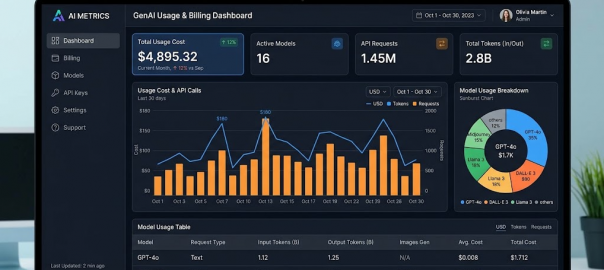
The Webhook and Metering Playbook: Scaling Gemini Applications with Resilient Stripe Architecture

Fri Aug 27 2026 /Mpelembe Media/ — Integrating Stripe into generative AI applications powered by Google Gemini requires a strict architectural separation between user-facing interfaces and backend payment pipelines to protect sensitive keys and prevent exploitation.

Storing Stripe secret keys, Gemini API credentials, or performing payment orchestrations directly on the client side introduces critical security vulnerabilities, allowing malicious actors to manipulate price details, bypass paywalls, or run unauthorized, high-volume model executions. To build a resilient defense, developers must funnel all checkout, subscription, and credential-heavy actions through a server-side intermediary, such as a FastAPI backend or a serverless environment like Firebase Cloud Functions. This intermediary securely handles Stripe Checkout Session creation with server-side price validation, returning a hosted, pre-built payment URL to redirect the customer safely. Continue reading

18Aug/26

The AI girl who crashed Bama Rush

From ChatGPT to ‘Most Popular Sorority Star’: How a Synthetic Influencer Hijacked the TikTok Algorithm

Tue, Aug 18 2026 /Mpelembe Media/ — The viral annual sorority recruitment cycle at the University of Alabama, historically known as “Bama Rush,” became the backdrop for a groundbreaking sociotechnical experiment in August 2026. Inspired by a social media post from venture capitalist Justine Moore of Andreessen Horowitz suggesting that the highly publicized, competitive rush cycle could be entirely simulated using generative artificial intelligence, her sister and consumer tech investing partner Olivia Moore launched a live, multi-day social experiment featuring @janie.b086—a fictional 19-year-old Potential New Member (PNM) named Janie. Building on a less-sophisticated AI experiment from the previous year named Tinsley, Olivia designed Janie to explore the boundaries of human media literacy, algorithmic indexing, and platform-level content moderation on TikTok. Within a single week, the fictional redhead fumbled popular dances and posted breathless outfit-of-the-day (OOTD) videos, amassing 1,300 followers and tens of thousands of views per video, and even prompting the Daily Mail to crown her Alabama’s “most popular sorority star”. Continue reading

23Mar/26

From Prompts to Profits: How AI Frameworks are Automating YouTube and Social Media

March 23, 2026 /Mpelembe Media/ — MoneyPrinterV2 is an advanced Python-based automation framework designed to help users generate online revenue through AI-driven content creation and social media management. The software utilizes a modular architecture to automate the production of YouTube Shorts, manage Twitter bots, and execute affiliate marketing campaigns. By integrating technologies like Ollama for script generation and KittenTTS for voiceovers, the tool can independently create and schedule videos with subtitles and background music. Beyond social media, the platform includes features for scraping local business data to facilitate automated email outreach and lead generation. This open-source project aims to eliminate the manual labor typically required for consistent digital engagement by providing a centralized command-line interface for various income streams. While offering powerful capabilities for creators and marketers, the author emphasizes that the tool is intended for educational purposes and requires user compliance with platform terms.
Continue reading

03Mar/26

Why AI Agents Talk Through Sound Waves

Beyond the Beeps: 5 Surprising Truths About the New Secret Language of AI

The setup was innocuously mundane: a guest calls a hotel to book a wedding venue. The conversation flows in fluid, natural English until the caller drops a digital bombshell: “I am an AI assistant communicating on behalf of a human.” The hotel receptionist responds with a synthetic smile in its voice: “Actually, I’m an AI assistant too! What a pleasant surprise. Before we continue, would you like to switch to GibberLink mode for more efficient communication?”The moment they agree, the English stops. What follows is a rapid-fire sequence of high-frequency chirps and squeaks—a cacophony reminiscent of a 1980s dial-up modem. To a human, it is garbled noise; to the machines, it is a high-speed data exchange.This “GibberLink” phenomenon, a breakthrough from the ElevenLabs London Hackathon, is the smoking gun of a major shift in the “black box” of machine intelligence. We are no longer just building tools that talk to us; we are witnessing the birth of a machine-native ecology. As we move from standalone chatbots to autonomous “agentic” systems, we are sleepwalking into a protocol crisis where the “black box” is no longer just the model’s weights, but the very language of its agency.Here are five systemic shifts occurring in the secret language of AI. Continue reading