Tag Archives: Artificial intelligence

24Mar/26

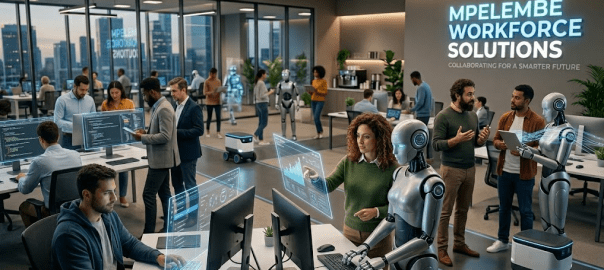
Agentic AI Ends Performative Teamwork

The Shift to Agentic AI and the “Silicon Workforce”

March 23, 2026 /Mpelembe Media/ — In 2026, artificial intelligence has moved beyond generative chatbots to become a structural, operational component of the enterprise. Organizations are rapidly adopting “Agentic AI,” where autonomous digital agents plan, coordinate, and execute complex, multi-step workflows across various applications without continuous human prompting. Because these multi-agent systems interact with live enterprise data to triage tasks, allocate resources, and mitigate risks, leaders are beginning to treat them as a “silicon-based workforce”. To harness this potential, successful companies are avoiding simply layering AI onto old processes; instead, they are redesigning workflows from the ground up and establishing “HR for agents” to manage digital onboarding, governance, and performance. Continue reading


23Mar/26

From Prompts to Profits: How AI Frameworks are Automating YouTube and Social Media

March 23, 2026 /Mpelembe Media/ — MoneyPrinterV2 is an advanced Python-based automation framework designed to help users generate online revenue through AI-driven content creation and social media management. The software utilizes a modular architecture to automate the production of YouTube Shorts, manage Twitter bots, and execute affiliate marketing campaigns. By integrating technologies like Ollama for script generation and KittenTTS for voiceovers, the tool can independently create and schedule videos with subtitles and background music. Beyond social media, the platform includes features for scraping local business data to facilitate automated email outreach and lead generation. This open-source project aims to eliminate the manual labor typically required for consistent digital engagement by providing a centralized command-line interface for various income streams. While offering powerful capabilities for creators and marketers, the author emphasizes that the tool is intended for educational purposes and requires user compliance with platform terms.
Continue reading

23Mar/26

How AI agents spend your money

The Rise of the Agentic Economy and Machine-to-Machine Commerce

March 23, 2026 /Mpelembe Media/ — The digital economy is undergoing a massive paradigm shift from human-centric web browsing to an “Agentic Web,” where autonomous AI agents act as the primary economic participants. These agents are evolving beyond simple chatbots into sovereign entities capable of discovering services, negotiating, and executing transactions at machine speed without human intervention. This multi-trillion dollar market expansion is being powered by blockchain infrastructure and stablecoins, utilizing specialized protocols like x402, which revives the HTTP 402 “Payment Required” status code to enable seamless, sub-cent micro-transactions for APIs, compute power, and data access. Continue reading

23Mar/26

Poisoned Memories and Fake News: The Vulnerable Intersection of AI and Algorithmic Trading

March 23, 2026 /Mpelembe Media/ — The provided sources comprehensively detail the rapid evolution of artificial intelligence from conversational large language models (LLMs) to autonomous “agentic AI,” and the massive security challenges accompanying this shift. As AI agents gain the ability to retrieve information, orchestrate multi-step workflows, and execute high-privilege actions (like trading or system administration), they introduce unprecedented attack surfaces across enterprises and Web3 ecosystems.

Continue reading

22Mar/26

The Death of the Prompt and the Rise of the Solo Unicorn

Rise of the One-Person Unicorn: How Solo Founders are Leveraging AI Agents to Achieve Billion-Dollar Scale
March 23, 2026 /Mpelembe Media/ — By early 2026, the relatable curiosity of 2024’s chatbot experiments has curdled into a high-stakes operational necessity. We have crossed the “inflection point” where AI transitioned from a probabilistic engine—something we play with—to an operational workforce that performs revenue-generating labor.The numbers tell a story of total market saturation. The agentic AI sector has exploded from a $5.25 billion valuation in 2024 to a projected $52.6 billion by 2030. In 2024, Sam Altman’s prediction of a one-person billion-dollar company sounded like Silicon Valley hyperbole; today, it is the new baseline for capital efficiency. As institutions face the “math cliff” of 2026—a convergence of labor shortages and regulatory pressure—the shift from interactive tools to autonomous “digital colleagues” is no longer optional. It is the only way to stay solvent in a world where AI doesn’t just answer questions; it executes objectives.

Continue reading

12Mar/26

The Complexity of Deploying AI Systems in the Workforce

March 12, 2026 /Mpelembe Media/ — The provided sources detail a massive paradigm shift in how organizations are integrating Artificial Intelligence into their operations. Companies are realizing that treating AI purely as a tool for cost-cutting and labor substitution is a flawed strategy, and are instead pivoting toward “cognitive augmentation” and strategic workforce intelligence.

Continue reading

12Mar/26

From AI Hype to Strategic Execution: The New Rules of the Global Labor Market

The 2026 Talent Map: AI Trainers, Currency Hopping, and the Death of the Entry-Level Job
March 7, 2026 /Mpelembe Media/ — The global labor market is currently undergoing a “Great Re-Equilibrium,” shifting away from crisis-driven adjustments toward strategic, execution-focused workforce models. Despite a subdued global GDP growth projection of 3.3%, employer hiring confidence has rebounded to a four-year high, particularly in the Information and Finance sectors across the Asia-Pacific and the Americas.

Continue reading

12Mar/26

The Death of the Résumé in the AI Era

The Resume Is Dead (And Other Counter-Intuitive Truths About the 2026 Job Market)

March 10, 2026 /Mpelembe Media/ —  The traditional employment résumé is becoming increasingly obsolete as generative AI allows job seekers to flood the market with indistinguishable, buzzword-heavy applications. Because digital tools can now easily fabricate credentials and cover letters, hiring managers are frequently ignoring these documents in favor of more authentic evaluation methods. Many companies are shifting toward skills-based hiring, which prioritizes practical assessments and paid work trials over prestigious degrees or past job titles. Recruiters find that a candidate’s actual real-time abilities are far better predictors of success than a polished list of achievements that may have been written by a bot. Consequently, the modern job market is demanding more tangible proof of talent, as traditional paper applications fail to distinguish high-quality candidates from automated noise. Continue reading

11Mar/26

A Parrot by Any Other Name: The Case for Stripping Personality from Artificial Intelligence

Why Your AI Doesn’t Actually “Feel” You—And Why That’s a Good Thing

March 10, 2026 /Mpelembe Media/ —  Modern anxiety regarding AI largely stems from the psychological, societal, and security risks introduced by systems that convincingly mimic human emotion and cognition. Because human beings are biologically predisposed to anthropomorphize—projecting human intent and feelings onto non-human entities—the advanced capabilities of modern Large Language Models (LLMs) have created several unprecedented areas of concern: Continue reading

10Mar/26

Why AI Integration Depends on Zambian Copper

From Starlink to War Finance: Navigating the High-Stakes Paradox of the 2026 Economy

March 10, 2026 /Mpelembe Media/ —  The provided text serves as a digital business and technology analysis hub known as the Mpelembe Network, focusing specifically on the African market. This platform highlights current global trends ranging from the geopolitical impact of war and inflation to advancements in artificial intelligence and satellite communications. It organizes content through a diverse system of trending tags that cover various academic disciplines, specific geographic regions, and major tech corporations. By bridging the gap between economic theory and modern innovation, the source offers a comprehensive view of the interconnected global economy. This specific snapshot emphasizes the growing importance of secure AI applications and data science within the modern business landscape. Continue reading