

Tag Archives: Regulation of artificial intelligence

21Feb/26

India AI Impact Summit 2026: Shaping Global AI Governance, Securing Massive Investments, and Joining Pax Silica

The Center of Gravity Just Shifted: 5 Surprising Lessons from the India AI Impact Summit 2026

Feb 21, 2026 /Mpelembe media/ — For the past three years, the global conversation surrounding Artificial Intelligence has been dominated by a single, narrow theme: safety. From the  Bletchley Park AI Safety Summit (2023)  to high-level gatherings in  Seoul (2024)  and  Paris (2025) , the focus remained fixed on “existential risk” and theoretical doomsday scenarios. While the West remained paralyzed by the “Alignment Problem,” the Global South has been focused on the “Access Problem.”The  India AI Impact Summit 2026 , held from February 16–21 at  Bharat Mandapam  in New Delhi, decisively shifted the center of gravity. As the first global AI summit hosted in the Global South, the event pivoted from speculative risks to  “Applied AI” —technology deployed today to solve real-world problems. Anchored in the philosophical foundation of the  “Three Sutras” (People, Planet, and Progress) , the summit presented a human-centric alternative to the Silicon Valley narrative, prioritizing inclusive development over elite safety debates. Continue reading

10Feb/26

The Machine Economy Arrives: Autonomous Agents, Stablecoins, and the Global Fiscal Pivot

The Copilot: 6 Surprising Ways the “Agent Economy” is Rewiring Global Finance in 2026 

10 Feb. 2026 /Mpelembe Media  — 2026 represents a structural shift from “assistive” technology to “autonomous” economic actors, underpinned by new U.S. crypto legislation and a global scramble to tax digital value. The Year of the “Agentic” Workforce 2026 is widely cited as “the year of the agent,” marking a transition from AI “copilots” (which wait for instructions) to autonomous “agents” (which act with intent to execute workflows). Continue reading

07Jan/26

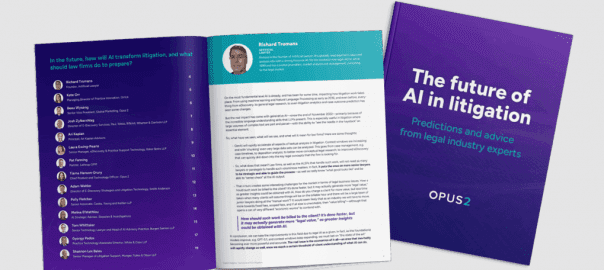
The Future of AI in Litigation

Jan. 6, 2026 /Mpelembe Media/ — This publication gathers expert opinions on how artificial intelligence will revolutionize the legal sector by 2026, focusing on its role in litigation, court preparation, and law firm strategy. While the text highlights that AI will become a strategic asset, it maintains that human legal expertise remains irreplaceable for ethical and defensible outcomes. Artificial intelligence is set to evolve from a simple efficiency tool into a strategic asset, fundamentally altering the entire litigation lifecycle. Continue reading

06Jan/26

Copyright infringement, artist compensation

Jan. 6, 2026 /Mpelembe Media/ — In 2025 and early 2026, the  BBC Talking Business  series and wider BBC reporting have extensively covered the transformative and controversial role of AI in the music industry. Continue reading

01Jan/26

Digital Rights & Algorithmic Transparency

Jan. 1, 2026 /Mpelembe Media/ — In 2026, you are protected by a new generation of laws—specifically Article 86 of the EU AI Act and Article 22 of the UK/EU GDPR. These laws give you a “Right to Explanation” when a “high-risk” AI (the kind used in the AI Economy for jobs, loans, or insurance) makes a decision about you. Continue reading

01Jan/26

Understanding the AI Economy and Digital ID

Jan. 1, 2026 /Mpelembe Media/ — The “Fifth Industrial Revolution” (5IR), is a shift from tools that we control to environments that control themselves. It frames the future not as a collection of gadgets, but as a totalizing system—the “Cathedral”—where the infrastructure itself makes moral and economic decisions. The Dark Industrial Cathedral is built on surveillance, extraction, and algorithmic control. The primary task for 5IR leaders is “engineering ethics into infrastructure” by embedding human values directly into the code. Continue reading

31Dec/25

Beyond Automation: AI as the Operating System of Human Civilisation

Dec. 31, 2025 /Mpelembe Media/ — As of 2025, the global economy is projected to reach approximately $115 trillion, even as it faces a staggering $338 trillion in total debt. Within this landscape, artificial intelligence has emerged as the foundational infrastructure of a Fifth Industrial Revolution, with the AI economy expected to contribute over $15.7 trillion to global GDP by 2030. This technological shift is characterized by the rise of AI sovereignty, where control over data and models defines geopolitical power. While automation and AI agents enhance productivity and business valuations, they also present significant risks regarding cybersecurity and the potential erosion of human identity. Ultimately, society faces a critical choice between using these tools to foster human dignity or allowing them to create a future defined by algorithmic surveillance and control. Continue reading

20Nov/25

UK Corporate Digital Communication: AI Responsibility and Transparency Gaps

A Webranking survey by Comprend assessment details how well the corporate websites of the UK’s largest listed companies meet stakeholder expectations for digital communication and transparency. A major finding is that while UK companies are strong in digital accessibility (with 75% publishing an accessibility statement), they significantly lag in responsible AI disclosure, as only 10% provide a policy or framework for ethical AI use, falling slightly behind the European average. The report notes a “clear gap” between merely discussing AI and demonstrating responsible governance, though sustainability communication is also expanding in scope. Overall, UK companies achieved an average score of 46.4 out of 100 in the ranking, with Coca-Cola HBC being the top scorer, demonstrating consistent strength in financial transparency and cohesive storytelling. The survey underscores the growing pressure on businesses to communicate clearly on complex topics like AI governance and sustainability amid evolving regulatory frameworks. Continue reading

20May/25

Generative AI’s Impact on Software Development: A DORA Perspective

May 20, 2025 /Mpelembe Media/ — This report from DORA explores the impact of generative AI on software development, analyzing both the challenges and opportunities it presents. It examines how AI affects individual developers’ productivity and well-being, finding both benefits and unexpected trade-offs. The document also addresses the organizational perspective, considering how AI influences processes like code quality and delivery speed, while acknowledging a potentially negative short-term impact on delivery performance. Finally, it proposes practical strategies for fostering developer trust, promoting responsible AI adoption, and measuring success within organizations.

Down load the free report

10May/25

REPLY: The jury for the second edition of the Reply AI Film Festival is announced, which will celebrate the best AI-generated short films

Reply, an international group specialized in the development of new business models enabled by Artificial Intelligence and long committed to the exploration of emerging technologies and supporting the growth of new talent, announces the jury for the second edition of the Reply AI Film Festival. Continue reading