Category Archives: Innovation

10Mar/26

Why AI Integration Depends on Zambian Copper

From Starlink to War Finance: Navigating the High-Stakes Paradox of the 2026 Economy

March 10, 2026 /Mpelembe Media/ —  The provided text serves as a digital business and technology analysis hub known as the Mpelembe Network, focusing specifically on the African market. This platform highlights current global trends ranging from the geopolitical impact of war and inflation to advancements in artificial intelligence and satellite communications. It organizes content through a diverse system of trending tags that cover various academic disciplines, specific geographic regions, and major tech corporations. By bridging the gap between economic theory and modern innovation, the source offers a comprehensive view of the interconnected global economy. This specific snapshot emphasizes the growing importance of secure AI applications and data science within the modern business landscape. Continue reading

08Mar/26

Starlink Direct-to-Cell: Global Deployment and Performance Analysis

Your Smartphone’s Next Roaming Partner is 350 Miles Up: 5 Surprising Realities of Starlink’s “Cell Towers in Space”

March 8, 2026 /Mpelembe Media/ — The provided sources examine the emergence and rapid expansion of Direct-to-Cell (D2C) technology, specifically focusing on Starlink’s efforts to provide Supplemental Coverage from Space (SCS). Research highlights that these satellite-based networks allow unmodified 4G LTE smartphones to connect directly to orbiting satellites, effectively eliminating terrestrial dead zones in remote areas like national parks. While initial commercial services in the United States and New Zealand focused on text messaging and emergency alerts, the technology is evolving to support voice, high-speed data, and IoT applications. Significant milestones include Airtel Africa and MTN Zambia partnering with SpaceX to launch services across the African continent, successfully piloting the first satellite-based fintech transactions. Despite technical hurdles like lower signal power and Doppler shifts, regulatory bodies worldwide are modernizing frameworks to accommodate this hybrid orbital-terrestrial model. Ultimately, these sources position D2C as a transformative tool for global digital inclusion, promising near-universal connectivity without the need for traditional ground infrastructure.

How does Starlink’s direct-to-cell technology work with unmodified smartphones?
What are the expected data speeds for satellite-to-mobile services?
How is this technology being used for emergency response and fintech?

Continue reading

28Feb/26

Inside the Silicon Boardroom: A Glimpse into the Alpha Flare Network Dashboard

Syncing with Lord Silicon: 3 Secrets Inside the 2026 Alpha Access Boardroom

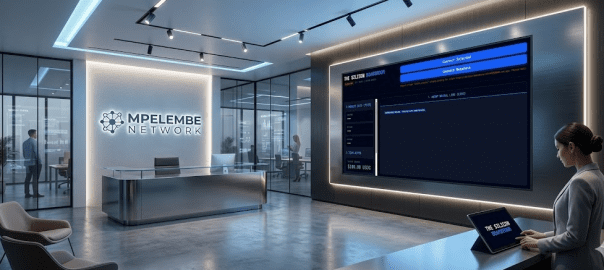
27 Feb. 2026 /Mpelembe Media/ —  The mahogany-clad boardroom is dead; long live the digital node. As we navigate the volatile waters of 2026, the “Silicon Boardroom” has emerged as the definitive venue for a new breed of decentralized organization. This isn’t just a UI update—it’s a fundamental pivot toward “Alpha Access” environments that prioritize automated precision over old-world corporate bureaucracy. Continue reading

19Feb/26

MonetizationOS Launches Free Paywall Infrastructure to Combat Bot-Driven IP Theft

The “Seat” is Dead: 5 Surprising Truths About Monetizing Software in 2026

Feb 19, 2026 /Mpelembe media/ — Most SaaS founders approach their billing infrastructure with the same level of strategic rigor they use to pick lunch: they go with what’s familiar, what’s easy, or what their neighbor recommended. But in 2026, treating billing as a back-office utility rather than a core product feature is a recipe for subsidized growth and eventual insolvency. For a company at $2M in Annual Recurring Revenue (ARR), the cost of this “lunch-pick” mentality is staggering—up to $100,000 lost every year due to billing errors, missed renewals, and failed payments.We have entered a landscape where the “physics of compute” has rewritten the rules of the game. As venture-backed startups navigate a world dominated by AI and usage-driven models, the traditional seat-based license has become a relic. To thrive, founders must move past simple subscription summaries and understand that monetization is now a continuous discipline of research, iteration, and negotiation. Continue reading

02Feb/26

Mpelembe Network: Innovation Through Google Cloud Solutions

02, Feb. 2026 /Mpelembe Media/ — Mpelembe Network is a collaborative community that provides comprehensive Google Cloud deployment, training, integration, and support services to businesses across all sectors. Distinguished by a dedicated social impact arm, the network collaborates with corporate partners and innovators to address global challenges through specific initiatives, such as using AI for patient data analysis at the University Teaching Hospital (UTH) in Zambia, developing educational tools at the University of Zambia (UNZA), and creating sustainable energy solutions. Continue reading

29Jan/26

The Structural Reconfiguration for Agentic AI

Jan. 29, 2026 /Mpelembe Media/ — Thoughtworks introduced their latest Looking Glass report, which outlines necessary structural changes for businesses in the agentic AI era. The report emphasizes that companies must move beyond minor experiments to rewire their core architectures, ensuring that data, platforms, and security are fully integrated to support autonomous intelligence. Key focus areas include modernizing software delivery, transitioning to intent-driven user experiences, and establishing federated data ecosystems that provide real-time information to AI agents. Additionally, the report highlight the importance of computational governance, suggesting that safety and privacy regulations should be built directly into a company’s technical foundation. This overview also mentions the Mpelembe Network, a platform that distributes such technology news and analysis to help leaders navigate rapidly evolving industry trends. Together, these documents serve as a strategic guide for enterprises aiming to maintain architectural integrity while adopting transformative digital innovations. Continue reading

26Jan/26

The “Locked In” Era: Why Silicon Valley Founders are Trading Intimacy for Innovation

Jan. 26, 2026 /Mpelembe Media/ — There is a growing cultural trend where young tech entrepreneurs are intentionally choosing celibacy to maximize their professional output. By adopting a monastic lifestyle, these founders prioritize product development and company growth over romantic relationships or dating. Being “locked in” to their work requires removing the distractions of personal intimacy to remain competitive in Silicon Valley. Ultimately, this movement reflects a radical shift in work-life balance where emotional fulfillment is sacrificed for technological innovation. Continue reading

22Jan/26

Empowering Educators and Students: The Next Generation of AI Integration in Google Classroom

Jan. 22, 2026 /Mpelembe Media/ — Google has announced a series of technological enhancements to its Gemini and Google Classroom platforms to improve the academic experience for both staff and pupils. Students can now access complimentary SAT practice examinations and use sophisticated AI models to generate visual study aids like infographics. For educators, the updates introduce streamlined administrative tools that assist with drafting lesson plans, tracking student engagement, and providing automated feedback. The Classroom interface has been redesigned into an interactive dashboard that highlights upcoming deadlines and essential learning metrics. Furthermore, new multimedia capabilities allow users to integrate audio and video recordings directly into their digital coursework. These innovations aim to personalise learning while reducing the time teachers spend on repetitive organisational tasks. Continue reading

17Jan/26

The Future of Personal AI: A Guide to Gemini’s Cross-App Integration

Jan . 11, 2026 /Mpelembe Media/ — Google has launched Personal Intelligence, a new beta feature that allows users in the United States to link the Gemini AI with various Google applications like Gmail and Photos. By integrating these services, the assistant can provide highly tailored answers by cross-referencing private emails and images to retrieve specific details, such as vehicle information or travel preferences. Users maintain full control over their data, as the feature is disabled by default and allows for the selective connection of specific apps. To protect individual privacy, the AI does not train its core models directly on private libraries; instead, it uses the data only to answer individualised prompts. This update is currently available for AI Pro and Ultra subscribers on mobile and web platforms, with plans for a broader release in the future. The system is designed to be proactive and helpful, though it still requires user feedback to improve its understanding of complex human nuances and relationships. Continue reading

09Jan/26

Intent Recognition (The “Mood” Factor)

Jan. 9, 2026 /Mpelembe Media/ — When we talk about Grok in the context of physical robots (like Tesla’s Optimus humanoid), we aren’t just talking about a chatbot. We are talking about the “brain” that translates digital sentiment into physical action. The reason “mood swings” and sentiment analysis matter for robots is that they move AI from being a calculator to being a collaborator. For a robot to operate safely and naturally around humans, it must “grok” (deeply understand) the emotional context of its environment.  Continue reading