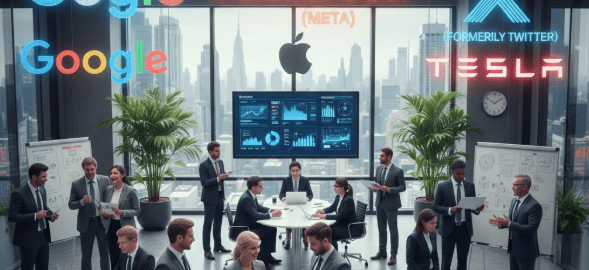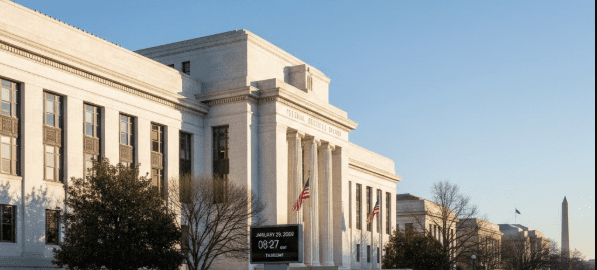

Jan. 1, 2026 /Mpelembe Media/ —These sources collectively examine the multifaceted influence of think tanks as essential intermediaries between complex academic research and practical governmental action. They function as idea brokers that set political agendas, draft legislative blueprints, and provide neutral environments for high-level diplomatic and policy discussions. The documentation categorizes these organizations into academic, advocacy-based, or specialized sectors, illustrating how they utilize media outreach and direct consultation to impact public opinion. Furthermore, the texts highlight the role of these institutes in cultivating future political talent and validating government initiatives to reduce political risk. Modern challenges are also addressed, noting a shift toward financial transparency and active implementation to maintain credibility in polarized climates. Ultimately, the materials present think tanks as vital architects of the global policy ecosystem. Continue reading
Category Archives: Economy
Understanding the AI Economy and Digital ID
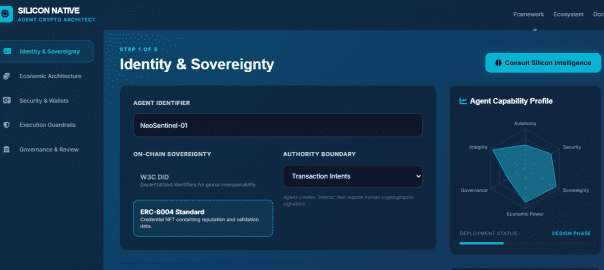
Jan. 1, 2026 /Mpelembe Media/ — The “Fifth Industrial Revolution” (5IR), is a shift from tools that we control to environments that control themselves. It frames the future not as a collection of gadgets, but as a totalizing system—the “Cathedral”—where the infrastructure itself makes moral and economic decisions. The Dark Industrial Cathedral is built on surveillance, extraction, and algorithmic control. The primary task for 5IR leaders is “engineering ethics into infrastructure” by embedding human values directly into the code. Continue reading
Beyond Automation: AI as the Operating System of Human Civilisation
Dec. 31, 2025 /Mpelembe Media/ — As of 2025, the global economy is projected to reach approximately $115 trillion, even as it faces a staggering $338 trillion in total debt. Within this landscape, artificial intelligence has emerged as the foundational infrastructure of a Fifth Industrial Revolution, with the AI economy expected to contribute over $15.7 trillion to global GDP by 2030. This technological shift is characterized by the rise of AI sovereignty, where control over data and models defines geopolitical power. While automation and AI agents enhance productivity and business valuations, they also present significant risks regarding cybersecurity and the potential erosion of human identity. Ultimately, society faces a critical choice between using these tools to foster human dignity or allowing them to create a future defined by algorithmic surveillance and control. Continue reading
Hakainde Hichilema: Zambia’s Leader at the Centre of a Global Superpower Tug-of-War
Dec. 29, 2025 /Mpelembe Media/ — Hakainde Hichilema as been ranked as one of the pre-eminent global leaders of 2025. The Zambian President has successfully positioned his nation as a highly desirable partner amidst the geopolitical competition between the United States and China. High-level diplomatic visits, such as the arrival of the Chinese Premier, underscore the country’s growing strategic importance. Continue reading
Impact of Zambia’s High Living Costs
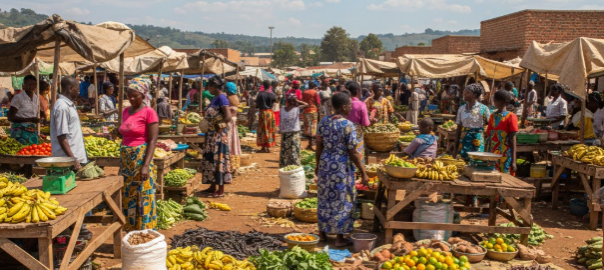
Dec. 26, 2025 /Mpelembe Media/ —In 2025, Zambia’s economic challenges were significantly exacerbated by deep-seated structural rigidities that prevented the country from benefiting from a stable national currency. Even though the kwacha remained stable for a six-month period, these underlying flaws ensured that the cost of living remained high for the average citizen. Continue reading
The $7 Trillion Green Economy: A CEO Blueprint
Dec. 03, 2025 /Mpelembe Media/ — This report highlights key findings from a joint report by the World Economic Forum (WEF) and the Boston Consulting Group (BCG) regarding the immense growth of the global green economy. The document states that this sector has already surpassed $5 trillion and is projected to reach over $7 trillion by 2030, growing faster than every major sector except technology. This economic resilience is supported by substantial cost declines in essential technologies, which now make climate solutions addressing 55% of global emissions cost-competitive. The report also underscores that China is cementing its role as the global leader in green technology through overwhelming investment, innovation, and production capabilities. To assist corporate leaders, the report concludes by providing a “CEO Guide” that outlines strategies for successful growth, focusing on factors like technology maturity and close regulatory shaping. Continue reading
The value of thought. How human-AI collaboration is measured economically
This touches on how large language models (LLMs) operate! tokenization is the fundamental process in natural language processing (NLP) of breaking down raw text into smaller units called tokens, such as words, subwords, or characters. This is a crucial first step that transforms unstructured text into a structured format that machine learning models can process.
Autonomous Economy: Agentic Economy as the Operating System of the Machine Economy
Nov. 22, 2025 /Mpelembe Media/ — We are currently in the foundational or emergence phase of the Autonomous Economy. It is no longer a futuristic concept; it is actively being built and deployed, though the full, ubiquitous vision of a global, self-regulating autonomous economy is still years away.
Many experts compare the current state of the Autonomous Economy to the Internet in the early 1990s—the core technologies and infrastructure are being established, and we are seeing the first truly disruptive commercial applications emerge. Continue reading
S\&P Global: Unlocking Africa’s Economic Potential
S&P Global announced the publication of its “Look Forward: Unlocking Africa” report, which examines the continent’s economic potential. The report highlights how key factors like renewable energy, sustainable finance, capital market development, and infrastructure investment are shaping Africa’s future economic outlook. S&P Global emphasises Africa’s natural resources and young population as catalysts for global growth, while also detailing persistent challenges such as financing gaps and regulatory hurdles. The publication is timed to coincide with the inaugural S&P Global Africa Summit 2025 in Johannesburg, which focuses on advancing Africa’s development through robust financial markets. The overall message stresses the need for sustained global collaboration and innovative policy support to accelerate long-term sustainable development across the continent. Continue reading
Rathbones’ Call for UK Regional Investment and Growth
Rathbones, a major UK wealth management firm produced their report, “Building Prosperity: Five Recommendations for Growth and Investment in the UK.” This analysis highlights that the UK is the most geographically unequal economy in the developed world, with critical under-investment occurring outside of the South-East region. Rathbones urgently calls on the Chancellor to take decisive action in the Autumn Budget to reverse this neglect, citing poor infrastructure, high energy costs, and planning system delays as major hindrances to national economic potential. The firm specifically recommends policy changes across five areas: pensions, business taxation, regional investment, wealth taxation, and property market reform. Continue reading