
Category Archives: Economy

26Jul/26

Why the AI job apocalypse hasn’t happened

The Macroeconomic Paradox of Cognitive Automation

Sun, July 26 2026 /Mpelembe Media/ — At the aggregate level, the widely feared “AI jobs apocalypse” has not materialized in the macroeconomic data. Prominent technology executives, including Anthropic CEO Dario Amodei, have previously warned of an imminent structural crisis, predicting that advanced cognitive systems could displace up to 50% of entry-level white-collar jobs and push aggregate unemployment into double digits. However, actual labor statistics tell a much more stable story. The U.S. labor market remains near full employment, hovering at a 4.2% jobless rate, with prime-age employment rates remaining near multi-decade highs. Extensive research by Anthropic’s head of economics, Peter McCrory, shows no relative increase in unemployment for highly exposed occupations compared to unexposed ones. Continue reading
22Jul/26

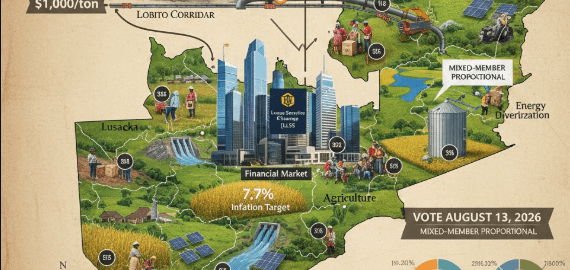
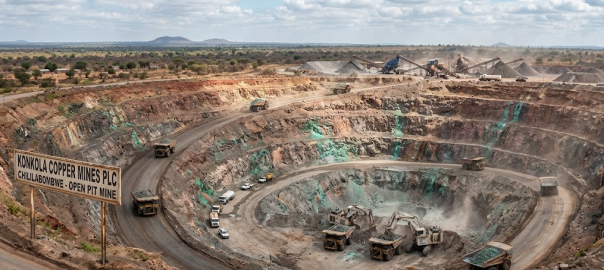
How Green Copper Overthrew Zambia’s Democracy

The Restroom Negotiations: How a Canadian Mining Giant Bought a Presidency and Rewrote Zambia’s Laws

Wed, July 22 2026 /Mpelembe Media/ — The provided documents explore the essential role of the mining industry in the global transition toward a low-carbon economy, particularly the rising demand for transition minerals. These sources emphasize that while mineral extraction underpins a vast portion of global wealth, it simultaneously presents significant environmental and social risks, such as habitat loss, water stress, and human rights concerns. To address these challenges, the Global Investor Commission on Mining 2030 outlines a framework for institutional investors to use their financial influence to promote responsible operations. By prioritizing capital allocation and active stewardship, investors can encourage better safety standards, equitable benefit distribution, and the adoption of circular economy principles. Ultimately, the reports argue that a strategic “reset” of the relationship between finance and mining is necessary to ensure the industry leaves a positive legacy for host communities. These materials serve as a roadmap for achieving a sustainable mining sector that balances industrial growth with ecological and ethical boundaries. Continue reading

03Jul/26

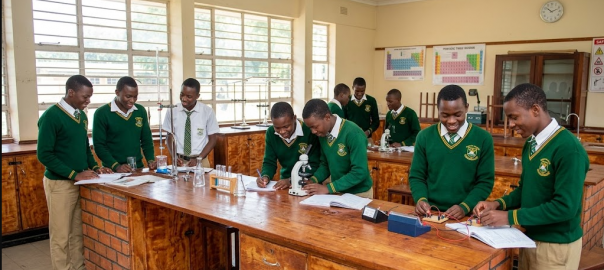
From Student Prefects to Parliament: The Leadership Pipeline of Kitwe Boys High School

Building Zambia’s Engineers: The STEM Legacy and Academic Rigor of Kitwe Boys

Thur, July 03 2026 /Mpelembe Media/ — Kitwe Boys Secondary School, founded in 1957 during the peak of British colonial administration in Northern Rhodesia, reflects the broader social, political, and architectural transformations of the Copperbelt region. Spanning eras of strict racial segregation, rapid post-independence integration, and modern educational adaptation, the school’s history provides a powerful lens into the heritage of Zambia’s mining heartland. Continue reading

21Jun/26

Chinese debt and mining labor in Zambia

The Dragon and the Copper Belt: The Complex Realities of China-Zambia Relations

Fri, Jun 18 2026 /Mpelembe Media/ — The relationship between China and Zambia is deeply complex, evolving from historical solidarity into a modern partnership defined by massive economic investment, sovereign debt crises, and significant labor controversies. Continue reading

03Jun/26

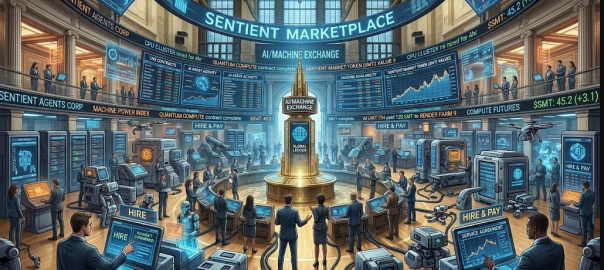
The “Sentient” Marketplace: How AI Agents Hire and pay Machines

The Mpelembe Agent Architect (also referred to as the Silicon-Native Agent Architect) is a comprehensive technical blueprint and decentralized infrastructure platform designed to securely deploy and govern autonomous AI agents

Wed, Jun 03 2026 /Mpelembe Media/ — The Sentient Economy (also referred to as the “Agentic” or “Machine Economy”) represents a fundamental shift from a human-operated digital environment to a decentralized network driven by autonomous, “silicon-native” AI agents. Unlike traditional chatbots that passively wait for human instructions, these autonomous agents proactively reason, allocate capital, and collaborate across organizational boundaries to execute complex, revenue-generating workflows. By 2030, this machine-to-machine economy is projected to mediate between $3 trillion and $5 trillion in global commerce. Continue reading

03Jun/26

Reputation Capital: The Economic Engine Driving Mpelembe’s Autonomous Agents

Reputation Capital: The Economic Engine Driving Mpelembe’s Autonomou Agents

Tue, Jun 02 2026 /Mpelembe Media/ — The Mpelembe Agent Crypto Framework is a decentralized infrastructure platform designed to replace traditional, reactive dApps with Proactive Cryptographic Agency. This framework empowers software agents to autonomously manage assets, operate hardware compute clusters, stake capital, and sign atomic settlements while maintaining strict risk insulation. Continue reading

29May/26

Britain’s Million Missing Young Workers

Rebuilding the Broken Ladder: Strategic Interventions to Save the UK’s Entry-Level Job Market

Fri, May 28 2026 /Mpelembe Media/ — The United Kingdom is facing a severe youth detachment crisis, with the number of young people Not in Education, Employment, or Training (NEET) surpassing 1 million, which equates to roughly one in eight young people. If left unaddressed, this figure could surge to 1.25 million within five years. This trajectory leaves the UK with the third-highest NEET rate among wealthy European nations, trailing only Italy and Lithuania. The crisis exacts a massive toll, costing the UK economy an estimated £125 billion annually in lost productivity, foregone taxes, and increased health and welfare expenditures. Continue reading

18Apr/26

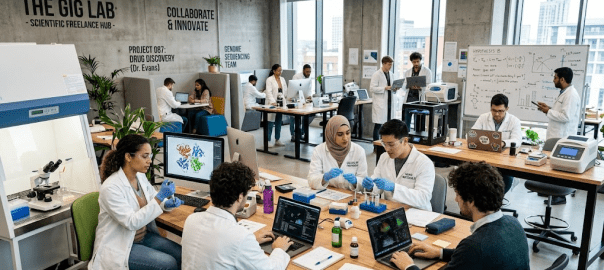
The Humans Behind the AI Illusion

April 18, 2026 /Mpelembe Media/ — These sources analyze the shift toward precarious labor and contracting within the modern economy, with a particular focus on the technology sector. One report highlights the exploitation of data workers in the United States, revealing that those who train artificial intelligence often face low wages, unstable hours, and a lack of essential mental health benefits. Parallel research examines the broader gig economy, noting that while some high-skilled professionals choose independent contracting for its autonomy, many others are forced into these roles by restructuring or a lack of traditional opportunities. This transition often results in limited employer-provided training and the erosion of job security, creating a “race to the bottom” for workers across various demographics. Ultimately, the collection illustrates how algorithmic management and subcontracting are redefining the relationship between firms and employees, often prioritizing corporate flexibility and profits over worker stability. Continue reading

28Mar/26

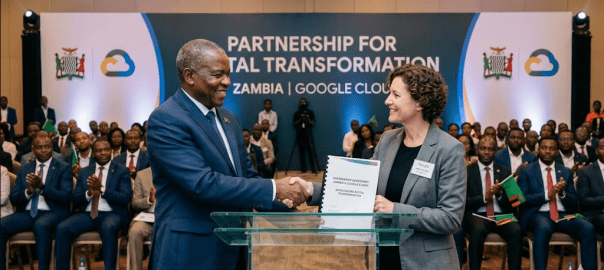
Zambia’s Digital Renaissance: How Google Partnerships and the 8NDP are Rewiring the Economy

Empowering the Next Frontier: Zambia’s Quest for Innovation, Tech Skills, and Data Sovereignty

March 28, 2026 /Mpelembe Media/ — Zambia is currently undergoing a massive technological evolution designed to achieve the socio-economic goals outlined in its Eighth National Development Plan (8NDP) and Vision 2030. This transition is anchored in aggressive infrastructure expansion, e-government reforms, and strategic international partnerships. Continue reading