
James Lovelock, the maverick scientist and inventor, died surrounded by his family on July 27 2022 – his 103rd birthday. Jim led an extraordinary life. He is best known for his Gaia hypothesis, developed with the brilliant US biologist Lynn Margulis in the 1970s, which transformed the way we think of life on Earth.
Tag Archives: Creative Commons
Revealed: untold story of the CIA/Stasi double agent abandoned after 22 years of service
Eleni Braat, Utrecht University and Ben de Jong, Leiden University
I was naked, tied to a hard chair with handcuffs. Three or four burly fellows in uniform are standing around me, one of them behind me with a truncheon… ‘Sie sind ein Verräter! [You are a traitor!],’ they snap.
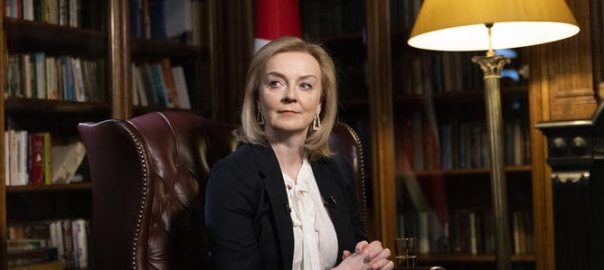
Rishi Sunak or Liz Truss? Polling shows party members want her – but the wider voting public would choose him
Paul Whiteley, University of Essex
Rishi Sunak and Liz Truss are the final two candidates chosen to go head-to-head in the battle to become the next leader of the Conservative party and, therefore, the next prime minister of the UK.
Monkeypox: World Health Organization declares it a global health emergency – here’s what that means
Paul Hunter, University of East Anglia
The World Health Organisation (WHO) has declared the current monkeypox epidemic a global health emergency.
Debunking the myth of the ‘evil people smuggler’
Yvonne Su, York University, Canada and Corey Robinson, Durham University
In 2022, the number of forcibly displaced people surpassed 100 million worldwide. Nearly 1.5 million refugees will need resettlement in 2022, but less than one per cent of refugees will be resettled.
Love Island’s Tasha is the show’s first deaf contestant – here’s what you should know about deaf accents
I sat down to watch the first episode of this year’s Love Island with my daughter as I was told that there was a deaf contestant appearing on the show. I don’t usually watch Love Island, but as a deaf person I was intrigued to find out more about how this contestant, Tasha Ghouri, would handle being the only deaf person on the show.
Depression is probably not caused by a chemical imbalance in the brain – new study
Joanna Moncrieff, UCL and Mark Horowitz, UCL
For three decades, people have been deluged with information suggesting that depression is caused by a “chemical imbalance” in the brain – namely an imbalance of a brain chemical called serotonin. However, our latest research review shows that the evidence does not support it.
Boris Johnson: a terminal case of hubris syndrome
As Boris Johnson barricades himself in Number 10, apparently unwilling or unable to listen to the advice of close party colleagues who are calling on him to resign, how can we understand this bizarre melodrama?
As I watched Johnson’s appearance in front of the House of Commons Liaison Committee on the afternoon before his showdown with key members of his cabinet, I couldn’t help but wonder if there was a deeper malady at play. It was as if an existential disconnect had settled across the comfortingly boring committee room.
Higgs boson: ten years after its discovery, why this particle could unlock new physics beyond the standard model
Martin Bauer, Durham University and Stephen Jones, Durham University
Ten years ago, scientists announced the discovery of the Higgs boson, which helps explain why elementary particles (the smallest building blocks of nature) have mass. For particle physicists, this was the end of a decades-long and hugely difficult journey – and arguably the most important result in the history of the field. But this end also marked the beginning of a new era of experimental physics.
Four ways to stop thinking the worst will happen when you’re stressed
Patricia Riddell, University of Reading
Imagine you have an interview for a new job tomorrow. Some people might think about what kind of questions they will be asked so that they can prepare, or imagine the interview going well. For others, the thought of an interview will cause them to toss and turn all night thinking of every worst case scenario possible – no matter how outlandish these may be. If you’re someone who has a tendency to do the latter, you are prone to catastrophising.