April 1, 2026 /Mpelembe Media/ — Vionde Studio represents a category of bespoke, cloud-native AI solutions—typically hosted on platforms like Google Cloud Run—that function as centralized command hubs for deploying custom AI agents. Its primary goal is to prioritize the preservation of human “soul,” voice, and intention through sophisticated technical workflows, avoiding the generic, flat content often produced by traditional AI. Continue reading
Category Archives: Business
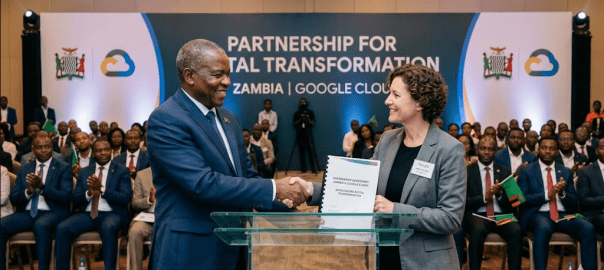
Zambia’s Digital Renaissance: How Google Partnerships and the 8NDP are Rewiring the Economy
Empowering the Next Frontier: Zambia’s Quest for Innovation, Tech Skills, and Data Sovereignty
March 28, 2026 /Mpelembe Media/ — Zambia is currently undergoing a massive technological evolution designed to achieve the socio-economic goals outlined in its Eighth National Development Plan (8NDP) and Vision 2030. This transition is anchored in aggressive infrastructure expansion, e-government reforms, and strategic international partnerships. Continue reading
The Neuroscience of Doing Nothing: How Strategic Stillness Fuels Creative Genius
March 26, 2026 /Mpelembe Media/ — The Illusion of Busyness vs. The Power of Deep Work The modern workplace is plagued by “productivity theater” or “fauxductivity,” where employees prioritize visible activity over meaningful output. Research identifies this as “Dramaturgical Work Behavior” (DWB), where workers consciously perform tasks to look busy—such as sending late-night emails or constantly rearranging files—merely to signal compliance and protect their status. This is driven by organizations that reward “passive face time” and speed rather than actual results. To combat this, experts advocate for Deep Work: distraction-free concentration that pushes cognitive capabilities to their limit and produces true value. Transitioning away from shallow, performative tasks requires setting strict boundaries, implementing a “strategic no,” and embracing “career minimalism” or “slow business” to prioritize sustainable, high-quality output over frantic activity. Continue reading
Agentic AI Ends Performative Teamwork
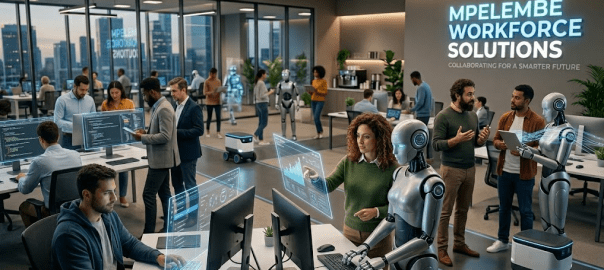
The Shift to Agentic AI and the “Silicon Workforce”
March 23, 2026 /Mpelembe Media/ — In 2026, artificial intelligence has moved beyond generative chatbots to become a structural, operational component of the enterprise. Organizations are rapidly adopting “Agentic AI,” where autonomous digital agents plan, coordinate, and execute complex, multi-step workflows across various applications without continuous human prompting. Because these multi-agent systems interact with live enterprise data to triage tasks, allocate resources, and mitigate risks, leaders are beginning to treat them as a “silicon-based workforce”. To harness this potential, successful companies are avoiding simply layering AI onto old processes; instead, they are redesigning workflows from the ground up and establishing “HR for agents” to manage digital onboarding, governance, and performance. Continue reading
How AI agents spend your money
The Rise of the Agentic Economy and Machine-to-Machine Commerce
March 23, 2026 /Mpelembe Media/ — The digital economy is undergoing a massive paradigm shift from human-centric web browsing to an “Agentic Web,” where autonomous AI agents act as the primary economic participants. These agents are evolving beyond simple chatbots into sovereign entities capable of discovering services, negotiating, and executing transactions at machine speed without human intervention. This multi-trillion dollar market expansion is being powered by blockchain infrastructure and stablecoins, utilizing specialized protocols like x402, which revives the HTTP 402 “Payment Required” status code to enable seamless, sub-cent micro-transactions for APIs, compute power, and data access. Continue reading
Zambia’s Debt Deal and Human Survival
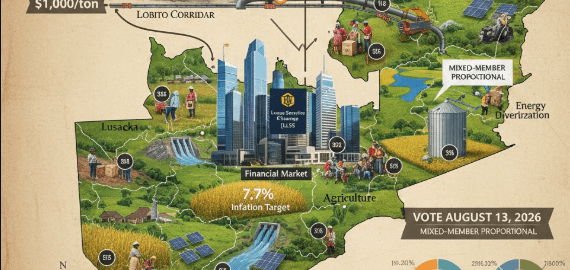
The Zambia Paradox: Can a 92% Debt Restructuring Survive the ‘Rule by Terror’?
The perspective on the socio-political and economic environment in Zambia is a 2026 Pre-Budget Survey Report produced by KPMG and the UNDP, which gathers insights from local businesses to influence national fiscal policy. It highlights how inflation, currency volatility, and high utility costs have pressured corporate profitability, while advocating for sustainable development goals and debt restructuring. Continue reading
Mind the Gap: How the Midlife MOT Aims to Keep Older Workers in the Labour Market
The 2026 Retirement Reckoning: 5 Impactful Realities of the UK’s New Pension Landscape
March 21, 2026 /Mpelembe Media/ — We are currently navigating a “demographic paradox” that threatens the very foundation of the British social contract. For decades, the logic of pension policy was simple: as we lived longer, we worked longer. But that trajectory has hit a wall. While the government continues to push retirement further into the horizon, our actual gains in longevity have begun to stall—and in some cases, retreat.April 2026 represents a “Triple-Uprating” stress test for the UK. It is the month where a new State Pension age phase-in, a CPI-linked benefit rise, and the “booster” effects of the Universal Credit Act 2025 all converge. As a strategist, I view this month not merely as a fiscal transition, but as a fundamental shift in responsibility from the State to the individual.Here are the five essential realities of the 2026/27 landscape that every worker and saver must navigate. Continue reading
Protecting Brands in Zambia: Powerful Customs Measures and New Arbitration Avenues
March 12, 2026 /Mpelembe Media/ — The African Regional Intellectual Property Organization (ARIPO) serves as a collaborative hub for 22 member nations to streamline the protection of patents, trademarks, and industrial designs through centralized protocols like the Harare Agreement. While ARIPO facilitates cross-border registration via digital tools and online gazettes, nations such as Zambia maintain their own robust legal frameworks, including the Industrial Property Act of 2017. Managed by PACRA, Zambia’s domestic system is currently transitioning to mandatory online trademark filings to improve administrative efficiency and align with international standards. Despite these modernizing efforts, experts argue for deeper regional integration within the Southern African Development Community (SADC) to better address public health and traditional knowledge. Current assessments, such as the Global Innovation Index, show that while Zambia shows strength in infrastructure, it still faces challenges in translating investments into high-level innovation outputs. Regional cooperation remains a vital strategy for these developing economies to pool limited resources and foster a predictable environment for global investors. Continue reading
The Complexity of Deploying AI Systems in the Workforce
Visa vs. Mastercard: The High-Stakes Battle for the Future of Programmable Money
Defending the Rails: How Mastercard’s Multi-Token Network is Countering the $27 Trillion Stablecoin Threat