
Category Archives: Business

30Jul/26

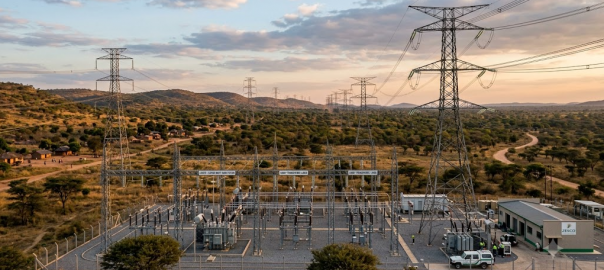
Southern Africa is breaking energy monopolies

Zambia’s 2024 Open Access Reforms: A Catalyst and Testing Ground for Regional Energy Liberalization

Thu, July 30 2026 /Mpelembe Media/ — The electricity supply industries in Southern Africa are undergoing a major structural shift, transitioning from vertically integrated, state-dominated monopolies toward decentralized and competitive wholesale power markets. This transformation is largely driven by persistent power deficits, climate-induced hydropower shortages, and the soaring energy demands of the region’s mining sectors. Continue reading

29Jul/26

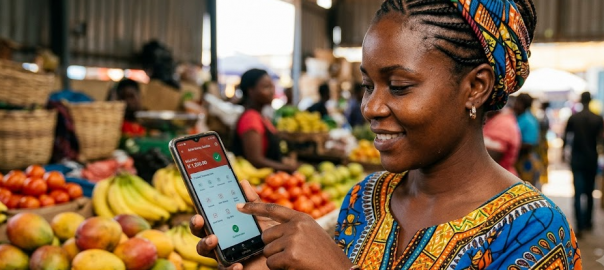
Zambia’s massive leap into digital finance

Navigating Zambia’s Digital Payment Landscape

Wed, July 29 2026 /Mpelembe Media/ — The Zambian digital payment ecosystem historically struggled with severe fragmentation, relying heavily on bilateral agreements between financial institutions and routing domestic card transactions through expensive international networks. To address these structural inefficiencies and lower the cost of domestic electronic payments, the Bank of Zambia, the Bankers Association of Zambia, and the Zambia Electronic Clearing House Limited initiated the National Financial Switch project in 2013. The system was designed as a shared public utility to interconnect various payment streams, including automated teller machines, point-of-sale systems, and mobile money platforms, thereby eliminating the need for institutions to build and maintain costly bilateral connections. Continue reading

29Jul/26

Why Zambia’s Digital Rails Need Routine

Zambia’s Digital Payment Landscape: Bridging the Gap from Rails to Routine

Wed, July 29 2026 /Mpelembe Media/ — Zambia has made remarkable strides in expanding financial access, achieving a financial inclusion rate of 80.1% by 2025, a significant increase from 69.4% in 2020. A cornerstone of this progress is the National Financial Switch (NFS), a shared infrastructure that connects banks, payment service providers, fintechs, and mobile money operators. By facilitating wallet-to-bank, bank-to-wallet, and merchant transactions, the NFS eliminates the need for institutions to build expensive bilateral connections. However, despite these foundational achievements, Zambia faces a critical new challenge: transitioning these digital “rails” into an affordable, trusted, and everyday routine for its citizens. Continue reading

29Jul/26

ASML panic and AI circular funding

Historic Tech Plunge: Asian Markets Tumble Amid Fears of Unsustainable AI Spending and New Chinese Rivals

Wed, July 29 2026 /Mpelembe Media/ — The summer of 2026 witnessed a profound global market recalibration as major technology and semiconductor stocks faced a severe sell-off, pushing the tech-heavy Nasdaq-100 index into correction territory. This downturn reflected a fundamental shift in investor sentiment, moving from speculative optimism surrounding artificial intelligence to a rigorous demand for tangible monetization and balance sheet stability. The correction was not triggered by a singular event, but rather by a confluence of escalating capital expenditures, systemic credit risks tied to circular financing, and significant geopolitical shifts in the Asian semiconductor supply chain. Continue reading

29Jul/26

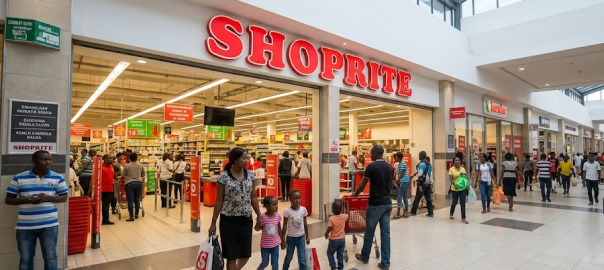
How Shoprite Became Africa’s Operating System

The Digital Integration and Social Evolution of African Retail: An Analysis of Mobile Wallet Adoption and Community Impact

Wed, July 29 2026 /Mpelembe Media/ — The landscape of retail in Africa is undergoing a profound transformation, characterized by the rapid digitization of payment ecosystems and a deep, institutional commitment to social impact. Driven by high mobile penetration and the need for inclusive financial services, retailers are rethinking traditional commercial infrastructures to better serve unbanked populations. A leading example of this dual evolution is observed in Zambia, where Shoprite Holdings has seamlessly integrated mobile wallet payments into its point-of-sale systems while simultaneously expanding its extensive community resilience programs. Continue reading

29Jul/26

The $20 Billion FIFA Civil War

Selling the Soul of Soccer: UEFA Threatens Boycott Over FIFA’s Private Equity Push

Tue, July 28 2026 /Mpelembe Media/ — The international football landscape is currently facing an unprecedented institutional fracture driven by a highly controversial commercialization proposal from FIFA. At the center of the debate is FIFA’s strategic plan to establish a semi-private commercial subsidiary named FIFA Forward Enterprise (FFE), which would consolidate the management of commercial rights—including broadcasting, sponsorships, ticketing, and licensing—alongside the operational delivery of major tournaments like the men’s and women’s World Cups. By selling a minority, non-controlling equity stake of approximately 20 to 21 percent to private investors, FIFA aims to raise up to $4.2 billion, basing the transaction on an initial corporate valuation of $20 billion. Continue reading

27Jul/26

Why we hunt monsters and failed startups

The Anatomy of Monomania: Why We Soul-Settle and Suffer for Our “White Whales”

Mon, July 27 2026 /Mpelembe Media/ — This analysis explores the intersection of biography, media criticism, and the material culture of corporate failure. One primary text provides an in-depth review of Walter Isaacson’s biography of Albert Einstein, focusing on the physicist’s unique creative process and the tragic history of his son’s mental illness. Another review critiques the unconventional documentary Zodiac Killer Project, which examines the formulaic nature of the true-crime genre through the lens of a failed film production. Complementing these are accounts of bird watching as a psychological pursuit and a discussion among collectors of “fucked company” swag. This latter community values authentic artifacts from collapsed or fraudulent entities like Theranos and Enron as tangible reminders of human hubris and historical mismanagement. Together, these sources highlight how society documents and remembers extraordinary lives, notorious crimes, and industrial catastrophes. Continue reading

26Jul/26

Why the AI job apocalypse hasn’t happened

The Macroeconomic Paradox of Cognitive Automation

Sun, July 26 2026 /Mpelembe Media/ — At the aggregate level, the widely feared “AI jobs apocalypse” has not materialized in the macroeconomic data. Prominent technology executives, including Anthropic CEO Dario Amodei, have previously warned of an imminent structural crisis, predicting that advanced cognitive systems could displace up to 50% of entry-level white-collar jobs and push aggregate unemployment into double digits. However, actual labor statistics tell a much more stable story. The U.S. labor market remains near full employment, hovering at a 4.2% jobless rate, with prime-age employment rates remaining near multi-decade highs. Extensive research by Anthropic’s head of economics, Peter McCrory, shows no relative increase in unemployment for highly exposed occupations compared to unexposed ones. Continue reading

24Jul/26

Boxing training against digital manipulation

Inside the Rhetorical Sparring Ring: UBUNK’s Plan to Knockout Online Nonsense

Fri, July 24 2026 /Mpelembe Media/ — The core philosophy and mission behind the UBUNK platform center on actively confronting falsehoods and proving oneself as a “heavyweight truth-teller”. It embraces a rigorous, arena-like environment where users are invited to “Step into the arena” and “Knockout the nonsense,” using the metaphor of a gym to emphasize the active and potentially competitive nature of seeking and defending the truth. Continue reading

22Jul/26

How Green Copper Overthrew Zambia’s Democracy

The Restroom Negotiations: How a Canadian Mining Giant Bought a Presidency and Rewrote Zambia’s Laws

Wed, July 22 2026 /Mpelembe Media/ — The provided documents explore the essential role of the mining industry in the global transition toward a low-carbon economy, particularly the rising demand for transition minerals. These sources emphasize that while mineral extraction underpins a vast portion of global wealth, it simultaneously presents significant environmental and social risks, such as habitat loss, water stress, and human rights concerns. To address these challenges, the Global Investor Commission on Mining 2030 outlines a framework for institutional investors to use their financial influence to promote responsible operations. By prioritizing capital allocation and active stewardship, investors can encourage better safety standards, equitable benefit distribution, and the adoption of circular economy principles. Ultimately, the reports argue that a strategic “reset” of the relationship between finance and mining is necessary to ensure the industry leaves a positive legacy for host communities. These materials serve as a roadmap for achieving a sustainable mining sector that balances industrial growth with ecological and ethical boundaries. Continue reading