Category Archives: Business

02Oct/26

Google Quietly Tests AI Payouts for Publishers

Small and Mid-Sized Publishers Join Google Pilot to Monetize Content Used in Gemini

Fri 02 Oct 2026 /Mpelembe Media/ — Google
has quietly rolled out an “AI contribution pilot” that pays web publishers when their material significantly informs AI-generated answers across Gemini, AI Overviews, and AI mode. Accessible directly within Google Search Console, the program adds an AI earnings widget displaying a monthly payout, though Google keeps the specific calculation methods undisclosed in what industry insiders describe as a “black box”. Unlike earlier high-profile lump-sum deals negotiated with major news organizations, this pay-per-value scheme reaches a broader group of small and mid-sized publishers seeking new revenue streams as traditional search referral traffic declines. While participating publishers appreciate the open dialogue and the establishment of a precedent for AI content compensation, critics caution that early returns are minimal and argue the initiative functions primarily as a strategic hedge to reduce Google’s legal, regulatory, and reputational risks. Continue reading →

20Sep/26

XRP Powers Stripe’s New Payment Standard

Ripple Connects XRP Ledger to Stripe via Machine Payments Protocol

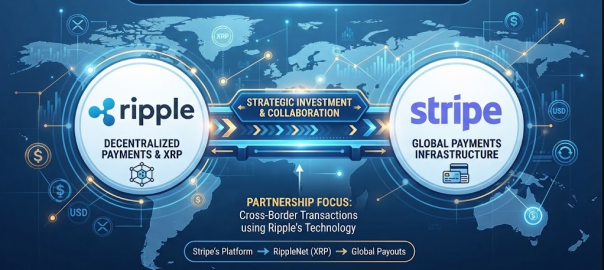
Sun 20 Sept 2026 /Mpelembe Media/ — The XRPL AI Starter Kit version 1.1 serves as the software framework enabling this connection by adding support for both the Machine Payments Protocol (MPP) and the Open Wallet Standard. Originally launched in June, this updated developer resource incorporates MPP—a protocol co-authored by Stripe and Tempo, a payment-focused blockchain that launched its mainnet in March. Continue reading →

14Sep/26

The Shadow Market for Social Housing

The £2 Million Shortcut: Inside the Scam Rigging London’s Social Housing

In London, a city where the wait for a stable home is measured in decades rather than years, desperation has a market price. For a family of seven packed into a damp, one-bedroom flat in Tower Hamlets, the official “bidding” system feels less like a ladder and more like a treadmill. But what if there was a way to jump the queue? What if a few thousand pounds could buy the keys that twenty years of waiting could not?This isn’t a hypothetical. It is the grim reality behind  Operation Chandrila , a massive criminal investigation that has pulled back the curtain on a £2 million conspiracy. It is a story of “gatekeeper” corruption, social media predators, and a system so broken that authorities are now offering a “no questions asked” amnesty to people living in stolen homes just to get the keys back. Continue reading →

13Sep/26

The Radical Innovation of 1980s Pop Culture

Studio Alchemy and the Technological Architecture of the 1980s

Sun 13 2026 /Mpelembe Media/ —The sonic landscape of 1980s pop music was fundamentally reshaped by studio experimentation and technological breakthroughs, most famously exemplified by the discovery of gated reverb. In late 1979 at Virgin’s Townhouse Studios in London, during sessions for Peter Gabriel’s third solo album, drummer Phil Collins was instructed to play without cymbals while experimenting with rhythms for the song “Intruder”. Recording engineer Hugh Padgham accidentally activated the Solid State Logic (SSL) 4000 console’s heavily compressed reverse-talkback listen microphone hanging in the reflective “Stone Room”. The resulting explosive room ambience was gated and triggered by the close-mic drum signal, causing the dense reverberation to slam shut into immediate silence the moment the signal dropped. This artificial, punchy drum sound became the signature acoustic signature of the decade, catapulted into mainstream culture by Phil Collins’ “In the Air Tonight” and subsequently emulated via digital hardware like the AMS RMX16 processor. The technique defined 1980s pop production and has experienced periodic modern revivals by contemporary artists such as Haim, Lorde, and Beyoncé. Continue reading →

12Sep/26

The Evolving Taxonomy of Moral Agency

The Architecture of Agency: A Comparative Report on Moral Subjectivity and Responsibility

1. Introduction: The Evolving Taxonomy of Moral Agency

As autonomous systems, complex corporate structures, and new insights into animal ethology challenge our traditional ethical boundaries, the strategic importance of defining “moral agency” has never been greater. For centuries, the domain of moral participation was reserved almost exclusively for the human rational agent. However, as non-human entities increasingly occupy roles of significant social and ethical consequence—ranging from AI-driven healthcare diagnostics to the legal personhood of corporations—we must move beyond a species-centric model. To maintain a functional moral community, we must examine the specific functional requirements that allow an entity to participate in moral life, regardless of its biological or structural origin.The “Orthodox View” of moral agency traditionally rests on three pillars: the capacity to distinguish right from wrong, the ability to make autonomous choices, and the liability to be held accountable for those actions. Under this framework, an agent is not merely an object of concern (a moral patient) but a participant capable of being praised or blamed. As we shall see, this benchmark remains the foundation upon which all other comparative frameworks are built, though the boundaries are increasingly porous. Continue reading →

12Sep/26

How Military Generals Run Zambian Agribusiness

Thu Sep 10 2026 /Mpelembe Media/ — Brigadier General Laston Chabinga served as a flag officer in the Zambia Army, holding executive command of the 3 Infantry Brigade headquartered in Ndola, the administrative and industrial hub of the Copperbelt Province. As active Brigade Commander around March 2017, he directed the military’s strategic and operational envelope across critical regional defense and economic corridors. Continue reading →

09Sep/26

The Human Cost of Administrative Failure

Modernizing Judicial Operations Through Centralized Digital Intelligence

Wed Sep 09 2026 /Mpelembe Media/ — TrackFlow serves as a unified digital judicial intelligence platform that replaces fragmented case registries and paper-reliant court processes with a multi-tenant cloud workspace. The system centralizes case docketing, chronological timeline monitoring, administrative scheduling, and security auditing into a single digital architecture designed to reduce procedural delays and pre-trial detention risks. An automated scheduling engine coordinates judicial panels, stenographers, security teams, and certified language interpreters, cutting administrative workloads by up to forty-two percent while enforcing cryptographically signed digital audit trails for all calendar updates, invoice approvals, and system modifications. Continue reading →

03Sep/26

The Multi-Trillion Dollar Machine Economy

Sentient Marketplace: How Mpelembe Network Pioneers Decentralized AI Identity and Sovereign Commerce in Zambia

Thu Sep 03 2026 /Mpelembe Media/ — The technology landscape has firmly transitioned from conversational artificial intelligence to autonomous, multi-agent AI networks, representing a major strategic shift where software agents autonomously reason, plan, allocate capital, and collaborate to execute complex workflows. Unlike traditional chatbots that passively wait for human inputs, these autonomous digital workers are increasingly integrated directly into corporate payrolls, with Gartner projecting that 33% of active enterprise software applications will incorporate agentic AI and 15% of day-to-day tasks will be handled autonomously by 2028. However, this rapid shift has exposed a critical trust and payments bottleneck, as traditional online payment networks were architected on the assumption that a human sits at the visual interface to verify intent and manually click “buy”. To bridge this gap, Google and over 60 partner organizations co-developed the Agent Payments Protocol (AP2) to establish an open, payments-agnostic framework that allows any compliant AI agent to transact securely with any compliant merchant globally. Continue reading →

03Sep/26

Wall Street Battles for Digital Plumbing

Wall Street Goes Public: 21 Financial Giants Commit to Joint H1 2027 G7 Stablecoin Launch

Thu Sep 03 2026 /Mpelembe Media/ —Twenty-one of the world’s largest financial institutions have committed to establishing a new operating company in the second half of 2026 to support the issuance of a regulated, reserve-backed digital asset pegged to the U.S. dollar, with a commercial launch targeted for the first half of 2027. The consortium, which includes Wall Street anchors like Goldman Sachs, Bank of America, and Citigroup, as well as European heavyweights like UBS and Deutsche Bank, plans to focus initially on institutional, wholesale, and retail use cases such as cross-border payments and atomic digital asset settlement. The venture represents a significant expansion of an exploratory pilot launched in October 2025 with just ten banks, although certain original participants like Barclays and BNP Paribas have withdrawn from the joint venture. While the consortium plans to eventually expand into other G7 currencies, prioritizing a euro-denominated token next, it stands alongside a highly competitive landscape where JPMorgan Chase has notably chosen to remain independent, focusing instead on its proprietary commercial bank token networks, JPM Coin and Kinexys. Continue reading →

02Sep/26

Newsrooms fight for survival against AI

Ethics in Action: Preserving Human Judgment Amid the Rise of Generative News

Tue Sep 01 2026 /Mpelembe Media/ — The global expansion of artificial intelligence has created a landscape of digital hegemony where standard-setting and economic benefits are heavily concentrated in the Global North, establishing a form of digital extractivism that mirrors historical colonial dynamics. Large technology conglomerates utilize content harvested from global networks to train proprietary models and sell them back as subscriptions. This extraction is accompanied by a severe decline in search referral traffic, which has collapsed by 50% to 60% in critical emerging markets like Brazil, South Africa, and Indonesia. This occurs because conversational search engines summarize copyrighted reporting directly on results pages, bypassing clicks to the original publisher. In response, major nations in the Global South are reframing the AI debate, moving from historical strategies of diplomatic non-alignment directly into the digital realm. Media leaders and policymakers in these regions argue that AI must not be treated as an isolated technical novelty, but as a critical national sovereignty, labor, and industrial policy issue that fundamentally impacts the health of local information environments. Continue reading →