Category Archives: World

08Apr/26

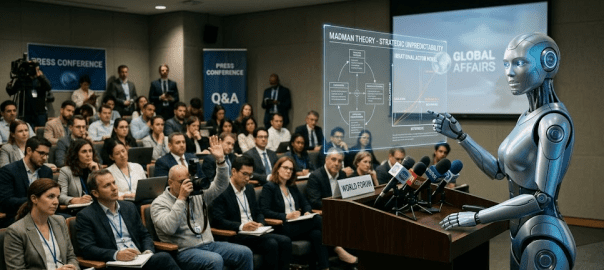
The Economic and Strategic Costs of Cosplaying Madness

Wrecking Ball Diplomacy: How ‘America First’ Tariffs and Transactionalism Alienated the World

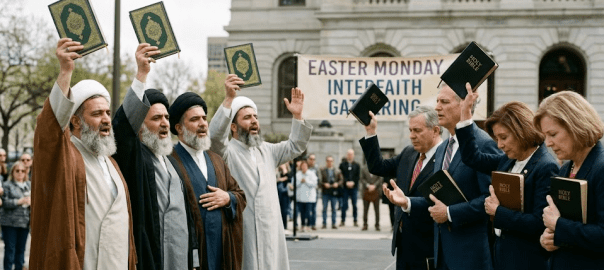
April 8, 2026 /Mpelembe Media/ —  The “Madman Theory” is a concept in international relations suggesting that a leader can gain coercive bargaining leverage by appearing irrational, highly volatile, or indifferent to the costs of conflict. By cultivating a reputation for madness, a leader attempts to make otherwise incredible threats—such as initiating a nuclear war or destroying the global economy—appear credible, thereby forcing adversaries to concede to avoid a catastrophe.
Continue reading

08Apr/26

The Fragile 2026 Iran War Ceasefire

Global Markets Rally as U.S. Halts Operation Epic Fury for Islamabad Negotiations

April 8, 2026 /Mpelembe Media/ — The 2026 war in the Middle East has reached a critical diplomatic turning point following a provisional two-week ceasefire between the United States and Iran, agreed upon on April 7, 2026. The truce, brokered through the mediation of Pakistani officials, was reached less than two hours before President Donald Trump’s deadline to launch devastating strikes against Iranian power plants and bridges. Prior to the agreement, Trump had escalated his rhetoric to unprecedented levels, warning that “a whole civilization will die” if Iran did not reopen the vital Strait of Hormuz to global shipping.

Continue reading

06Apr/26

Why Friction Prevents Escalation

U.S. politicians across the political spectrum have reacted with intense alarm to the President’s recent expletive-laden threats toward Iran, with several questioning his mental fitness for office.

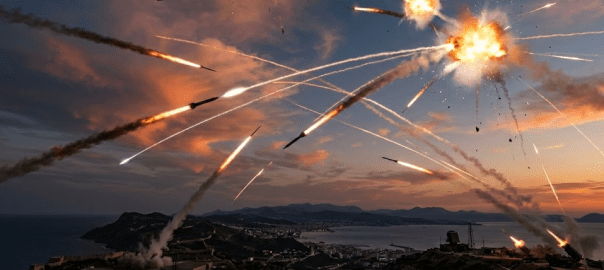
April 6, 2026 /Mpelembe Media/ — The current conflict between the United States, Israel, and Iran began in late February 2026 with joint U.S.-Israeli “preemptive” military strikes on Iran, aiming to either eliminate the country’s nuclear capabilities or force regime change. In retaliation, Iran launched drones and ballistic missiles against Israel, as well as U.S. military targets located in the Gulf States and Jordan. Now in its sixth week, the war has severely destabilized the Middle East, killing over 3,500 people across the region—including more than 1,900 in Iran and 1,400 in Lebanon—while displacing millions. Continue reading

01Apr/26

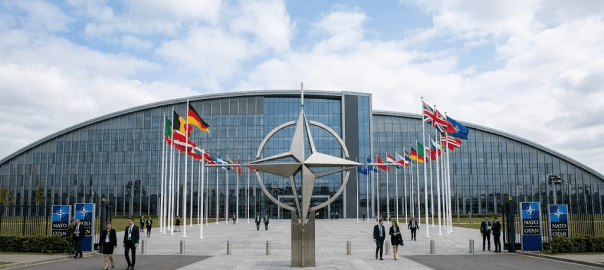
NATO’s secret armies and modern hybrid warfare

Unmasking the Deep State: Cold War Subversion, the P2 Lodge, and Modern Whistleblowers

April 1, 2026 /Mpelembe Media/ — The historical sources detail the emergence of a covert “shadow government” architecture that originated during the Cold War. Initially organized by NATO, the CIA, and MI6 as clandestine “stay-behind” armies (such as Operation Gladio) to mount armed resistance in the event of a Soviet invasion, these networks frequently evolved into instruments of domestic political subversion. Across Western Europe and Turkey, right-wing paramilitary units employed a “strategy of tension,” staging false-flag terrorist attacks to spread public fear, discredit left-wing political movements, and justify authoritarian crackdowns. Prominent examples of this state-sponsored terror include the 1969 Piazza Fontana and 1980 Bologna massacres in Italy, as well as the Brabant massacres in Belgium.

Continue reading

31Mar/26

Institutional Analysis: The P2 Lodge and the Mechanics of the ‘State Within a State’

March 30, 2026 /Mpelembe Media/ — Experts investigate the intersection of clandestine organizations, criminal narratives, and institutional responses in Italian history. They primarily focus on Propaganda Due (P2), a secret Masonic lodge that functioned as a shadow government by infiltrating the highest levels of the military, media, and judiciary to advance a radical right-wing agenda. While some academic analysis explores the organizational criminology and cultural initiation rituals of the ‘Ndrangheta mafia, other materials highlight the fight for justice led by determined women. This anti-mafia effort is exemplified by the 2026 DIA calendar, which honors female activists, journalists, and whistleblowers who challenged mafia culture. Collectively, the texts document a legacy of political corruption, high-level conspiracies like the Bologna massacre, and the ongoing struggle to uphold civil legality against occult powers. Continue reading

28Mar/26

Shadow Governments and Hit Squads: The Weaponization of Masonic Lodges

March 28, 2026 /Mpelembe Media/ —  Organized crime groups, particularly the Calabrian ‘Ndrangheta and the Sicilian Cosa Nostra, have transformed from regional racketeers into sophisticated global enterprises. Central to their modern success is the “submersion” strategy—a tactical move away from overt, bloody violence toward the silent infiltration of the legal economy, public administration, and global financial systems.

Continue reading

27Mar/26

The UN Resolution on Slavery Reparations

UN General Assembly Makes History: Declares Transatlantic Slave Trade the “Gravest Crime Against Humanity”

March 27, 2026 /Mpelembe Media/ — On March 25, 2026, coinciding with the International Day of Remembrance of the Victims of Slavery and the Transatlantic Slave Trade, the United Nations General Assembly adopted a historic resolution declaring the transatlantic trafficking of enslaved Africans and racialized chattel enslavement as “the gravest crime against humanity”. Spearheaded by Ghana and heavily supported by the African Union and Caribbean Community (CARICOM), Resolution A/80/L.48 marks a significant shift in international human rights by calling for a comprehensive framework of reparatory justice.

Continue reading

10Mar/26

How Operation Epic Fury Fractured Iran

The “Epic Fury” Fallout: 6 Takeaways That Are Redefining the Middle East

10 Feb. 2026 /Mpelembe Media/ —  These reports detail a 2026 military escalation involving coordinated U.S. and Israeli air strikes against Iran under the Trump administration. Operation “Epic Fury” resulted in the death of Supreme Leader Ali Khamenei and the destruction of significant nuclear and missile infrastructure, prompting Iranian retaliation against Israel and Gulf states. Experts describe the American strategy as maximalist but improvised, noting a lack of clear plans for regime change or post-war governance. The conflict has triggered global economic anxiety due to potential disruptions in the Strait of Hormuz and surging energy prices. Regional security is further complicated by Hezbollah’s involvement in Lebanon and the selection of Mojtaba Khamenei as Iran’s new hardline leader. Ultimately, the sources highlight a strategic dilemma for Washington: balancing the desire for a decisive victory against the risk of an endless regional war. Continue reading

07Mar/26

How is the U.S.-Israel-Iran conflict reshaping the global economy?

March 7, 2026 /Mpelembe Media/ — Geopolitical Risk Report: The 2026 West Asian Realignment and the Collapse of Regional Diplomacy

The U.S.-Israel-Iran conflict is triggering severe shocks across the global economy, primarily through disruptions to energy supplies, international trade routes, financial markets, and critical technology infrastructure.

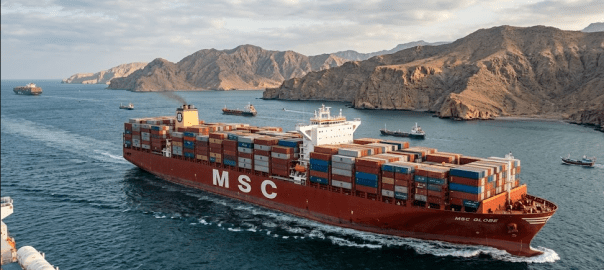
Energy Market Upheaval The most immediate economic threat stems from rising energy prices due to the disruption of the Strait of Hormuz—a crucial maritime chokepoint that normally handles about one-fifth of the world’s oil and liquefied natural gas (LNG). Following Iranian threats, commercial shipping through the strait has slowed to a near-standstill, with tanker traffic dropping by about 90% and multiple insurance firms canceling coverage for Gulf vessels. Continue reading

02Mar/26

A Region on the Brink: Stranded Civilians, Evacuation Chaos, and Suspended Aid in the Middle East

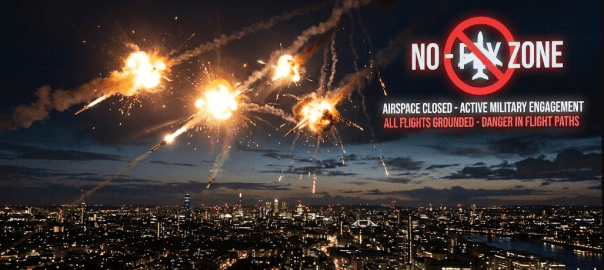
Hundreds of Thousands Stranded: Middle East Airspace Shutdown and Strait of Hormuz Closure Paralyze Global Transit

March 2, 2026 /Mpelembe Media/ — The United States and Israel launched a massive, coordinated military campaign—codenamed Operation Epic Fury and Operation Lion’s Roar—against the Islamic Republic of Iran. The coalition conducted nearly 900 strikes in the first 12 hours, targeting Iranian air defenses, missile production facilities, and IRGC command centers. The strikes successfully assassinated Supreme Leader Ali Khamenei and dozens of top Iranian military and government officials. In retaliation, Iran launched “Operation True Promise 4,” firing waves of ballistic missiles and drones at Israel and US military installations across the Persian Gulf, including bases in Qatar, Bahrain, Kuwait, and the UAE.

Continue reading