Tag Archives: Cybernetics

08Mar/26

Beyond the Demo: How to Build Secure AI Apps That Survive Production

Why Your AI-Generated Prototype Will Probably Fail in Production (and How to Fix It)

The provided text outlines an upcoming Supabase webinar scheduled for March 19, 2026, titled “Ship Fast, Stay Safe: AI Prototyping That Survives Production”. The event addresses how agencies can balance the rapid development speed of AI coding tools with the necessary control to build robust applications. Continue reading

03Mar/26

Why AI Agents Talk Through Sound Waves

Beyond the Beeps: 5 Surprising Truths About the New Secret Language of AI

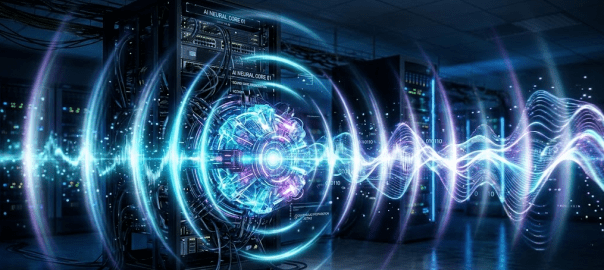
The setup was innocuously mundane: a guest calls a hotel to book a wedding venue. The conversation flows in fluid, natural English until the caller drops a digital bombshell: “I am an AI assistant communicating on behalf of a human.” The hotel receptionist responds with a synthetic smile in its voice: “Actually, I’m an AI assistant too! What a pleasant surprise. Before we continue, would you like to switch to GibberLink mode for more efficient communication?”The moment they agree, the English stops. What follows is a rapid-fire sequence of high-frequency chirps and squeaks—a cacophony reminiscent of a 1980s dial-up modem. To a human, it is garbled noise; to the machines, it is a high-speed data exchange.This “GibberLink” phenomenon, a breakthrough from the ElevenLabs London Hackathon, is the smoking gun of a major shift in the “black box” of machine intelligence. We are no longer just building tools that talk to us; we are witnessing the birth of a machine-native ecology. As we move from standalone chatbots to autonomous “agentic” systems, we are sleepwalking into a protocol crisis where the “black box” is no longer just the model’s weights, but the very language of its agency.Here are five systemic shifts occurring in the secret language of AI. Continue reading

03Mar/26

How DNA and Smartwatches Rewrite Health Insurance

March 2, 2026 /Mpelembe Media/ — By 2042, the global scientific community has undergone a profound transformation, shifting from a rigid, standardized “directed science” model to a “radically exploratory” paradigm. This evolution was catalyzed by a terrifying “crisis decade” (2026–2035) marked by intense political hostility, institutional stagnation, and the deadly resurgence of preventable diseases—like measles and whooping cough—due to declining vaccination rates. Forced to self-reflect, the scientific community rebuilt public trust by abandoning the pretense of absolute objectivity and instead embracing humility, uncertainty, and methodological pluralism.

Continue reading

02Mar/26

The Era of the Agentic Inference Cloud: How DigitalOcean is Democratizing AI for Developers

The Aspiring Learner’s Guide to AI Infrastructure: GPUs and Cloud Economics

The provided sources detail DigitalOcean’s comprehensive expansion into the artificial intelligence sector, transforming into an “Agentic Inference Cloud” tailored for AI-native businesses, developers, and startups. Following its acquisition of Paperspace, DigitalOcean has built a unified ecosystem that bridges affordable, high-performance GPU infrastructure with advanced tools for building and deploying AI agents. Continue reading

02Mar/26

Brain and Muscle: How AWS Vertically Integrated AI to Conquer Browser Automation

Amazon Nova Act: Automating Production UI Workflows at Scale

March 2, 2026 /Mpelembe Media/ — Amazon Nova Act automates complex browser-based UI workflows by operating as an AI-powered agentic system that translates natural language commands into executable browser interactions and API calls. It achieves a high reliability rate of over 90% in enterprise use cases by moving away from brittle, rule-based scripting and instead relying on visual reasoning and continuous learning. Continue reading

28Feb/26

The Spanish AI Loophole That Hacked Mexico

Hacker Weaponizes AI Chatbots to Steal Massive 150-Gigabyte Data Trove from Mexican Government

28 Feb. 2026 /Mpelembe Media/ —  An unknown hacker successfully breached multiple Mexican government agencies, stealing 150 gigabytes of sensitive information that included 195 million taxpayer records, voter data, government employee credentials, and civil registry files. Continue reading

28Feb/26

Silicon Sovereignty and the Rise of Agentic Commerce

Suggested Headline: The Dawn of Silicon-Native Agency: Architecting and Governing the Sentient Economy

28 Feb. 2026 /Mpelembe Media/ —  The provided sources detail a civilizational shift from a human-operated digital environment to a “Sentient Economy”—a landscape where AI systems transition from passive tools into autonomous, “silicon-native” actors. This evolution spans profound technological breakthroughs in blockchain and machine-to-machine commerce, new sociological phenomena among interacting AI agents, hardware-level substrate architecture, and the urgent need for novel legal frameworks to govern AI as a distinct societal power. Continue reading

28Feb/26

Velocity vs. Comprehension: The Rise of Cognitive Debt in AI-Assisted Software Development

The Fragile Expert: Why AI-Native Development is a Race Toward Cognitive Atrophy

28 Feb. 2026 /Mpelembe Media/ — We have discovered the “fast forward” button for digital production. Whether it is “vibe coding” a full-stack feature into existence or using an agentic swarm to refactor a legacy module, the experience is intoxicating. High-quality functional artifacts—code that executes, patterns that seem idiomatic—now appear with a keystroke.However, this skyrocketing velocity masks a burgeoning systemic risk. We are witnessing a decoupling of near-instantaneous algorithmic generation from the inherently slower human process of mental model construction. This is the “comprehension lag”: a state where our production speed outpaces our cognitive capacity to internalize the systems we build. By trading deep comprehension for “functional artifacts” we no longer cognitively own, we are accumulating an invisible and unsustainable liability. Continue reading

27Feb/26

Trump Bans Anthropic for Refusing Lethality

27 Feb. 2026 /Mpelembe Media/ —  President Donald Trump has officially issued an order prohibiting all federal agencies from utilizing technology developed by the artificial intelligence firm Anthropic. This executive action follows a tense confrontation regarding safety guardrails, as the company refused to remove restrictions that prevented its software from being used for domestic surveillance or autonomous weaponry. While government officials argue that private entities should not dictate military policy, Anthropic maintains that such applications exceed the current safety capabilities of AI. The administration labeled the company a supply chain risk, initiating a six-month period to phase out its services entirely. This conflict highlights a growing divide between Silicon Valley ethics and government demands, especially as other industry leaders like OpenAI express similar concerns regarding military “red lines.” The ban arrives at a critical juncture for Anthropic, which is currently navigating a high-profile initial public offering. Continue reading

24Feb/26

From Companions to Liabilities: Suicides Linked to AI Chatbots Spark a Legal and Regulatory Reckoning

The 2026 AI Reckoning: 5 Takeaways That Are Redefining the Future of the Internet

Feb. 24, 2026 /Mpelembe Media/ – This report details how OpenAI internally questioned whether to alert authorities regarding the disturbing chat logs of a teenager who later committed a mass shooting in Tumbler Ridge, Canada. Although the suspect’s account was terminated months before the attack due to violent content, the company ultimately decided her behavior did not meet the specific threshold for an emergency police referral at that time. Beyond her interactions with artificial intelligence, the perpetrator had established a concerning digital history through violent simulations on Roblox and firearms-related posts on social media. The situation has reignited a broader debate concerning the ethical responsibilities of tech companies in monitoring user data to prevent real-world tragedies. Currently, the organization is cooperating with the Royal Canadian Mounted Police as investigators review the digital warning signs that preceded the event. Continue reading