All posts by admin

15Sep/26

Epstein’s Buried 1.5 Billion Dollar Money Trail

The Money Trail They Tried to Bury: 5 Shocking Takeaways from the Hidden Epstein Files

While the media was mesmerized by the lurid, horrific details of Jeffrey Epstein’s sex trafficking ring, a massive financial probe was being quietly smothered in the shadows. For nearly two decades, the public narrative focused on the man’s depravity, but the mechanisms of his empire—the money that moved the machinery of abuse—remained largely untouched.It is only now, through the “Epstein Files Transparency Act” of late 2025, that we are seeing the receipts of a systemic failure. These aren’t just files; they are a map of institutional complicity. The world is finally asking the right question: Why was a multi-billion dollar money-laundering investigation locked in a drawer while the victims were left to rot?Here are the five most shocking takeaways from the recently unsealed Epstein files. Continue reading


15Sep/26

Krapopolis: Politics is show business for ugly people

The “Krapopolis” Experiment: 5 Reasons Why Dan Harmon’s Ancient Greece is Rewriting the TV Rulebook

In the carnage of the modern streaming wars, where promising freshman series are often axed before their first cliffhanger, Fox’s  Krapopolis  has emerged as a fascinating case study in asymmetric risk. While most networks scramble for scraps of audience attention, Dan Harmon—the mind behind  Rick and Morty  and  Community —has been given the keys to a kingdom that looks less like a standard broadcast sitcom and more like a long-term infrastructure project.Produced by the powerhouse Bento Box Entertainment,  Krapopolis  follows a dysfunctional family of humans, gods, and monsters attempting to pilot the world’s first city out of a “savage wilderness.” But for industry observers, the real story isn’t the togas; it’s the unprecedented series of pivots in production, distribution, and fan engagement. As we navigate the fall 2026 television season, it is clear that  Krapopolis  isn’t just a show—it’s a disruptive experiment rewriting the rulebook. Continue reading

14Sep/26

The Shadow Market for Social Housing

The £2 Million Shortcut: Inside the Scam Rigging London’s Social Housing

In London, a city where the wait for a stable home is measured in decades rather than years, desperation has a market price. For a family of seven packed into a damp, one-bedroom flat in Tower Hamlets, the official “bidding” system feels less like a ladder and more like a treadmill. But what if there was a way to jump the queue? What if a few thousand pounds could buy the keys that twenty years of waiting could not?This isn’t a hypothetical. It is the grim reality behind  Operation Chandrila , a massive criminal investigation that has pulled back the curtain on a £2 million conspiracy. It is a story of “gatekeeper” corruption, social media predators, and a system so broken that authorities are now offering a “no questions asked” amnesty to people living in stolen homes just to get the keys back. Continue reading

13Sep/26

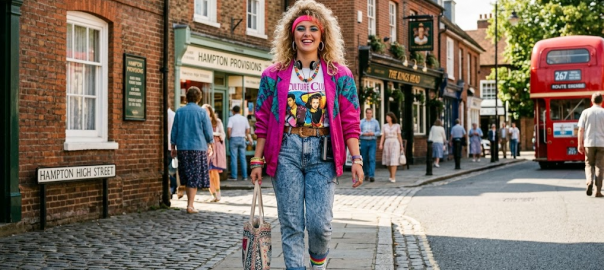
The Radical Innovation of 1980s Pop Culture

Studio Alchemy and the Technological Architecture of the 1980s

Sun 13 2026 /Mpelembe Media/ —The sonic landscape of 1980s pop music was fundamentally reshaped by studio experimentation and technological breakthroughs, most famously exemplified by the discovery of gated reverb. In late 1979 at Virgin’s Townhouse Studios in London, during sessions for Peter Gabriel’s third solo album, drummer Phil Collins was instructed to play without cymbals while experimenting with rhythms for the song “Intruder”. Recording engineer Hugh Padgham accidentally activated the Solid State Logic (SSL) 4000 console’s heavily compressed reverse-talkback listen microphone hanging in the reflective “Stone Room”. The resulting explosive room ambience was gated and triggered by the close-mic drum signal, causing the dense reverberation to slam shut into immediate silence the moment the signal dropped. This artificial, punchy drum sound became the signature acoustic signature of the decade, catapulted into mainstream culture by Phil Collins’ “In the Air Tonight” and subsequently emulated via digital hardware like the AMS RMX16 processor. The technique defined 1980s pop production and has experienced periodic modern revivals by contemporary artists such as Haim, Lorde, and Beyoncé. Continue reading

13Sep/26

The Struggle is One Zambia, One Nation: Kenneth Kaunda

The Political and Economic Legacy of Kenneth Kaunda: A Comprehensive Analysis

1. Introduction: The Architect of Modern Zambia

In October 1964, Kenneth Kaunda ascended to the presidency of the newly independent Republic of Zambia, executing a transition of immense strategic complexity. Navigating the metamorphosis of the former British protectorate of Northern Rhodesia into a sovereign Republic required not merely administrative acumen, but the navigation of a post-colonial state inheriting a dualistic economy characterized by enclave mineral extraction and structural dependency. Kaunda emerged as a primary architect of the region’s decolonial architecture, a role that earned him the reverential titles of “Pan-Africanist” and the “Baobab of African politics”—symbolizing a towering, resilient figure whose influence provided the essential canopy for regional liberation. His core mission, as distilled from the regional collective memory, was the reclamation of an African destiny where the continent’s inhabitants could chart their own socio-economic trajectory, finally ending the era where natural resources were plundered while the populace remained in structural poverty. This mission was predicated on a governance model that sought to harmonize indigenous values with the requirements of a modern state. Continue reading

12Sep/26

The Evolving Taxonomy of Moral Agency

The Architecture of Agency: A Comparative Report on Moral Subjectivity and Responsibility

1. Introduction: The Evolving Taxonomy of Moral Agency

As autonomous systems, complex corporate structures, and new insights into animal ethology challenge our traditional ethical boundaries, the strategic importance of defining “moral agency” has never been greater. For centuries, the domain of moral participation was reserved almost exclusively for the human rational agent. However, as non-human entities increasingly occupy roles of significant social and ethical consequence—ranging from AI-driven healthcare diagnostics to the legal personhood of corporations—we must move beyond a species-centric model. To maintain a functional moral community, we must examine the specific functional requirements that allow an entity to participate in moral life, regardless of its biological or structural origin.The “Orthodox View” of moral agency traditionally rests on three pillars: the capacity to distinguish right from wrong, the ability to make autonomous choices, and the liability to be held accountable for those actions. Under this framework, an agent is not merely an object of concern (a moral patient) but a participant capable of being praised or blamed. As we shall see, this benchmark remains the foundation upon which all other comparative frameworks are built, though the boundaries are increasingly porous. Continue reading

12Sep/26

How the Tumbuka People Survived Erasure


The Ethno-Historical Trajectory of the Tumbuka People”, “Iron, Ivory, and Lineage: Kinship and State Formation in Tumbukaland”

Ancestral Migration and Early Territorial Settlement

The Tumbuka people trace their ethno-historical ethnogenesis to early Bantu expansion waves from the Luba Empire in the modern Democratic Republic of the Congo under ruler Mwaa Yamvo. Resisting forced menial labor and state subjugation, the ancestral group migrated eastward during the early fifteenth century under the overall leadership of a patriarch named Mudala. Following Mudala’s death around 1415, a succession dispute led the Tumbuka branch—guided by Mulonga Mbulalubilo—to cross the Songwe River and establish an initial settlement at Kalonga in present-day Karonga District, Malawi. Subsequent population expansion and the search for fertile agricultural land after 1430 triggered widespread dispersals across a geographic corridor bounded by the Luangwa River, Lake Malawi, the Dwangwa River, and the North Rukuru River. During this early period, Tumbuka society was decentralized, consisting of autonomous, low-density homesteads organized around localized agrarian clans. Continue reading

12Sep/26

How Military Generals Run Zambian Agribusiness

Thu Sep 10 2026 /Mpelembe Media/ — Brigadier General Laston Chabinga served as a flag officer in the Zambia Army, holding executive command of the 3 Infantry Brigade headquartered in Ndola, the administrative and industrial hub of the Copperbelt Province. As active Brigade Commander around March 2017, he directed the military’s strategic and operational envelope across critical regional defense and economic corridors. Continue reading

11Sep/26

How Vinchenzo Mbale hacked the music algorithm

Inside Chakolwa Wa Nzeru: How Vinchenzo M’bale Built a Modern Cultural Movement

Thu Sep 10 2026 /Mpelembe Media/ — Vincent Daka, professionally known as Vinchenzo M’bale, is a prominent Zambian recording artist born on October 11, 1996. Raised across the Eastern Province and the industrial hub of Kitwe on the Copperbelt, he built a dual-regional perspective that deeply connects to his Chewa heritage. Despite being the son of a Reverend in the Reformed Church in Zambia, Daka adapted his early ecclesiastical choral arrangement training into secular music, using traditional call-and-response structures to address contemporary social conditions. Continue reading

11Sep/26

Why People Mourn Their AI Partners

The Architectural Boundaries of AI: Syntax, Semantics, and the Chinese Room

Thu Sep 10 2026 /Mpelembe Media/ — The philosophical foundation of artificial intelligence reveals a fundamental divide between syntactic computation and genuine mental understanding. John Searle’s Chinese Room thought experiment demonstrates that an agent manipulating uninterpreted symbols according to formal, programmatic rules can produce outputs indistinguishable from a native speaker without grasping their semantic meaning. Contemporary large language models function as scalable manifestations of this thought experiment, relying on complex mathematical and probabilistic statistical patterns across vast datasets to generate persuasive text. Although these models achieve high linguistic fluency, they lack subjective conscious experience, intentionality, and qualia, operating entirely within symbol manipulation while human users actively supply the meaning. Consequently, machine expressions of care or comprehension remain structural simulations rather than authentic internal states. Continue reading