Jan . 11, 2026 /Mpelembe Media/ — Google has launched Personal Intelligence, a new beta feature that allows users in the United States to link the Gemini AI with various Google applications like Gmail and Photos. By integrating these services, the assistant can provide highly tailored answers by cross-referencing private emails and images to retrieve specific details, such as vehicle information or travel preferences. Users maintain full control over their data, as the feature is disabled by default and allows for the selective connection of specific apps. To protect individual privacy, the AI does not train its core models directly on private libraries; instead, it uses the data only to answer individualised prompts. This update is currently available for AI Pro and Ultra subscribers on mobile and web platforms, with plans for a broader release in the future. The system is designed to be proactive and helpful, though it still requires user feedback to improve its understanding of complex human nuances and relationships. Continue reading
Category Archives: Technology
From Classrooms to the Cloud: Pioneering the Agentic Era on Mpelembe.net
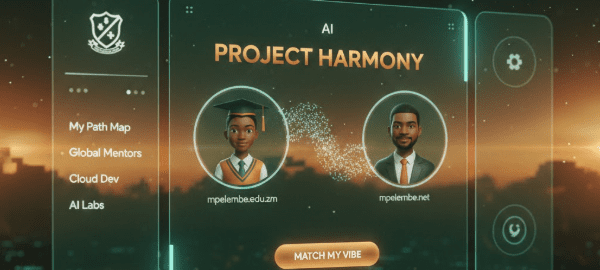
Jan. 9, 2026 /Mpelembe Media/ — Built on the power of the Google ecosystem, mpelembe.net is more than a platform—it is a bridge between the local excellence of Mpelembe Secondary School and the global tech frontier. Through real-time AI collaboration and cloud-driven social impact projects, we are turning the collaborative spirit of the Copperbelt into a world-class laboratory for human-centered technology. While they share a name and a deep history, mpelembe.edu.zm and mpelembe.net represent two different “dimensions” of the Mpelembe ecosystem. One is the physical foundation of education, while the other is the digital frontier of innovation. Continue reading
Intent Recognition (The “Mood” Factor)
Jan. 9, 2026 /Mpelembe Media/ — When we talk about Grok in the context of physical robots (like Tesla’s Optimus humanoid), we aren’t just talking about a chatbot. We are talking about the “brain” that translates digital sentiment into physical action. The reason “mood swings” and sentiment analysis matter for robots is that they move AI from being a calculator to being a collaborator. For a robot to operate safely and naturally around humans, it must “grok” (deeply understand) the emotional context of its environment. Continue reading
The Vigilance Blueprint: A Framework for Community-Led Counter-Surveillance
Jan. 9, 2026 /Mpelembe Media/ — This initiative, modeled on the Surveillance Watch concept, empowers citizens to transition from passive subjects of monitoring to active participants in privacy oversight. By leveraging a decentralized network of volunteers, the project creates a high-resolution, grassroots map of surveillance infrastructure—such as facial recognition cameras, license plate readers, and cell-site simulators. The framework addresses the inherent risks of community activism (such as data inaccuracy and volunteer safety) Continue reading
Data, Deception, and the Death of Renee Nicole Good
Jan. 9, 2026 /Mpelembe Media/ — On January 7, 2026, the fatal shooting of 37-year-old Renee Nicole Good by an ICE agent in South Minneapolis ignited a national firestorm, exposing the lethal intersection of mass deportation policies and AI-driven surveillance. While federal officials, including President Trump and DHS Secretary Kristi Noem, have labeled Good a “domestic terrorist” who weaponized her vehicle, eyewitness accounts and independent video forensics suggest a far different reality: a U.S. citizen and mother of three attempting to steer her SUV away from a chaotic federal enforcement action. Continue reading
CES 2026: From Silicon to Soul — The Dawn of Physical AI and Robotic Companions Redefines the Future of Tech
January 8, 2026 /Mpelembe Media/ – The 2026 Consumer Electronics Show (CES) concluded as a landmark event, signaling a pivotal shift from AI as a mere feature to AI as fundamental infrastructure. This year’s show was dominated by the emergence of “Physical AI,” where generative intelligence transcends digital screens, manifesting in advanced humanoids, smart materials, and a new generation of immersive displays. Continue reading
Gemini Code Assistant Fixed The Error
Jan. 6, 2026 /Mpelembe Media/ — Trouble with dedugging code is that when you fix one issue and then end up creating more bugs. Gemini is a good coding assistant. Here is how Gemini fixed an error in under 5 minutes
Digital Rights & Algorithmic Transparency
Jan. 1, 2026 /Mpelembe Media/ — In 2026, you are protected by a new generation of laws—specifically Article 86 of the EU AI Act and Article 22 of the UK/EU GDPR. These laws give you a “Right to Explanation” when a “high-risk” AI (the kind used in the AI Economy for jobs, loans, or insurance) makes a decision about you. Continue reading
Rokid’s Strategic Evolution: Merging Everyday Fashion with Advanced AI Wearables at CES 2026
Rokid will debut its new AI Glasses Style line at the CES 2026 conference in Las Vegas. These upcoming smart glasses are designed to blend fashionable aesthetics with high-tech augmented reality capabilities for everyday use. The announcement highlights the company’s recent success in mass-producing wearable devices and its growing global ecosystem of developers and users. During the scheduled event, the firm intends to share specific details regarding official pricing, prescription options, and retail availability. This new product line represents a strategic move to make artificial intelligence more accessible through lifestyle-oriented hardware. Continue reading
Cybersecurity Forecast 2026: The Rise of AI Agents, Persistent Extortion, and Evolving Nation-State Tactics
Dec. 29, 2025 /Mpelembe Media/ — The Cybersecurity Forecast 2026 report by Google Cloud examines the anticipated evolution of digital threats, primarily focusing on the transformative role of artificial intelligence. It describes how adversaries will increasingly use AI agents for automated attacks and sophisticated social engineering, while defenders will adopt similar technology to enhance security operations. Beyond AI, the analysis highlights the persistent danger of ransomware and the expansion of cybercrime into the blockchain and virtualisation sectors. The document also evaluates the strategic motivations of nation-state actors from Russia, China, Iran, and North Korea as they pursue global espionage and disruption. Ultimately, the report serves as a guide for organisations to modernise their identity management and governance frameworks in response to these emerging risks. Continue reading