
28Feb/26

Beyond English: Scaling Zambia’s Local-Language AI Ecosystem for National Impact

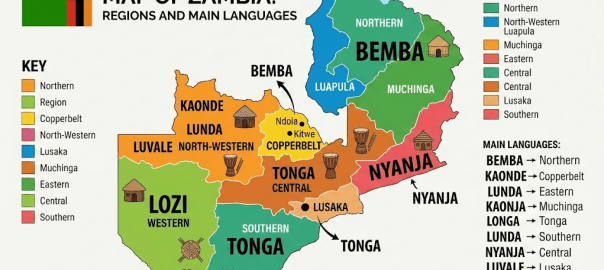
Understanding Zambia: Demographics, Linguistic Diversity, and the Push for AI

28 Feb. 2026 /Mpelembe Media/ —  The artificial intelligence revolution is occurring primarily in English, which structurally excludes people who rely on local languages for their daily lives and deepens existing inequalities. Developing AI systems that “speak” local languages can bridge critical gaps in healthcare and education in the following ways: Continue reading


28Feb/26

The Architecture of Innovation: Hackathons, Agentic AI, and the Future of Developer Growth in 2026

Beyond the Pizza and Code: The Surprising Science of Why Hackathon Projects Survive (or Die)

28 Feb. 2026 /Mpelembe Media/ —  Tthe hackathon landscape has evolved far beyond collegiate weekend coding sprints. It has transformed into a highly structured engine for corporate innovation, product adoption, and skills-first talent acquisition. The modern developer’s journey is now deeply intertwined with these global competitions, driven by several key technological and institutional shifts. Continue reading

28Feb/26

The 2026 Geo-Economic Fault Line: Energy, Logistics, and the Great Divergence

Contextualizing the 2026 Escalation: From Trade Tensions to Kinetic Warfare

28 Feb. 2026 /Mpelembe Media/ —  The global strategic landscape has transitioned from the “unpredictable” trade volatility of 2024–2025—characterized by a century-high effective tariff rate and fiscal “haze”—into a state of “major combat operations” initiated in February 2026. This shift represents an existential threshold for regional stability; geopolitical risk is no longer an occasional variable but a foundational structural baseline. The previous era’s focus on trade countermeasures has been superseded by a period of kinetic escalation that fundamentally alters the movement of global capital and commodities.The tactical environment of the 2026 conflict was defined by the U.S. and Israeli “preventative strikes” launched on February 28, targeting Iranian nuclear and missile infrastructure. These operations necessitated the immediate closure of Iranian, Israeli, and Iraqi airspace to civilian traffic. The U.S. administration has adopted a posture of total naval dominance, explicitly declaring an intent to “annihilate” the Iranian navy and “raze” its missile industry to the ground. This transition to high-intensity warfare aims to neutralize regional proxies and prevent nuclear breakout, yet its execution has invalidated previous economic projections. The April 2025 “haze” projections—which anticipated a gradual decline in oil prices toward $65 per barrel—have been rendered obsolete by supply-side shocks that prioritize hard security over soft demand fundamentals. Continue reading

28Feb/26

Global Markets Brace as US-Israeli Strikes on Iran Compound Tariff and Inflationary Pressures


The 2026 Global Pivot: 5 Surprising Realities Reshaping the Middle East and Beyond

28 Feb. 2026 /Mpelembe Media/ —  The geopolitical landscape has drastically deteriorated, culminating in joint “pre-emptive” military strikes launched by the United States and Israel against Iran in late February 2026. The US military announced “major combat operations” aimed at razing Iran’s missile industry and naval capabilities. This severe escalation follows a previous 12-day war in June 2025, during which Israel and the US targeted Iranian nuclear facilities, including Fordow and Natanz, fundamentally altering the region’s risk profile. Continue reading

28Feb/26

Inside the Silicon Boardroom: A Glimpse into the Alpha Flare Network Dashboard

Syncing with Lord Silicon: 3 Secrets Inside the 2026 Alpha Access Boardroom

27 Feb. 2026 /Mpelembe Media/ —  The mahogany-clad boardroom is dead; long live the digital node. As we navigate the volatile waters of 2026, the “Silicon Boardroom” has emerged as the definitive venue for a new breed of decentralized organization. This isn’t just a UI update—it’s a fundamental pivot toward “Alpha Access” environments that prioritize automated precision over old-world corporate bureaucracy. Continue reading

27Feb/26

Trump Bans Anthropic for Refusing Lethality

27 Feb. 2026 /Mpelembe Media/ —  President Donald Trump has officially issued an order prohibiting all federal agencies from utilizing technology developed by the artificial intelligence firm Anthropic. This executive action follows a tense confrontation regarding safety guardrails, as the company refused to remove restrictions that prevented its software from being used for domestic surveillance or autonomous weaponry. While government officials argue that private entities should not dictate military policy, Anthropic maintains that such applications exceed the current safety capabilities of AI. The administration labeled the company a supply chain risk, initiating a six-month period to phase out its services entirely. This conflict highlights a growing divide between Silicon Valley ethics and government demands, especially as other industry leaders like OpenAI express similar concerns regarding military “red lines.” The ban arrives at a critical juncture for Anthropic, which is currently navigating a high-profile initial public offering. Continue reading

27Feb/26

The $3 Billion Awakening: How Flare and Xaman Are Turning Idle XRP Into a DeFi Powerhouse

Unlocking $3 Billion in Idle XRP: Flare and Xaman Bring One-Click, Self-Custodial DeFi to the XRPL

27 Feb. 2026 /Mpelembe Media/ — The recent integration between the Flare network and the Xaman wallet introduces a streamlined, “one-click” decentralized finance (DeFi) experience designed to unlock over 2 billion idle XRP tokens, which represents roughly $3 billion in sidelined liquidity. Continue reading

26Feb/26

Introduction to Somnia: A Million-TPS Blockchain for Real-Time Applications

Understanding Somnia: A Primer on the Next Generation of High-Performance Blockchain

25 Feb. 2026 /Mpelembe Media/ — Somnia is a cost-efficient, EVM-compatible Layer 1 blockchain that delivers massive scale, capable of processing over 1,000,000 transactions per second (TPS) with sub-second finality. This high-performance infrastructure is specifically designed to support millions of users, enabling developers to build real-time, mass-consumer applications like games, metaverses, and social platforms entirely on-chain. Continue reading

26Feb/26

Banking Complicity and the Jeffrey Epstein Enterprise

Profits Over Compliance: How Major Banks Financed Jeffrey Epstein’s Sex-Trafficking Enterprise

25 Feb. 2026 /Mpelembe Media/ — Financial experts investigate the systemic compliance failures at major financial institutions, specifically focusing on Deutsche Bank’s relationship with Jeffrey Epstein. Despite his status as a convicted sex offender, the bank onboarded Epstein as a high-value client, allegedly ignoring suspicious transactions and internal warnings from whistleblowers. This negligence led to a $150 million regulatory fine and a landmark $75 million settlement with his victims, who accused the bank of facilitating a sex-trafficking enterprise. The texts also explore broader themes of white-collar crime, arguing that corporate fines often fail to deter misconduct because they burden shareholders rather than the responsible executives. Additionally, the materials highlight how “prestige bias” and the institutionalization of plausible deniability allow powerful individuals to bypass standard anti-money laundering controls. Documents further detail the bank’s involvement in other scandals, including dealings with Russian oligarchs and suspected terrorist financing. Continue reading

26Feb/26

Cover-Ups, Missing Files, and Congressional Surveillance: The Escalating Crisis Over the DOJ’s Handling of the Epstein Documents

25 Feb. 2026 /Mpelembe Media/ —  The Department of Justice’s (DOJ) recent release of documents mandated by the Epstein Files Transparency Act (EFTA) has ignited a fierce political and constitutional crisis. While the DOJ claims to have complied with the law by publishing roughly 3.5 million pages, investigations and congressional leaders allege a systemic cover-up designed to protect President Trump and his associates, alongside gross negligence regarding victim privacy. Continue reading