
Tag Archives: Emotions

12Apr/26

AI Care Agents and the Helper’s High

April 9, 2026 /Mpelembe Media/ —  The Mpelembe Network is a multifaceted digital collaborative platform built on Google Cloud that integrates artificial intelligence with social, health, and community services. The network facilitates specialized initiatives like CuraFlow AI, which uses multi-agent systems to orchestrate clinical care, and the Justina Mutale Foundation, which promotes gender equality and STEM education for African women. Central to the platform’s philosophy is the “helper’s high,” a neurobiological concept suggesting that altruism and volunteering are essential for mental resilience and physical longevity. Beyond technology, the materials examine complex social issues such as loneliness, psychological trauma, and the economic challenges of providing care in aging urban environments like Richmond upon Thames. Collectively, these sources present a vision for a 2026 “Agentic Era,” where high-fidelity AI and human collaboration bridge the gap between social isolation and meaningful community support.
Continue reading

09Apr/26

How helping others saves your life

From Isolation to Inclusion: How Volunteering Helps Us Feel Connected Again

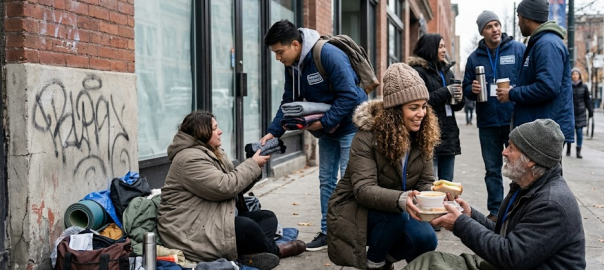
April 9, 2026 /Mpelembe Media/ —  The “Helper’s High” and Physical Health Volunteering produces a documented physiological response known as the “helper’s high”. When individuals engage in acts of altruism, the brain releases a cascade of neurochemicals, including endorphins (natural painkillers that elevate mood), dopamine (which creates a sense of pleasure and reward), and oxytocin (the “bonding hormone” that fosters trust and empathy). Because of this biological response, volunteering actively reduces stress and anxiety, combats depression, lowers mortality rates, and can even lessen symptoms of chronic pain and heart disease. Continue reading

29Mar/26

Navigating the Friendship Recession and the Cost of Connection

The Decline of the “Third Place” and the Rise of Global Isolation

March 30, 2026 /Mpelembe Media/ — The Core Issue: The “Friendship Recession” Modern society is experiencing a severe decline in social capital and interpersonal connections, a phenomenon widely referred to as the “friendship recession”. Data shows a quantifiable collapse in the size of our social networks: in 1990, 33% of Americans reported having 10 or more close friends, but by 2021, that number had plummeted to just 13%. Meanwhile, the percentage of individuals reporting zero close friends has quadrupled. This erosion of social capital—the “glue” that holds communities together through networks, trust, and reciprocity—is undermining both civic engagement and personal well-being.

Continue reading

16Sep/25

Racism isn’t innate – here are five psychological stages that may lead to it

Steve Taylor, Leeds Beckett University

Research from Europe and Australia in recent years has found a rise in the number of people experiencing racism. Reports from the US and UK have indicated that most ethnic minority participants felt racism was getting worse. And a global study has found rising incidents of discrimination.

Continue reading

25Oct/23

Zambians are celebrating peace!

May 3, 2024 Politics/ — t’s great to hear that Zambians are celebrating peace! It’s important to remember that hate is often rooted in fear and ignorance. When people are afraid of what they don’t understand, it can lead to anger and resentment. This can manifest itself in violence, discrimination, and other forms of hatred. Continue reading

11Oct/23

How loneliness changes the way our brains process the world

Robin Kramer, University of Lincoln

If there’s one thing we as humans seem to have in common, it’s that most of us have felt lonely at one time or another. But is the pain that comes with feeling socially isolated simply a part of being human? Why does the world seem so different when we’re feeling lonely?

Recent research has begun to provide some answers. And it turns out that loneliness can affect your perception and cognition.

Continue reading

11Jul/23

Treat culture: why indulging in small, affordable pleasures can help you cope with tough times

Kokho Jason Sit, University of Portsmouth

Life today is stressful. Since the start of the pandemic, social media has been flooded with coping mechanisms and wellbeing trends to help people manage their emotions and worries about the state of the world. If you’ve tried therapy and “hot girl walks”, you may also have heard of the latest life hack: buying yourself a little treat.

Continue reading

14Jun/23

I am a romantic fool

June 14, 2023 /Human Interest/ — The joke is that you are a romantic fool who is always getting yourself into trouble.

The word “fool” can have two meanings:

  • A person who is easily tricked or deceived.
  • A person who is innocent or naive.

In the context of the joke, you are the latter type of fool. You are a romantic fool who is always getting yourself into trouble because you are too trusting and naive.

You are always falling in love with the wrong people, and you are always getting your heart broken. But you never learn your lesson. You keep on being a romantic fool, even though you know that it will only lead to pain. Continue reading

15May/23

I am not lonely

15 May 2023 /Healthcare/ — If you are not feeling lonely, that is great! However, it is important to remember that loneliness is a normal human emotion. Everyone feels lonely from time to time. If you do start to feel lonely, there are things you can do to cope. You can reach out to friends and family, get involved in activities, or seek professional help.
There are a few reasons why you might not feel lonely. Continue reading

12May/23

Learn about loneliness and what can be done to solve the loneliness epidemic

NEW YORKMay 12, 2023 /Healthcare/ — Loneliness is a growing problem in the United States. In fact, the Surgeon General has called it an epidemic. Loneliness can have a negative impact on our physical and mental health, and it can even shorten our lifespan.

There are many things we can do to learn about loneliness and what we can do to solve the epidemic. Here are a few ideas: Continue reading