Tag Archives: SHUTTERSTOCK

30Oct/26

How Agentic AI Replaces Software

The Tollbooth Trap: Why Commoditized Middlemen Are Losing Ground to Autonomous Intelligence.

Fri, July 30 2026 /Mpelembe Media/ — The rapid evolution of generative artificial intelligence and autonomous multi-agent architectures is driving a structural transformation across the digital economy, dismantling traditional business models founded on search arbitrage, manual creative services, seat-based software licensing, and intermediation. Legacy stock photography illustrates this vulnerability, highlighted by Getty Images filing for Chapter 11 bankruptcy after losing more than 99 percent of its peak market valuation amid competition from on-demand text-to-image generators that undercut conventional pay-per-image licensing. Similar pressures are impacting online labor markets such as Upwork, where freelancers in occupations exposed to language and image models experienced a 2 percent decline in contracts and a 5 percent decrease in earnings, with high-reputation professionals disproportionately impacted as automated systems compress human skill differentials. Concurrently, commoditized intermediaries across travel booking, online retail, and mid-market SaaS face severe disintermediation. Over 100 publicly listed mid-market software providers are caught in a major squeeze between low-cost AI startups and cloud hyperscalers, prompting enterprises to replace traditional per-seat subscriptions with internal autonomous agents. Continue reading →
01Dec/25

Racism never went away – it simply changed shape

Lars Cornelissen, Manchester Metropolitan University; Independent Social Research Foundation

Prime Minister Keir Starmer thinks that racism is returning to British society. He has accused Nigel Farage’s Reform UK of sowing “toxic division” with its “racist rhetoric”.

Continue reading →

05Sep/25

What I’ve learned from photographing (almost) every British wildflower

The author’s project took him all over Britain.
Montage images: Pajor Pawel/Shutterstock (background); Richard Milne (flowers)

Richard Milne, University of Edinburgh

The wildflowers of Britain include all manner of treasures – yet many people are only aware of a few, such as bluebells and foxgloves. A lot of its other flora are rare because of Britain’s location at the northern, western or even southern edges of their natural geographic – and hence climatic – ranges.

Continue reading →

13May/25

AI can guess racial categories from heart scans – what it means and why it matters

Tiarna Lee, King’s College London

Imagine an AI model that can use a heart scan to guess what racial category you’re likely to be put in – even when it hasn’t been told what race is, or what to look for. It sounds like science fiction, but it’s real.

Continue reading →

03May/25

Perfect storm of tech bros, foreign interference and disinformation is an urgent threat to press freedom

Tom Felle, University of Galway

Media freedom has long been essential to healthy democracy. It is the oxygen that fuels informed debate, exposes corruption and holds power to account. But around the world, that freedom is under sustained attack.

Continue reading →

28Apr/25

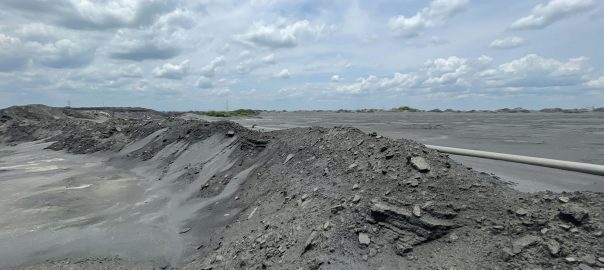
Why the energy transition won’t be green until mine waste disasters are prevented

Eva Marquis, University of Exeter and Karen Hudson-Edwards, University of Exeter

On February 18, contamination in the Kafue river, Zambia, led to a mass death of fish. Its water turned a deathly grey and adjacent farmland was poisoned. The drinking water it supplied to half a million residents of the town of Kitwe was suddenly cut off.

Continue reading →

10Dec/24

People who are good at reading have different brains

Mikael Roll, Lund University

The number of people who read for fun appears to be steadily dropping. Fifty percent of UK adults say they don’t read regularly (up from 42% in 2015)
and almost one in four young people aged 16-24 say they’ve never been readers, according to research by The Reading Agency.

Continue reading →

23Nov/24

Parents lie to children all the time – but they should think twice about it

Rebecca Brown, University of Oxford

Parents frequently lie to their children. “No, you can’t have any chocolate – it’s all gone,” when there’s a jumbo bar of Dairy Milk in the cupboard. “No, you can’t have my phone to watch YouTube – the battery’s flat,” when it’s at a solid 65%.

Continue reading →

08Oct/24

Can Kemi Badenoch claim to have ‘become working class’ while working in McDonald’s – and why would she want to?

Michael Rees, Nottingham Trent University

Conservative MP Kemi Badenoch recently caused controversy by claiming that while she was born to a middle-class family, she “became working class” when working in McDonald’s to earn money while she was in college. In fairness to Badenoch, having a diversity of experience is an admirable attribute for an MP – something you wouldn’t associate with someone like recently deposed Tory MP Jacob Rees-Mogg for example.

Continue reading →

18Jul/24

Some say a shot of olive oil can prevent a hangover – here’s what the science says

Justin Stebbing, Anglia Ruskin University

The search for alcohol hangover cures is as old as alcohol itself. Many cures and remedies are sold, but scientific evidence for their effectiveness is lacking.

Continue reading →