
Tag Archives: United States

13Sep/26

The Radical Innovation of 1980s Pop Culture

Studio Alchemy and the Technological Architecture of the 1980s

Sun 13 2026 /Mpelembe Media/ —The sonic landscape of 1980s pop music was fundamentally reshaped by studio experimentation and technological breakthroughs, most famously exemplified by the discovery of gated reverb. In late 1979 at Virgin’s Townhouse Studios in London, during sessions for Peter Gabriel’s third solo album, drummer Phil Collins was instructed to play without cymbals while experimenting with rhythms for the song “Intruder”. Recording engineer Hugh Padgham accidentally activated the Solid State Logic (SSL) 4000 console’s heavily compressed reverse-talkback listen microphone hanging in the reflective “Stone Room”. The resulting explosive room ambience was gated and triggered by the close-mic drum signal, causing the dense reverberation to slam shut into immediate silence the moment the signal dropped. This artificial, punchy drum sound became the signature acoustic signature of the decade, catapulted into mainstream culture by Phil Collins’ “In the Air Tonight” and subsequently emulated via digital hardware like the AMS RMX16 processor. The technique defined 1980s pop production and has experienced periodic modern revivals by contemporary artists such as Haim, Lorde, and Beyoncé. Continue reading

10Sep/26

Trump Midterm Dividend Promise or Federal Bribe

Populist Promise vs. Fiscal Deficit: Unpacking the 2026 Midterm Cash Transfer Strategy

Thu Sep 10 2026 /Mpelembe Media/ — Amidst rising domestic energy inflation, record-setting August fuel prices, and mounting geopolitical tensions surrounding the military conflict in Iran, President Donald Trump unveiled an extraordinary campaign proposal known as the “Trump Dividend”. Delivered during a primary address at the Republican midterm convention in Dallas—informally dubbed “Trumpapalooza”—the policy promises a $5,000 direct cash payout to every adult American citizen on the strict condition that the Republican Party retains or secures control of both chambers of Congress in the 2026 midterm elections. Designed to counter historic electoral trends in which the sitting president’s party traditionally suffers congressional losses, the proposal seeks to directly incentivize voters amidst declining presidential approval ratings and widespread economic anxiety. Continue reading

08Sep/26

African Payment Pitfalls and $25,000 Tax Traps

The Three Pillars of African Payments

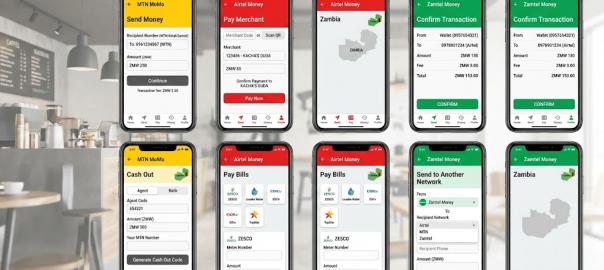
Tue Sep 08 2026 /Mpelembe Media/ — For a student entering the world of fintech, the African payment landscape can initially seem overwhelming. Unlike Western markets where credit cards are the standard, the African ecosystem is built on a “Hybrid Imperative.” In markets like Zambia, global tools like Stripe are often used for international billing, but they lack localized settlement and struggle with poor conversion rates due to bank-side fraud rules. To reach the actual local consumer, businesses must tap into the infrastructure that people already use: mobile money.The ecosystem is supported by three primary players:

  1. Mobile Network Operators (MNOs):  The foundational infrastructure providers that issue digital wallets and manage the movement of local currency.
  2. Payment Gateways:  Intermediaries that bridge the gap between global standards and local methods across multiple countries.
  3. Payment Aggregators:  Specialized “simplifiers” that bundle multiple mobile money connections into a single, developer-friendly interface.Learning Insight: The “So What?”  While credit and debit cards are the global gold standard for SaaS, they represent only a minor fraction of transactional volume in many African nations. In the retail ecosystem of Southern Africa, mobile money is the dominant force. Understanding how to connect to these networks is the key to unlocking the market.While these three pillars work together, the journey starts at the foundational “source”: the MNOs.

Continue reading

04Sep/26

The UN Vote to Correct the Map

The Map as a Mental Model

The core objective of this guide is to deconstruct the hegemonic visuality of the 16th-century world map—a navigation tool that has metastasized into a standard classroom fixture, inadvertently codifying a biased global worldview. As critical geographers, we recognize that a map is never a neutral reflection of reality; it is a mental model that dictates the “geopolitical imaginary” of students from their earliest years of schooling. By distorting the scale of continents, maps influence how the power, agency, and place of diverse civilizations are internalized.As the “Correct the Map” campaign articulates in its core philosophy:”A fair world begins with a fair map.”When our primary visual tools marginalize the Global South, they perpetuate a form of  cartographic silencing . To dismantle this bias, we must first analyze the technical “structural flaws” that transformed a revolutionary maritime aid into a pillar of Eurocentric hegemony. Continue reading

03Sep/26

Wall Street Battles for Digital Plumbing

Wall Street Goes Public: 21 Financial Giants Commit to Joint H1 2027 G7 Stablecoin Launch

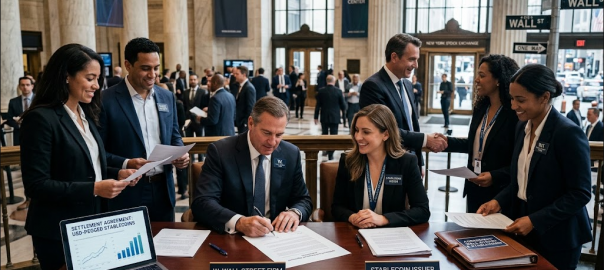
Thu Sep 03 2026 /Mpelembe Media/ —Twenty-one of the world’s largest financial institutions have committed to establishing a new operating company in the second half of 2026 to support the issuance of a regulated, reserve-backed digital asset pegged to the U.S. dollar, with a commercial launch targeted for the first half of 2027. The consortium, which includes Wall Street anchors like Goldman Sachs, Bank of America, and Citigroup, as well as European heavyweights like UBS and Deutsche Bank, plans to focus initially on institutional, wholesale, and retail use cases such as cross-border payments and atomic digital asset settlement. The venture represents a significant expansion of an exploratory pilot launched in October 2025 with just ten banks, although certain original participants like Barclays and BNP Paribas have withdrawn from the joint venture. While the consortium plans to eventually expand into other G7 currencies, prioritizing a euro-denominated token next, it stands alongside a highly competitive landscape where JPMorgan Chase has notably chosen to remain independent, focusing instead on its proprietary commercial bank token networks, JPM Coin and Kinexys. Continue reading

02Sep/26

Newsrooms fight for survival against AI

Ethics in Action: Preserving Human Judgment Amid the Rise of Generative News

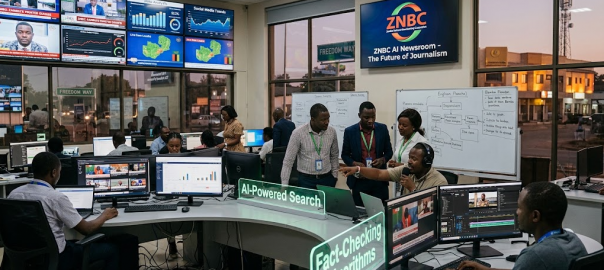
Tue Sep 01 2026 /Mpelembe Media/ — The global expansion of artificial intelligence has created a landscape of digital hegemony where standard-setting and economic benefits are heavily concentrated in the Global North, establishing a form of digital extractivism that mirrors historical colonial dynamics. Large technology conglomerates utilize content harvested from global networks to train proprietary models and sell them back as subscriptions. This extraction is accompanied by a severe decline in search referral traffic, which has collapsed by 50% to 60% in critical emerging markets like Brazil, South Africa, and Indonesia. This occurs because conversational search engines summarize copyrighted reporting directly on results pages, bypassing clicks to the original publisher. In response, major nations in the Global South are reframing the AI debate, moving from historical strategies of diplomatic non-alignment directly into the digital realm. Media leaders and policymakers in these regions argue that AI must not be treated as an isolated technical novelty, but as a critical national sovereignty, labor, and industrial policy issue that fundamentally impacts the health of local information environments. Continue reading

01Sep/26

Why Layer-2 Success Broke Ethereum’s Engine

Bridging the Uncanny Valley of Wealth: Why AI Agents Require Public Crypto Rails

Tue Sep 01 2026 /Mpelembe Media/ — The current digital asset market exhibits a striking structural divergence: while Ethereum’s underlying network metrics, institutional adoption, and active wallet addresses sit at historic highs, the native asset continues to trade at a significant discount relative to its prior peak. To resolve this valuation gap, Fundstrat co-founder and Bitmine chairman Tom Lee utilizes a reversion model of the Ethereum-to-Bitcoin exchange rate, projecting a conservative price target of $6,000 by the end of 2026, which is calculated based on Bitcoin reaching $150,000 and the exchange ratio recovering to a baseline of 0.04. Proponents argue that this projection is exceptionally conservative because the ratio approached 0.08 during the speculative 2021 bull market, which was fueled primarily by non-fungible tokens and meme coins. By contrast, the current cycle is anchored in tangible, utility-driven narratives like the comprehensive tokenization of real-world assets and the massive scale of autonomous artificial intelligence finance. This high-conviction outlook is driving corporate treasuries like Bitmine to aggressively execute their “Alchemy of 5%” initiative, accumulating approximately 4.8% to 4.9% of the total circulating supply of Ether through consecutive weekly purchases over more than a year, with the intent to stake the majority of these holdings to generate reliable operational yields. Continue reading

30Aug/26

Silicon Valley is rebranding eugenics

Scientific Racism’s Secret Backers: How Tech Wealth and Stolen Bio-Data Fuel a Discredited Pseudoscience

Sat Aug 29 2026 /Mpelembe Media/ — The contemporary landscape of reproductive medicine is witnessing the rapid commercialization of polygenic embryo screening (PES), a controversial technology that allows prospective parents to genotypically analyze and prioritize IVF-created embryos based on polygenic risk scores (PRSs). Driven by several well-funded US-based startups, this emerging industry offers to estimate the likelihood of chronic disease liabilities as well as quantitative, non-disease traits like eye color, height, and predicted intelligence. For instance, Orchid Biosciences markets whole-genome embryo sequencing at $2,500 per embryo to assess genetic predispositions to multi-gene health conditions like schizophrenia and cardiovascular diseases. In parallel, Nucleus Genomics has heavily marketed a $30,000 “IVF+” package to screen for over 2,000 traits, leveraging a high-profile New York City subway advertising campaign featuring slogans like “Have Your Best Baby” and “IQ is 50% Genetic”. The most controversial player in this market, Heliospect Genomics, charges wealthy couples up to $50,000 to screen up to 100 embryos for predicted intelligence and other behavioral traits using specialized algorithms. Continue reading

29Aug/26

Notting Hill Carnival’s Radical DIY Roots

Sixty Years of Resistance, Culture, and Celebration: Proposed Headlines

Sat Aug 29 2026 /Mpelembe Media/ — From Resistance to Revelry: How Racial Justice and the Windrush Generation Birthed Europe’s Greatest Street Festival The Sound of Sovereignty: Claudia Jones, Duke Vin, and the Radical Pioneers of Carnival Claiming the Streets: The Sixty-Year Journey and Diamond Jubilee of the Notting Hill Carnival

The Notting Hill Carnival was born out of a crucible of racial tension, discrimination, and active community resistance during the post-war Windrush era. Following the arrival of Caribbean migrants to West London, systemic prejudices such as the informal “colour bar” and housing exploitation in overcrowded slums created an increasingly hostile environment. In August 1958, these racial tensions erupted in violent riots across Notting Hill and Nottingham as white mobs attacked Black residents and their homes. The crisis deepened in May 1959 with the brutal, racially motivated murder of Kelso Cochrane, a thirty-two-year-old Antiguan carpenter. Cochrane’s death became a historic symbol of racial injustice, prompting over 1,200 people to march in solidarity at his funeral, which galvanized Black British civil rights activism across London. Continue reading

27Aug/26

Restructuring Trump’s Second-Term Immigration Policy

The High Cost of Silence: Tracing the Economic Fallout and Political Volatilities of America’s New Deportation Model

Thu Aug 27 2026 /Mpelembe Media/ — The second Trump administration initially launched its restrictive agenda with highly visible, militarized enforcement campaigns like “Operation Metro Surge” to project an uncompromising stance on domestic security. However, this overt, theatrical strategy hit an immediate crisis following a series of fatal enforcement errors, most notably the killing of Renée Nicole Macklin Good—an unarmed thirty-seven-year-old writer, poet, and U.S. citizen—by an ICE agent in Minneapolis on January 7, 2026. This tragedy, along with other fatal shootings, sparked nationwide protests, public outrage, and state-led lawsuits, inducing a major shift in public opinion. In response to this mounting political liability, the administration underwent a strategic restructuring: it replaced high-profile enforcers, removed Homeland Security Secretary Kristi Noem, and privately instructed congressional allies to drop the politically sensitive phrase “mass deportations” in favor of targeting violent criminals. Continue reading