Tag Archives: International Monetary Fund

24Aug/26

Why joblessness and diamonds fuel civil war

The Dual Private Sector Dilemma: Why IMF Market-Led Growth Models Fail to Create Jobs in Fragmented African Economies

Mon, Aug 24 2026 /Mpelembe Media/ — The economic relationship between sub-Saharan Africa and the International Monetary Fund (IMF) has its roots in the 1944 Bretton Woods Conference, where the few developing nations present failed to secure explicit references to their development financing needs in the Articles of Agreement. From its inception, the IMF maintained a rigid, short-term balance-of-payments focus, famously denying Ethiopia’s first request for financial assistance on the grounds that its needs were neither immediate nor temporary. By the 1980s and 1990s, this short-term framework was formalized into neoliberal Structural Adjustment Programs (SAPs), which mandated strict conditionalities such as market deregulation, extensive privatization of state-owned enterprises, and rapid trade opening. Although promoted as pathways to long-term macroeconomic stability, these interventions frequently triggered severe adverse social consequences, including declining real wages, heightened poverty, and the systematic deterioration of basic health and social welfare systems. In response to widespread critique in the late 1990s, the IMF purported to shift its operational model, replacing traditional SAPs with the Enhanced Structural Adjustment Facility (ESAF) and, subsequently, various credit facilities under the Poverty Reduction and Growth Trust (PRGT). However, empirical evidence indicates that these contemporary programs represent “SAPs in disguise,” with loan conditionalities and stringency steadily rising, and core prescriptions of fiscal consolidation and state retrenchment remaining largely unchanged. Continue reading

28Nov/23

Zambia’s foreign debt tragedy – what needs to happen to resolve the crisis

Danny Bradlow, University of Pretoria

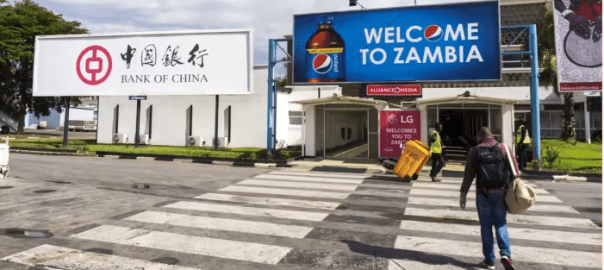
Three years after defaulting on its foreign debt, Zambia is still trying to reach agreement with all its creditors on how to manage this situation. This has left the southern African country in a state of development finance limbo. It is handicapped in raising the funds needed to generate jobs, build infrastructure, provide health, education and social services and deal with climate change. Its president, Hakainde Hichilema, has warned that the situation threatens to undermine its democracy.

Continue reading

23Jun/23

Is zambia the cinderella of Africa, poor indebted by wicked China and saved by the western prince?

23 June 2023 /Economy/– Zambia’s recent debt restructuring deal with its creditors is a major step forward for the country’s economy. The deal will allow Zambia to access much-needed financial resources to help it recover from the COVID-19 pandemic and stimulate economic growth.

In the short term, the deal will likely lead to a decrease in Zambia’s debt servicing costs, which will free up funds that can be used for other purposes, such as infrastructure development and social programs. This will help to boost economic growth and improve living standards for Zambians. Continue reading

29May/23

United States of America: Staff Concluding Statement of the 2023 Article IV Mission

A Concluding Statement describes the preliminary findings of IMF staff at the end of an official staff visit (or ‘mission’), in most cases to a member country. Missions are undertaken as part of regular (usually annual) consultations under Article IV of the IMF’s Articles of Agreement, in the context of a request to use IMF resources (borrow from the IMF), as part of discussions of staff monitored programs, or as part of other staff monitoring of economic developments. Continue reading

18Apr/23

Debt dangers in Africa: how defaults hurt people, and why forgiveness isn’t the answer

Philippe Burger, University of the Free State

Public debt repayments in some African countries are at their highest levels since 1998. The Conversation Africa’s founding editor Caroline Southey talks to dean and economics professor Philippe Burger about the danger of debt problems some African countries face.

Continue reading

16Apr/23

What is in Zambia’s debt restructuring proposal sent bondholders?

April 16, 2023 /Finance/ — If Zambia’s debt restructuring proposal is successful, it will help to improve the country’s economic outlook and create a more stable environment for businesses and investors. This will ultimately benefit the Zambian people by creating jobs, improving infrastructure, and providing access to basic services.

It is important to note that there are a number of risks associated with Zambia’s debt restructuring proposal. If the proposal is not successful, it could lead to a further deterioration in Zambia’s economy and could potentially lead to a default on Zambia’s debt.

Zambia sent a debt restructuring proposal to bondholders on April 14, 2023. The proposal includes the following key points: Continue reading

16Apr/23

Summary of The IMF Transcript of the 2023 Fiscal Monitor Press Briefing

The IMF Transcript of the 2023 Fiscal Monitor Press Briefing discusses the following topics:

The impact of the pandemic on fiscal policy.
The role of fiscal policy in supporting monetary policy.
The need to reduce debt levels.
The risks to financial stability.
The need to support vulnerable members.
Continue reading

27Oct/22

The whole world is facing a debt crisis – but richer countries can afford to stop it

Patrick E. Shea, University of Glasgow

Countries across the world are drifting towards a debt crisis. Economic slowdowns and rising inflation have increased demands on spending, making it almost impossible for many governments to pay back the money they owe.

Continue reading

01Sep/22

IMF Executive Board Approves New Extended Credit Facility (ECF) Arrangement for Zambia

August 31, 2022


The IMF Board approves SDR 978.2 million (about US$1.3 billion) 38-month ECF arrangement for Zambia to help restore macroeconomic stability and foster higher, more resilient, and more inclusive growth. Continue reading