Tag Archives: Saudi Arabia

10Mar/26

How Operation Epic Fury Fractured Iran

The “Epic Fury” Fallout: 6 Takeaways That Are Redefining the Middle East

10 Feb. 2026 /Mpelembe Media/ —  These reports detail a 2026 military escalation involving coordinated U.S. and Israeli air strikes against Iran under the Trump administration. Operation “Epic Fury” resulted in the death of Supreme Leader Ali Khamenei and the destruction of significant nuclear and missile infrastructure, prompting Iranian retaliation against Israel and Gulf states. Experts describe the American strategy as maximalist but improvised, noting a lack of clear plans for regime change or post-war governance. The conflict has triggered global economic anxiety due to potential disruptions in the Strait of Hormuz and surging energy prices. Regional security is further complicated by Hezbollah’s involvement in Lebanon and the selection of Mojtaba Khamenei as Iran’s new hardline leader. Ultimately, the sources highlight a strategic dilemma for Washington: balancing the desire for a decisive victory against the risk of an endless regional war. Continue reading

07Mar/26

How is the U.S.-Israel-Iran conflict reshaping the global economy?

March 7, 2026 /Mpelembe Media/ — Geopolitical Risk Report: The 2026 West Asian Realignment and the Collapse of Regional Diplomacy

The U.S.-Israel-Iran conflict is triggering severe shocks across the global economy, primarily through disruptions to energy supplies, international trade routes, financial markets, and critical technology infrastructure.

Energy Market Upheaval The most immediate economic threat stems from rising energy prices due to the disruption of the Strait of Hormuz—a crucial maritime chokepoint that normally handles about one-fifth of the world’s oil and liquefied natural gas (LNG). Following Iranian threats, commercial shipping through the strait has slowed to a near-standstill, with tanker traffic dropping by about 90% and multiple insurance firms canceling coverage for Gulf vessels. Continue reading

02Mar/26

Global Transit in Chaos: War in Iran Triggers Massive Airspace Closures and Threatens Energy Markets

Middle East in Turmoil: US-Israeli Strikes Kill Khamenei, Triggering Iranian Retaliation and Global Transit Paralysis

March 2, 2026 /Mpelembe Media/ — On February 28, 2026, the United States and Israel launched a massive, coordinated military campaign against Iran, targeting the country’s leadership, nuclear facilities, and military infrastructure. The strikes resulted in the assassination of Supreme Leader Ali Khamenei and dozens of top Iranian military and government officials, severely degrading the regime’s command-and-control structure. Continue reading

28Feb/26

The Board of Peace is Bombing Iran for the Gaza Riviera

5 Radical Realities Reshaping the Middle East

28 Feb. 2026 /Mpelembe Media/ —  The 2026 US-Iran War (“Operation Epic Fury”) Tensions between the United States and Iran escalated sharply in late 2025 and early 2026 following massive anti-regime protests in Iran, which the Iranian government suppressed with unprecedented lethal force and internet blackouts. In response, US President Donald Trump initiated a massive military buildup in the Middle East, deploying two aircraft carrier strike groups and issuing ultimatums demanding Iran halt its nuclear program and proxy support.
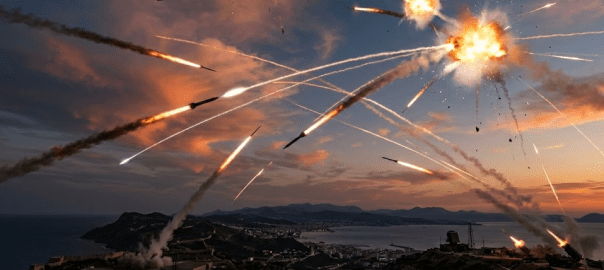
After US-brokered nuclear negotiations in Geneva broke down, the US and Israel launched joint military strikes on Iran on February 28, 2026, dubbed “Operation Epic Fury” and “Operation Roaring Lion”. The massive bombardment targeted Iranian nuclear facilities, military infrastructure, and leadership compounds in Tehran. In retaliation, Iran launched significant ballistic missile barrages at Israel and US military bases across the Persian Gulf, including in Bahrain, Qatar, Kuwait, and the UAE, while its regional proxies mobilized, triggering a multi-theater conflict.

Continue reading

28Feb/26

The 2026 Geo-Economic Fault Line: Energy, Logistics, and the Great Divergence

Contextualizing the 2026 Escalation: From Trade Tensions to Kinetic Warfare

28 Feb. 2026 /Mpelembe Media/ —  The global strategic landscape has transitioned from the “unpredictable” trade volatility of 2024–2025—characterized by a century-high effective tariff rate and fiscal “haze”—into a state of “major combat operations” initiated in February 2026. This shift represents an existential threshold for regional stability; geopolitical risk is no longer an occasional variable but a foundational structural baseline. The previous era’s focus on trade countermeasures has been superseded by a period of kinetic escalation that fundamentally alters the movement of global capital and commodities.The tactical environment of the 2026 conflict was defined by the U.S. and Israeli “preventative strikes” launched on February 28, targeting Iranian nuclear and missile infrastructure. These operations necessitated the immediate closure of Iranian, Israeli, and Iraqi airspace to civilian traffic. The U.S. administration has adopted a posture of total naval dominance, explicitly declaring an intent to “annihilate” the Iranian navy and “raze” its missile industry to the ground. This transition to high-intensity warfare aims to neutralize regional proxies and prevent nuclear breakout, yet its execution has invalidated previous economic projections. The April 2025 “haze” projections—which anticipated a gradual decline in oil prices toward $65 per barrel—have been rendered obsolete by supply-side shocks that prioritize hard security over soft demand fundamentals. Continue reading

28Feb/26

Global Markets Brace as US-Israeli Strikes on Iran Compound Tariff and Inflationary Pressures


The 2026 Global Pivot: 5 Surprising Realities Reshaping the Middle East and Beyond

28 Feb. 2026 /Mpelembe Media/ —  The geopolitical landscape has drastically deteriorated, culminating in joint “pre-emptive” military strikes launched by the United States and Israel against Iran in late February 2026. The US military announced “major combat operations” aimed at razing Iran’s missile industry and naval capabilities. This severe escalation follows a previous 12-day war in June 2025, during which Israel and the US targeted Iranian nuclear facilities, including Fordow and Natanz, fundamentally altering the region’s risk profile. Continue reading

09Jan/26

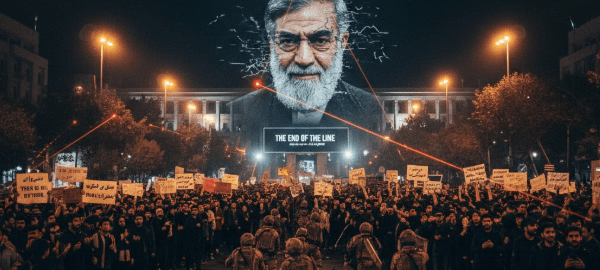
The Persian Threshold: Tehran Teeters Between Total Collapse and a “Year of Blood”

Jan. 9, 2026 /Mpelembe Media/ — The Iranian regime is currently facing its most existential challenge since the 1979 Revolution. As of January 9, 2026, the situation has shifted from sporadic economic protests into a coordinated nationwide uprising. Continue reading

06Jan/26

2026 Venezuelan oil is being used to counter BRICS momentum

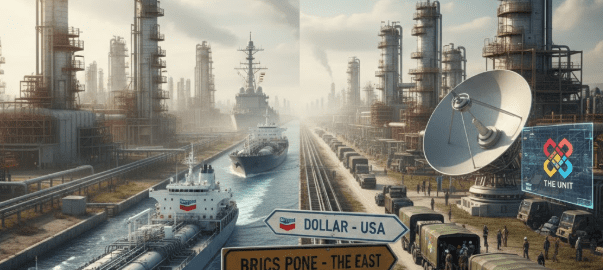
Jan. 6, 2026 /Mpelembe Media/ —The term petrodollar refers to the global system where crude oil is priced and traded exclusively in U.S. dollars. This system has been a cornerstone of American economic and geopolitical power for over 50 years. As of early 2026, the petrodollar system is facing its most significant challenges since its inception, with major shifts in Venezuela and the Middle East reshaping the global energy landscape. Continue reading

01Jan/26

The AI Economy and Emerging African Business Trends

Jan. 1, 2026 /Mpelembe Media/ — China’s strategic framework for international cooperation is based on the four pillars of the Global Development, Security, Civilization, and Governance initiatives. These programs are presented as a comprehensive Chinese solution to modern crises, aiming to reform the global governance system while promoting a shared future for humanity. By focusing on a people-centered approach, the initiatives prioritize addressing poverty, resolving conflicts through dialogue, and respecting the diversity of cultures. The sources emphasize that these efforts particularly support the Global South by advocating for sovereign equality and a move away from unilateral hegemony. Ultimately, the text argues that these public goods provide a pragmatic roadmap for achieving lasting peace and universal prosperity through multilateral action. Continue reading

14May/25

Digital Economy Trust Index Insights

May 14, 2025 /Mpelembe Media/ — According to a press release from Checkout.com, the company has launched its first Digital Economy Trust Index, ranking 16 countries based on consumer trust in online systems. The index highlights a strong link between trust in the digital economy and national GDP growth, suggesting that countries with higher digital trust tend to experience greater economic expansion. Continue reading