Tag Archives: United Kingdom
How is the U.S.-Israel-Iran conflict reshaping the global economy?
March 7, 2026 /Mpelembe Media/ — Geopolitical Risk Report: The 2026 West Asian Realignment and the Collapse of Regional Diplomacy
The U.S.-Israel-Iran conflict is triggering severe shocks across the global economy, primarily through disruptions to energy supplies, international trade routes, financial markets, and critical technology infrastructure.
Energy Market Upheaval The most immediate economic threat stems from rising energy prices due to the disruption of the Strait of Hormuz—a crucial maritime chokepoint that normally handles about one-fifth of the world’s oil and liquefied natural gas (LNG). Following Iranian threats, commercial shipping through the strait has slowed to a near-standstill, with tanker traffic dropping by about 90% and multiple insurance firms canceling coverage for Gulf vessels. Continue reading
A Region on the Brink: Stranded Civilians, Evacuation Chaos, and Suspended Aid in the Middle East
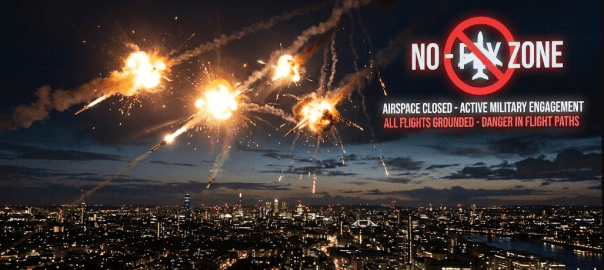
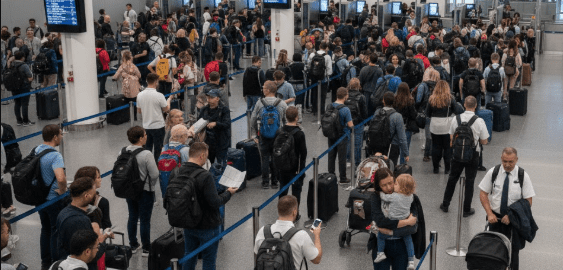
Hundreds of Thousands Stranded: Middle East Airspace Shutdown and Strait of Hormuz Closure Paralyze Global Transit
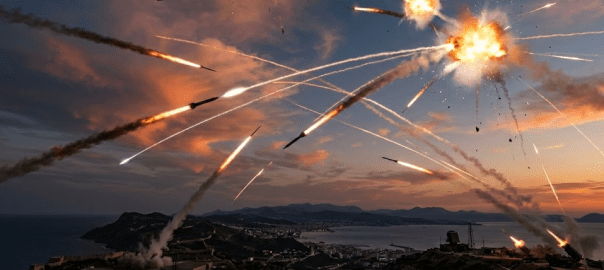
March 2, 2026 /Mpelembe Media/ — The United States and Israel launched a massive, coordinated military campaign—codenamed Operation Epic Fury and Operation Lion’s Roar—against the Islamic Republic of Iran. The coalition conducted nearly 900 strikes in the first 12 hours, targeting Iranian air defenses, missile production facilities, and IRGC command centers. The strikes successfully assassinated Supreme Leader Ali Khamenei and dozens of top Iranian military and government officials. In retaliation, Iran launched “Operation True Promise 4,” firing waves of ballistic missiles and drones at Israel and US military installations across the Persian Gulf, including bases in Qatar, Bahrain, Kuwait, and the UAE.
Global Transit in Chaos: War in Iran Triggers Massive Airspace Closures and Threatens Energy Markets
Middle East in Turmoil: US-Israeli Strikes Kill Khamenei, Triggering Iranian Retaliation and Global Transit Paralysis
March 2, 2026 /Mpelembe Media/ — On February 28, 2026, the United States and Israel launched a massive, coordinated military campaign against Iran, targeting the country’s leadership, nuclear facilities, and military infrastructure. The strikes resulted in the assassination of Supreme Leader Ali Khamenei and dozens of top Iranian military and government officials, severely degrading the regime’s command-and-control structure. Continue reading
The Board of Peace is Bombing Iran for the Gaza Riviera
5 Radical Realities Reshaping the Middle East
The 2026 Geo-Economic Fault Line: Energy, Logistics, and the Great Divergence
Contextualizing the 2026 Escalation: From Trade Tensions to Kinetic Warfare
28 Feb. 2026 /Mpelembe Media/ — The global strategic landscape has transitioned from the “unpredictable” trade volatility of 2024–2025—characterized by a century-high effective tariff rate and fiscal “haze”—into a state of “major combat operations” initiated in February 2026. This shift represents an existential threshold for regional stability; geopolitical risk is no longer an occasional variable but a foundational structural baseline. The previous era’s focus on trade countermeasures has been superseded by a period of kinetic escalation that fundamentally alters the movement of global capital and commodities.The tactical environment of the 2026 conflict was defined by the U.S. and Israeli “preventative strikes” launched on February 28, targeting Iranian nuclear and missile infrastructure. These operations necessitated the immediate closure of Iranian, Israeli, and Iraqi airspace to civilian traffic. The U.S. administration has adopted a posture of total naval dominance, explicitly declaring an intent to “annihilate” the Iranian navy and “raze” its missile industry to the ground. This transition to high-intensity warfare aims to neutralize regional proxies and prevent nuclear breakout, yet its execution has invalidated previous economic projections. The April 2025 “haze” projections—which anticipated a gradual decline in oil prices toward $65 per barrel—have been rendered obsolete by supply-side shocks that prioritize hard security over soft demand fundamentals. Continue reading
The Documentary the DOJ Hopes You Never Stream: Unmasking the Evidence American Media Ignored
25 Feb. 2026 /Mpelembe Media/ — The Borowitz Report details allegations of sexual misconduct by Donald Trump involving teenagers and children, referencing claims found within the Epstein files and a 2018 BBC Panorama documentary. The author asserts that the Department of Justice has attempted to suppress evidence, such as withholding interviews with a woman who alleged Trump abused her when she was 13. The BBC documentary, which has never aired in the US, features on-camera testimonies from women who encountered Trump as teen models, including Barbara Pilling. It also highlights instances where Trump bragged about invading pageant dressing rooms to ogle naked girls, including contestants as young as 15 at the Miss Teen USA pageant. Asserting that the FCC is aligned with Trump, the author urges readers to bypass traditional broadcasting by sharing the documentary clips online. Continue reading
New UK ETA Scheme Grounds Dual British Nationals Traveling on Foreign Passports
Following the Money: The Unraveling of Jeffrey Epstein’s Elite Enablers
23 Feb. 2026 /Mpelembe Media — The provided sources detail the immense global fallout following a massive 2026 Department of Justice document release concerning deceased sex trafficker Jeffrey Epstein. Government investigations and news reports highlight how JPMorgan Chase executives reportedly ignored internal alarms to facilitate Epstein’s financial activities for nearly two decades. The materials reveal a vast network of enablers, leading to the arrest of Andrew Mountbatten-Windsor and the resignations of prominent figures like Goldman Sachs lawyer Kathryn Ruemmler and UK Ambassador Peter Mandelson. Academic institutions like Harvard, Columbia, and UCLA are also facing internal reckonings as files expose deep ties between Epstein and various professors or donors. While the FBI maintains there is no evidence of a specific “client list” or blackmail, the documents have sparked a wave of accountability across global politics, finance, and elite social circles. Ultimately, the sources illustrate a systemic failure of high-level oversight that allowed Epstein to maintain influence long after his initial criminal convictions. Continue reading