
Category Archives: Health

28Jul/26

B-cell bootcamps to outsmart HIV

First-of-Its-Kind HIV Vaccine Enters South African Human Trials Using Moderna’s Sequenced mRNA Technology

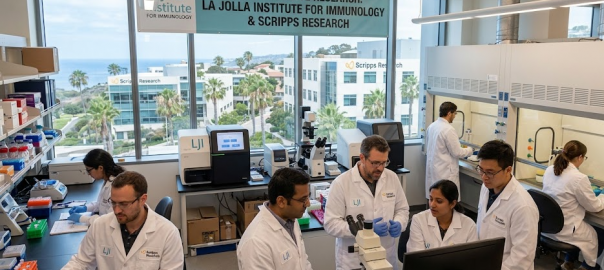
Tue, July 28 2026 /Mpelembe Media/ — Researchers at the La Jolla Institute for Immunology and Scripps Research have achieved a significant breakthrough by developing an HIV vaccine that successfully produced high levels of broadly neutralizing antibodies in primates. This innovative germline targeting approach functions as an “immune system bootcamp,” utilizing a sequence of specialized injections to train naive B cells to recognize and attack the virus’s most vulnerable regions. By mimicking the natural maturation of rare, effective antibodies, the vaccine overcomes HIV’s ability to mutate and hide behind glycan shields. Preclinical results showed that nearly half of the animal subjects developed the desired immune response, marking the most successful trial of its kind to date. Following these unprecedented results in non-human primates, scientists have transitioned to human clinical trials to evaluate the safety and efficacy of this multi-step immunization regimen. This collaborative effort represents a major advancement in the long-term mission to create a preventative vaccine for global public health. Continue reading

28Jul/26

How alcohol rewires your body

Beyond the Point of No Return: Why Advanced Liver Damage Is No Longer Considered Irreversible

Tue, July 28 2026 /Mpelembe Media/ — These sources provide a comprehensive look at the long-term physiological damage caused by excessive alcohol consumption and the pathways toward physical recovery. They specifically highlight how chronic drinking disrupts blood sugar regulation, potentially leading to a reversible form of diabetes by damaging insulin-producing cells. Additional focus is placed on gut health, detailing how alcohol causes microbiome instability and inflammatory conditions like leaky gut syndrome. The texts also examine the severe impact on the pancreas and other vital organs, leading to chronic diseases and increased cancer risks. Ultimately, the authors emphasize that sobriety, combined with professional medical treatment and nutritional support, can restore systemic balance and improve mental well-being. Continue reading

25Jul/26

How the FDA tracks foodborne outbreaks

Systems Modernization: “New Era of Smarter Food Safety

Fri, July 24 2026 /Mpelembe Media/ — Foodborne illness, commonly referred to as food poisoning, remains a formidable public health challenge in the United States. While our national food supply is among the most rigorously monitored in the world, the sheer complexity of modern global supply chains—ranging from field environments to processing facilities—means that contamination can occur at any stage. Therefore, the safest products still require “active consumer participation” as the final line of defense in the home. The scope of this challenge is best understood through the impact on the American population. Federal government estimates provide a sobering “so what?” for every household: * 48 Million Cases: Approximately 1 in 6 Americans suffer from a foodborne illness annually. * 128,000 Hospitalizations: These infections often lead to severe complications requiring clinical intervention. * 3,000 Deaths: For thousands of families, preventable foodborne pathogens result in fatal outcomes. While these statistics represent a broad public health burden, they are not inevitable. Most domestic cases can be prevented by transitioning from passive consumption to informed, science-based food handling. Continue reading

21Jul/26

The Architecture of Autonomy Reclaiming Your Story

The Anxiety Prison: Practical Strategies For Daily Resilience

Tue, July 21 2026 /Mpelembe Media/ —Psychological distress is often far more than “temporary sadness” or “occasional worry.” In our modern experience, uncertainty and distress act as a persistent undercurrent of unease that can rob the present moment of joy and create exhausting “what if” loops in the mind. Whether stemming from career transitions, health challenges, or relational instability, this distress manifests as a deep-seated tension that disrupts sleep and impairs daily functioning.The core function of therapy is to provide a provider of safety, structure, and evidence-based tools. It serves as a laboratory for emotional resilience, helping to reframe the brain’s perception of threat and move a person from a state of survival into one of grounded calm. Continue reading

18Jul/26

How Empathy Breaks Cognitive Confinement

The Battle Against ‘Stigma’: Empathy as Activism

Sat, July 18 2026 /Mpelembe Media/ — This theme of compassion is echoed in an overview of Princess Diana’s legacy, specifically her belief that personal happiness is invalid if it stems from the suffering of others. Her influence as a patron is further illustrated by Turning Point, a social care organization celebrating sixty years of service through an exhibition of symbolic objects that represent recovery and inclusion. Collectively, the texts document a shift toward person-centered care and the ongoing struggle to eliminate the social stigma surrounding addiction, disability, and mental illness. Together, they provide a multi-layered perspective on the progress of social welfare and the enduring power of empathy in public life. Continue reading

03Jun/26

The Compass Guide: Navigating Your Relationship with Alcohol

The Biology of Drinking: How Dopamine and Stress Trap Your Brain on Autopilot

Wed, Jun 03 2026 /Mpelembe Media/ — The cycle of habitual drinking is driven by an automated neurological pattern known as the habit loop, which consists of a cue, a routine, and a reward. Rather than being a moral failing or a lack of discipline, this behavior becomes consolidated in the basal ganglia, causing drinking to run on autopilot without requiring conscious thought. Alcohol triggers a surge of dopamine, which acts as an anticipation and reinforcement engine, aggressively training the brain to expect and seek alcohol for relief or pleasure. Continue reading

21May/26

Why Ebola Borders Must Stay Open

The 2026 Bundibugyo Ebolavirus Epidemic and Research Landscape

Thur, May 21 2026 /Mpelembe Media/ — The 2026 Global Health Emergency In May 2026, the World Health Organization (WHO) declared the outbreak of the Orthoebolavirus bundibugyoense (Bundibugyo virus) in the Democratic Republic of the Congo (DRC) and Uganda a Public Health Emergency of International Concern (PHEIC). The epidemic, which originated in the Ituri Province of the DRC and expanded into Kampala, Uganda, has exposed significant vulnerabilities in international disease surveillance and containment. The rapid spread of the virus has been exacerbated by a combination of cross-border dynamics, high-traffic mining operations, and regional humanitarian crises. Continue reading

15May/26

Why Giving Away Clean Stoves Fails

Fri, May 15 2026 /Mpelembe Media/ —The global reliance on traditional, polluting cooking fuels remains a critical health and environmental crisis, with over 2 billion people lacking access to clean alternatives like liquefied petroleum gas (LPG), biogas, and electricity. This dependence generates severe household air pollution (HAP), which is linked to nearly 3 million premature deaths annually and disproportionately impacts women and children, who also suffer the economic and educational toll of “time poverty” from daily fuel collection. Continue reading

20Apr/26

The Cannabis Creativity Illusion

The Cannabis Delusion: Why Weed Makes You Feel More Creative Than You Actually Are

April 20, 2026 /Mpelembe Media/ — Christopher Barnes and his team investigated whether cannabis actually boosts creativity or if it merely alters perception. To navigate ethical restrictions, researchers had participants complete the study in their own homes using their own cannabis, testing them either within 15 minutes of consumption or after 12 hours of abstinence. Continue reading

12Apr/26

AI Care Agents and the Helper’s High

April 9, 2026 /Mpelembe Media/ —  The Mpelembe Network is a multifaceted digital collaborative platform built on Google Cloud that integrates artificial intelligence with social, health, and community services. The network facilitates specialized initiatives like CuraFlow AI, which uses multi-agent systems to orchestrate clinical care, and the Justina Mutale Foundation, which promotes gender equality and STEM education for African women. Central to the platform’s philosophy is the “helper’s high,” a neurobiological concept suggesting that altruism and volunteering are essential for mental resilience and physical longevity. Beyond technology, the materials examine complex social issues such as loneliness, psychological trauma, and the economic challenges of providing care in aging urban environments like Richmond upon Thames. Collectively, these sources present a vision for a 2026 “Agentic Era,” where high-fidelity AI and human collaboration bridge the gap between social isolation and meaningful community support.
Continue reading