Category Archives: Family

18Oct/26

Zambian Tribal Governance on Google Cloud

From London to Chief Magodi: The Synthesis of Cloud Engineering and Traditional Heritage

Sun Oct. 18, 2026 /Mpelembe Media/ — Contemporary African diaspora families operating between Western metropoles and indigenous homelands are re-engineering traditional cultural governance into cloud-based ecosystems. As demonstrated by the multi-generational trajectory of the Mbale family in London, individuals maintain social mobility in sectors such as digital media, private corporate enterprise, and secondary education, while remaining formally anchored to their ancestral Tumbuka lineage. Central to this arrangement is the technological leadership of software engineer Sam Mbale, who utilizes Google Cloud infrastructure to power the Mpelembe Network. By systematically archiving family milestones alongside artificial intelligence initiatives and socio-cultural commentaries, the platform establishes a digital node that connects UK-based youth directly to the Chief Magodi traditional establishment in Eastern Zambia. This cloud framework enables diaspora members to maintain recognized tribal membership, clan solidarity, and royal heritage stakeholdership without requiring continuous physical residency.
Continue reading →

17Oct/26

Why Couples Therapy Fails Diverse Relationships

Healing Black and Inter-Ethnoracial Partnerships: Bridging Systems Theory, Critical Race Principles, and Emotionally Focused Therapy

Sat Oct. 16, 2026 /Mpelembe Media/ — Standard evidence-based couples therapies, including Emotionally Focused Therapy (EFT), demonstrate high overall efficacy in reducing relationship distress, yet their foundational frameworks were developed almost exclusively around White, middle-class, heterosexual norms. The assumption that adult attachment principles operate universally without regard to race, power, and cultural context fails to account for how chronic exposure to structural racism, microaggressions, and systemic oppression creates cumulative racial stress that directly impairs intimate relationships. When clinicians apply unadapted Western models to African American or inter-ethnoracial couples, they risk pathologizing culturally socialized protective behaviors or misinterpreting coping strategies as individual deficits or treatment resistance. Culturally responsive therapy requires moving beyond a purely dyadic attachment lens to integrate a network-oriented, socioculturally attuned framework that explicitly acknowledges how external societal hostility intersects with internal relational dynamics. Continue reading →

16Oct/26

Parental Alienation in Custody Battles

Navigating High-Conflict Family Law: Distinguishing Parental Alienation, Realistic Estrangement, and Legal Realities

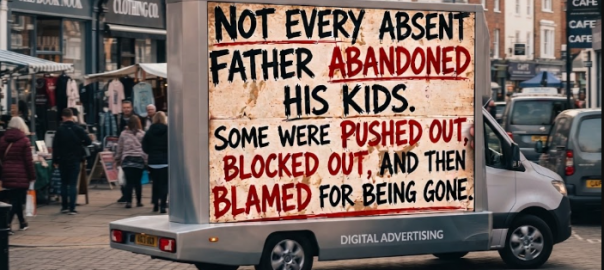
Fri 16 Oct 2026 /Mpelembe Media/ — Parent-child contact refusal following marital separation or divorce is primarily evaluated through two distinct clinical constructs: parental alienation and realistic estrangement. Parental alienation occurs when a child persistently rejects and denigrates a targeted parent without legitimate, objective justification, driven by the psychological manipulation, badmouthing, and gatekeeping behaviors of the preferred parent. Conversely, realistic estrangement represents a justified rejection resulting from the child’s actual baseline experience of physical, sexual, or emotional abuse, severe neglect, or domestic violence. Psychologically, alienated children display cognitive splitting—idealizing the preferred parent as entirely good while devaluing the targeted parent as entirely evil—and exhibit a complete lack of ambivalence. Realistically estranged children, in contrast, maintain psychological ambivalence, holding grounded fears paired with nuanced recollections of both positive and negative parental traits. Diagnostic tools such as the Parental Acceptance–Rejection Questionnaire (PARQ-Gap) quantify this degree of splitting to objectively differentiate severe alienation from justified estrangement with high statistical accuracy. Continue reading →

19Aug/26

The phantom limb of family estrangement

The Pride Barrier: Why Adult Children Can Forgive Imperfect but Not Unreachable Parents

Wed, Aug 19 2026 /Mpelembe Media/ — Family estrangement is a widespread but historically hidden structural reality that affects approximately 27% of American adults, translating to tens of millions of individuals navigating chronic emotional fractures in silence. This phenomenon is fueled by a profound cultural shift in Western societies, where the traditional model of family loyalty and non-voluntary obligation—historically summarized by dictates like “honor thy mother and father”—has been replaced by a modern emphasis on personal growth, individual happiness, and mental well-being. Continue reading →

21Jul/26

How the nervous system rebuilds trust

Rebuilding Trust The 5-Step Daily Protocol

Tue, July 21 2026 /Mpelembe Media/ — This analsis examines the profound psychological impact of betrayal and the multifaceted process of rebuilding trust within human relationships. Expert clinical perspectives describe how relational trauma can rewire the nervous system, leading to persistent hypervigilance and a diminished ability to feel safe with others. To overcome these injuries, the texts recommend consistent transparency, somatic healing, and professional support to shift from defensive posturing toward genuine emotional safety. Literary insights from T.S. Eliot underscore the fragility of these bonds, suggesting that while trust is difficult to repair once severed, it remains the essential foundation for authentic connection. Ultimately, the collection highlights that recovery is a gradual, non-linear journey requiring both personal accountability and self-compassion.
Continue reading →

08May/26

Snoop Dogg: 30 Years of Gin and Juice

Hallowed Ground or Open Doors? A Theological Review of Secular-to-Sacred Transitions in the Contemporary Black Church

1. Introduction: The Prodigal’s Return to the G-Funk Gospel

The historical relationship between the Black Church and secular music has long been characterized by a permeable yet rigorously policed boundary, a tension that reached a watershed moment with the “return home” of G-Funk pioneers. This transition, epitomized by Snoop Dogg, represents a profound subversion of traditional ecclesiastical hierarchies and a renegotiation of sacred space. In the field of liturgical musicology, this pivot is significant not merely as a celebrity conversion, but as an reclamation of a foundational identity. Snoop Dogg himself provides the sociological justification for this narrative, noting that “95 percent of the gangster rappers were born and raised in a church.” For these artists, the sanctuary provided the primary pedagogical environment for reading, acting, and performance—skills later utilized to navigate the profane world.In evaluating the intent behind his sacred projects, particularly the 2018  Bible of Love , one must engage with Snoop’s pneumatological claim: he asserts the album is a “spirit-driven” rather than a “money-driven” endeavor. His core theological argument—an ecclesiology of radical inclusion—can be distilled as follows: Continue reading →

01May/26

Why *Shared Custody* is the Uncomfortably Relatable Masterpiece of Modern Parenting

Love, Lawyers, and Living with Parents: The Economics of Modern Separation in Shared Custody

Fri, May 1 2026/Mpelembe Media/ — Shared Custody (Custodia repartida) is an eight-episode comedy-drama series directed by Javier Fesser and created by Juanjo Moscardó Rius and María Mínguez. The story centers on Cris and Diego, a millennial couple in their early forties who mutually agree to separate and attempt to maintain a friendly relationship for the well-being of their five-year-old daughter, Cloe. Continue reading →

19Apr/26

How your father defines your God

April 19, 2026 /Mpelembe Media/ — The statement “I cannot think of any need in childhood as strong as the need for a father’s protection” originates from Sigmund Freud’s 1930 foundational text, Civilization and Its Discontents. This assertion serves as the bedrock for Freud’s psychological explanation of both human religious belief and the structural development of the ego. Elaborating on this concept reveals several key psychological and cultural dimensions: Continue reading →

16Mar/26

The coefficient of relationship

Beyond the Family Tree: 5 Surprising Truths About How We’re Actually Related

March 15, 2026 /Mpelembe Media/ — If you have ever stood at a family reunion, plate of potato salad in hand, while a well-meaning relative attempted to explain how their daughter is your “second cousin twice removed,” you have entered a linguistic labyrinth that has frustrated family historians for centuries. To the uninitiated, the branches of a family tree look less like a neat diagram and more like a tangled thicket of confusing jargon.However, beneath this terminology lies a hidden logic—a fascinating intersection of ancient social strategy, mathematical probability, and cultural “glitches.” As both an anthropologist and a genetic genealogist, I see these relationships not as mere labels, but as a complex map designed to ensure both biological survival and social continuity. Here are five truths that reveal the underlying architecture of human connection. Continue reading →

16Mar/26

How Fatherhood Impacts Biology and_Law

This is a documentary titled Joe Swash: Forgotten Young Dads, which explores the experiences of underage or youthful fathers in the United Kingdom. Host Joe Swash profiles four specific men to highlight their commitment to parenting and to challenge negative societal stereotypes. Beyond this primary feature, the source lists several other factual programs available on the platform that address intense social issues like addiction, crime, and housing. By showcasing these diverse documentaries, the site offers viewers a look into the struggles and resilience of individuals navigating modern British life. The content also emphasizes accessibility features such as audio descriptions and sign language to ensure a wide range of audiences can engage with these stories. Continue reading →