
Tag Archives: AI agent

10Feb/26

The Machine Economy Arrives: Autonomous Agents, Stablecoins, and the Global Fiscal Pivot

The Copilot: 6 Surprising Ways the “Agent Economy” is Rewiring Global Finance in 2026 

10 Feb. 2026 /Mpelembe Media  — 2026 represents a structural shift from “assistive” technology to “autonomous” economic actors, underpinned by new U.S. crypto legislation and a global scramble to tax digital value. The Year of the “Agentic” Workforce 2026 is widely cited as “the year of the agent,” marking a transition from AI “copilots” (which wait for instructions) to autonomous “agents” (which act with intent to execute workflows). Continue reading


06Feb/26

Building the Agentic Enterprise: From Multi-Agent Orchestration to Ethical Governance

06 Feb. 2026 /Mpelembe Media  — The provided sources, namely insights.mpelembe,net, . detail a paradigm shift from simple generative models to “Agentic AI”—autonomous systems capable of reasoning, planning, and executing complex workflows. This transformation is characterized by advanced technical architectures, new infrastructure debates, and profound organizational implications.

Continue reading

29Jan/26

The Structural Reconfiguration for Agentic AI

Jan. 29, 2026 /Mpelembe Media/ — Thoughtworks introduced their latest Looking Glass report, which outlines necessary structural changes for businesses in the agentic AI era. The report emphasizes that companies must move beyond minor experiments to rewire their core architectures, ensuring that data, platforms, and security are fully integrated to support autonomous intelligence. Key focus areas include modernizing software delivery, transitioning to intent-driven user experiences, and establishing federated data ecosystems that provide real-time information to AI agents. Additionally, the report highlight the importance of computational governance, suggesting that safety and privacy regulations should be built directly into a company’s technical foundation. This overview also mentions the Mpelembe Network, a platform that distributes such technology news and analysis to help leaders navigate rapidly evolving industry trends. Together, these documents serve as a strategic guide for enterprises aiming to maintain architectural integrity while adopting transformative digital innovations. Continue reading

27Jan/26

The Dawn of Agentic Commerce and Autonomous Retail AI

Jan. 27, 2026 /Mpelembe Media/ — The emergence of agentic commerce is a transformative phase in retail where autonomous AI agents move beyond basic interactions to execute complex, multi-step tasks. Google Cloud is spearheading this shift by introducing Gemini Enterprise for Customer Experience, a platform that integrates shopping and service into a unified, intelligent system. Major global brands like The Home Depot, Papa Johns, and Gap Inc. are already adopting these tools to streamline internal operations and provide personalized digital concierges for their customers. By utilizing advanced reasoning and multimodal capabilities, these AI agents can autonomously manage the entire buyer journey, from initial product discovery to post-purchase support. Ultimately, this technology aims to bridge the gap between physical and digital storefronts, creating a seamless, proactive shopping environment that anticipates consumer needs. Continue reading

01Jan/26

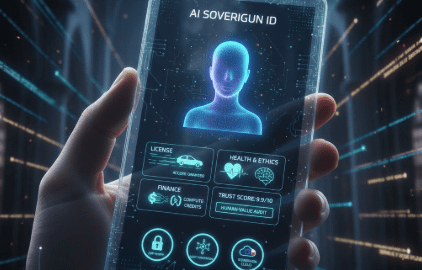
Understanding the AI Economy and Digital ID

Jan. 1, 2026 /Mpelembe Media/ — The “Fifth Industrial Revolution” (5IR), is a shift from tools that we control to environments that control themselves. It frames the future not as a collection of gadgets, but as a totalizing system—the “Cathedral”—where the infrastructure itself makes moral and economic decisions. The Dark Industrial Cathedral is built on surveillance, extraction, and algorithmic control. The primary task for 5IR leaders is “engineering ethics into infrastructure” by embedding human values directly into the code. Continue reading

31Dec/25

Beyond Automation: AI as the Operating System of Human Civilisation

Dec. 31, 2025 /Mpelembe Media/ — As of 2025, the global economy is projected to reach approximately $115 trillion, even as it faces a staggering $338 trillion in total debt. Within this landscape, artificial intelligence has emerged as the foundational infrastructure of a Fifth Industrial Revolution, with the AI economy expected to contribute over $15.7 trillion to global GDP by 2030. This technological shift is characterized by the rise of AI sovereignty, where control over data and models defines geopolitical power. While automation and AI agents enhance productivity and business valuations, they also present significant risks regarding cybersecurity and the potential erosion of human identity. Ultimately, society faces a critical choice between using these tools to foster human dignity or allowing them to create a future defined by algorithmic surveillance and control. Continue reading

29Dec/25

Cybersecurity Forecast 2026: The Rise of AI Agents, Persistent Extortion, and Evolving Nation-State Tactics

Dec. 29, 2025 /Mpelembe Media/ — The Cybersecurity Forecast 2026 report by Google Cloud examines the anticipated evolution of digital threats, primarily focusing on the transformative role of artificial intelligence. It describes how adversaries will increasingly use AI agents for automated attacks and sophisticated social engineering, while defenders will adopt similar technology to enhance security operations. Beyond AI, the analysis highlights the persistent danger of ransomware and the expansion of cybercrime into the blockchain and virtualisation sectors. The document also evaluates the strategic motivations of nation-state actors from Russia, China, Iran, and North Korea as they pursue global espionage and disruption. Ultimately, the report serves as a guide for organisations to modernise their identity management and governance frameworks in response to these emerging risks. Continue reading

29Dec/25

The Evolution of Vibe Engineering

Dec. 29, 2025 /Mpelembe Media/ — Artificial intelligence is fundamentally restructuring the software development lifecycle. Software engineering will become the primary application for AI, transitioning from simple code generation to sophisticated vibe engineering driven by natural language. This shift is expected to decrease computer science enrolment and significantly extend the time required to recruit developers as companies prioritise senior staff with AI expertise. Consequently, human roles will shift towards governance and architecture, necessitating a move toward as-code automation for nearly all enterprise development processes. To remain competitive, technology leaders are advised to modernise their hiring practices and integrate agentic development techniques immediately. Continue reading

20Dec/25

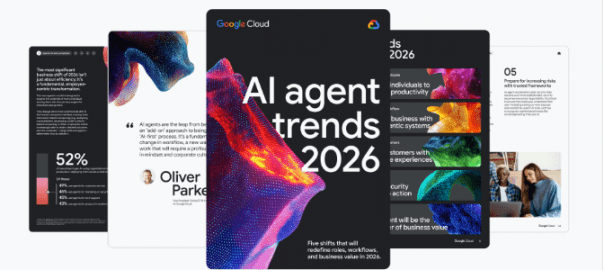
AI Agent Trends 2026

Dec. 20, 2025 /Mpelembe Media/ — The Google Cloud 2026 report describes a major transition from basic automated assistants to agentic AI, which can plan and execute complex tasks with human oversight. This shift moves technology from simple instruction-based computing to intent-based systems that understand and achieve specific goals. Key trends highlight how these agents will soon be integrated into every employee’s workflow, acting as specialized digital team members that handle repetitive duties. Beyond individual productivity, the report explores how integrated agent networks will manage entire business processes, such as customer service, security, and supply chain logistics. Human roles are expected to evolve into strategic orchestration, where people focus on high-level decision-making while AI agents manage the underlying data. Ultimately, the document serves as a strategic guide for business leaders to prepare for a future where AI is a fundamental, always-on collaborator. Continue reading

21Nov/25

Google Antigravity: A New AI-powered Development Platform for Software Engineers

Nov. 21, 2025 /Mpelembe Media/ — Despite the name, Google Antigravity is not a physics experiment; it’s a revolutionary new AI-powered development platform for software engineers.

It’s an “agent-first” system that uses autonomous AI agents (primarily powered by Gemini 3 Pro) to plan, execute, and verify complex software tasks across the editor, terminal, and browser. It shifts the developer’s role from writing every line of code to acting as an architect or orchestrator. Continue reading