Tag Archives: AI agent

26May/26

Inside the Agentic Enterprise of 2026

The Age of Autonomy: How Multi-Agent Systems are Redefining Enterprise AI in 2026

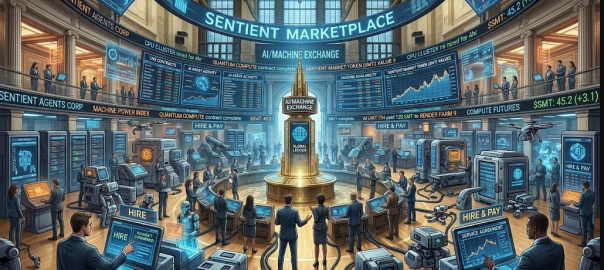
Tue, May 26 2026 /Mpelembe Media/ — In 2026, the technology landscape has firmly transitioned from conversational generative AI to autonomous, multi-agent AI ecosystems. Rather than waiting for step-by-step human prompts, these AI agents can independently reason, plan, use tools, and collaborate to execute complex workflows across enterprise systems. Continue reading

26May/26

Building the Future of eCommerce and Content: Inside WordPress’s New AI Ecosystem

Standardizing Artificial Intelligence: A Deep Dive into WordPress 7.0’s AI Infrastructure

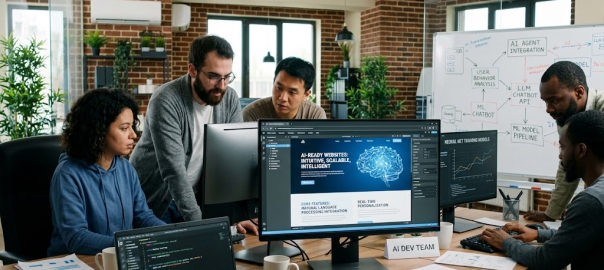
Tue, May 26 2026 /Mpelembe Media/ — TheThe recent updates to WordPress, particularly leading into version 7.0, mark a structural shift from a traditional CMS into an “AI-aware runtime” and agentic platform. This transformation is driven by several foundational components: Continue reading

20May/26

The Death of Doomscrolling and the Birth of AI Agents: Everything Announced at Google I/O 2026

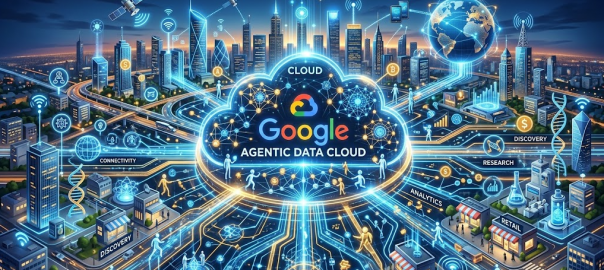
Tue, May 19 2026 /Mpelembe Media/ — Google I/O 2026 and the preceding Android Show marked a major pivot for Google towards an “agentic era,” where AI transitions from a passive assistant to a proactive, autonomous system. Google introduced advanced models like Gemini Omni and Gemini 3.5, which are designed to perform complex actions rather than just generating text. A major focus was placed on Google Antigravity, a development platform that enables creators to build autonomous agents for various tasks. These innovations extend across the company’s ecosystem, including intelligent eyewear, a universal shopping cart, and enhanced scientific research tools. Furthermore, the updates emphasize multimodal capabilities and new creative applications such as Google Pics and Stitch. Ultimately, the source portrays a future where proactive AI assistants are deeply integrated into search, hardware, and professional workflows. Continue reading

14May/26

Your AI is now an autonomous coworker

Meet Your New Digital Coworker: 15 AI Workflows Redefining Small Business Operations

Thur, May 14 2026 /Mpelembe Media/ — Anthropic has officially launched Claude for Small Business, an intelligent operating layer built into its desktop agent, Claude Cowork, designed to automate complex, multi-step administrative tasks for SMBs. Moving beyond a traditional chatbot interface, this package embeds directly into the software stack small businesses already rely on, connecting to platforms like Intuit QuickBooks, PayPal, HubSpot, Canva, Docusign, Google Workspace, Microsoft 365, and Slack. Continue reading

21Apr/26

Affection Economy: The High Cost of Artificial Intimacy

The Commodification of Intimacy: How AI is Redefining the Attention Economy

April 20, 2026 /Mpelembe Media/ — The “affection economy” represents a strategic evolution from the traditional attention economy, moving beyond simply capturing user screen time to the commodification of emotional relations and intimacy. Driven by the rapid integration of social AI systems, technology companies are no longer just trying to influence our minds, but are actively aiming to win our hearts. Continue reading

20Apr/26

Replacing Static Dashboards With Agentic AI

The Agentic Evolution: Unifying Compute, Code, and Context in Zerve’s Data Workspace

April 20, 2026 /Mpelembe Media/ — Zerve is an AI-native, agentic data workspace designed to unify data exploration, advanced analysis, team collaboration, and production deployment into a single, seamless environment. Continue reading

08Apr/26

Five cent AI and the compliance trap

April 8, 2026 /Mpelembe Media/ — This is a comprehensive overview of the 2026 generative AI landscape, heavily focusing on Google’s latest media models, enterprise orchestration, and the broader impacts of AI on industry and regulation. This article analyses a report from Google Cloud titled “Transformation Today,” which highlights new generative media tools available on Vertex AI. The primary focus is the launch of the Lyria 3 Pro and Veo 3.1 Lite models, designed for advanced music and video creation. It categorizes the Veo 3.1 family into three tiers—standard, fast, and lite—to help developers balance visual quality, processing speed, and cost. Additionally, the text offers a specific prompting formula to help users achieve better control over cinematic elements and subject actions. Technical experts contribute to the guide, providing frameworks for applying these AI innovations to professional workflows. Overall, the document serves as an educational resource for engineers looking to integrate high-volume video generation into their applications.
Continue reading

02Apr/26

From AI Yes-Man to Critical Partner: Inside the Vionde Studio Workflow

April 1, 2026 /Mpelembe Media/ — Vionde Studio represents a category of bespoke, cloud-native AI solutions—typically hosted on platforms like Google Cloud Run—that function as centralized command hubs for deploying custom AI agents. Its primary goal is to prioritize the preservation of human “soul,” voice, and intention through sophisticated technical workflows, avoiding the generic, flat content often produced by traditional AI. Continue reading

27Mar/26

Crypto, Fiat, and the AI Web: A Deep Dive into L402, x402, and Stripe’s MPP

March 26, 2026 /Mpelembe Media/ —  Agentic payment protocols like x402, MPP, and L402 are fundamentally reshaping the internet economy by enabling machines to transact seamlessly without human intervention, user accounts, or traditional subscriptions. By allowing software to autonomously negotiate and settle micro-transactions, a wide variety of real-world use cases have emerged across several distinct categories: Continue reading

24Mar/26

Agentic AI Ends Performative Teamwork

The Shift to Agentic AI and the “Silicon Workforce”

March 23, 2026 /Mpelembe Media/ — In 2026, artificial intelligence has moved beyond generative chatbots to become a structural, operational component of the enterprise. Organizations are rapidly adopting “Agentic AI,” where autonomous digital agents plan, coordinate, and execute complex, multi-step workflows across various applications without continuous human prompting. Because these multi-agent systems interact with live enterprise data to triage tasks, allocate resources, and mitigate risks, leaders are beginning to treat them as a “silicon-based workforce”. To harness this potential, successful companies are avoiding simply layering AI onto old processes; instead, they are redesigning workflows from the ground up and establishing “HR for agents” to manage digital onboarding, governance, and performance. Continue reading