Tag Archives: Reddit

25Aug/26

The Strategic Armor of Dolly Parton

The Rhinestone Saint: Celebrating the Life, Art, and Enduring Kindness of Dolly Parton

Tue, Aug 25 2026 /Mpelembe Media/ — Dolly Rebecca Parton was born on January 19, 1946, on a farm in Sevier County, Tennessee, where she grew up as the fourth of twelve children in an impoverished East Tennessee hills home. Blessed with a vivid imagination, she was composing her own songs even before she learned to read or write, eventually moving to Nashville the day after her high school graduation in 1964. Her musical career accelerated significantly in 1967 when she joined The Porter Wagoner Show, exposing her talent to over 45 million viewers and launching a highly successful duet partnership that earned her national recognition. Commemorating her emotional professional split from Wagoner in 1974, she wrote the classic “I Will Always Love You,” which topped the country charts that year and launched her into global solo superstardom as she went on to win the Country Music Association’s Entertainer of the Year award in 1978. Throughout her journey, her late husband of nearly sixty years, Carl Dean—whom she met on her first day in Nashville in 1964 and who passed away on March 3, 2025—remained her steadfast, private supporter who inspired her classic hit “Jolene” and other deeply personal tracks. Continue reading


24Aug/26

Why AI labels tank game sales

“AI Slop” Backlash: How Player Outrage is Forcing Developers to Put Human Artists First

Sun, Aug 23 2026 /Mpelembe Media/ — The video game industry is undergoing a swift legal and structural recalibration as “anti-AI” clauses rapidly transition from bespoke risk-mitigation measures into standard contract boilerplate. Corporate intellectual property lawyers, such as Haley MacLean of Voyer Law, report that nearly all of their game development and publishing clients now explicitly mandate strict bans on generative AI. This shift is primarily driven by massive intellectual property liability: under current U.S. copyright law, works must be the product of human authorship to receive IP protection. If a developer incorporates AI-generated assets like art, writing, or sound without substantial human editing, those elements fall into the public domain. Consequently, competitors could legally extract those identical assets and use them in their own games with no legal recourse for the original creator, rendering unedited AI assets a major commercial risk for publishers and investors alike. Continue reading

18Aug/26

The AI girl who crashed Bama Rush

From ChatGPT to ‘Most Popular Sorority Star’: How a Synthetic Influencer Hijacked the TikTok Algorithm

Tue, Aug 18 2026 /Mpelembe Media/ — The viral annual sorority recruitment cycle at the University of Alabama, historically known as “Bama Rush,” became the backdrop for a groundbreaking sociotechnical experiment in August 2026. Inspired by a social media post from venture capitalist Justine Moore of Andreessen Horowitz suggesting that the highly publicized, competitive rush cycle could be entirely simulated using generative artificial intelligence, her sister and consumer tech investing partner Olivia Moore launched a live, multi-day social experiment featuring @janie.b086—a fictional 19-year-old Potential New Member (PNM) named Janie. Building on a less-sophisticated AI experiment from the previous year named Tinsley, Olivia designed Janie to explore the boundaries of human media literacy, algorithmic indexing, and platform-level content moderation on TikTok. Within a single week, the fictional redhead fumbled popular dances and posted breathless outfit-of-the-day (OOTD) videos, amassing 1,300 followers and tens of thousands of views per video, and even prompting the Daily Mail to crown her Alabama’s “most popular sorority star”. Continue reading

05Aug/26

The fabricated life of Jason Arday

Identity Over Integrity: How Cambridge’s Youngest Black Professor Escaped Scrutiny for Years

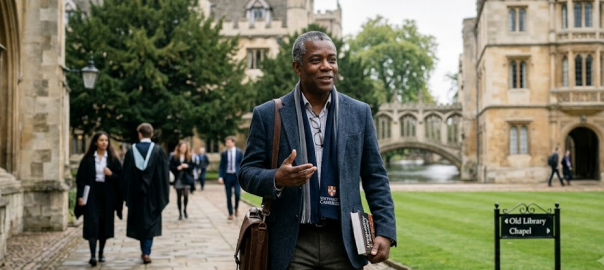
Tue , Aug 04 2026 /Mpelembe Media/ — The rapid academic rise of Jason Arday, who became the youngest Black professor in the history of the University of Cambridge at age 37, was heavily propelled by an inspirational biographical narrative of overcoming immense physical, developmental, and socioeconomic adversity. Glowing media profiles and promotional materials celebrated Arday as an “autistic savant” who had triumphed over structural exclusion, having been diagnosed with global developmental delay, remaining entirely non-verbal until age 11, and unable to read or write until age 18. His celebrated backstory also featured extraordinary physical, medical, and philanthropic milestones, including overcoming a recurring, life-threatening brain tumor and stroke weeks before defending his doctoral dissertation, personally raising £5.5 million for national charities, playing professional-level soccer and snooker as a child, volunteering overseas with WaterAid, and completing extreme long-distance running challenges like 30 marathons in 35 days on a fractured leg or 600 miles on a treadmill in six days. Continue reading

31Jul/26

When machines write better than humans

AI Integration and Integrity in 2026

Thu, July 30 2026 /Mpelembe Media/ — The provided sources paint a picture of a digital, literary, and academic landscape fundamentally transformed by generative artificial intelligence by the year 2026. The integration of large language models (LLMs) has sparked intense debates around intellectual property, job displacement, academic integrity, and the very definition of human authorship. Continue reading

29Jul/26

Why Zuckerberg is Building an AI CEO

Friction in the Labs: Delays, Layoffs, and Culture Clashes Inside Meta’s Superintelligence Push

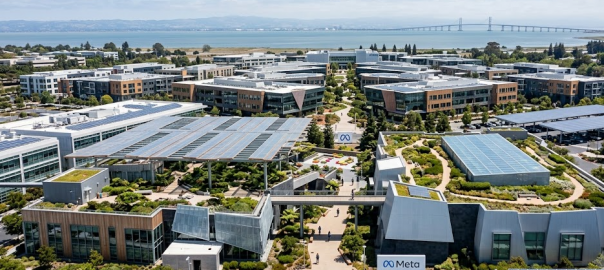
Wed, July 29 2026 /Mpelembe Media/ — The Open-Source Vision and Industry Dominance Meta CEO Mark Zuckerberg is aggressively positioning the company as the primary institutional sponsor of open-source (open-weight) artificial intelligence. With the release of Llama 3.1, Zuckerberg argues that open-source AI is the path forward because it empowers developers, prevents centralization of power, and allows organizations to protect their data without being locked into closed vendor ecosystems like those of Apple, OpenAI, or Google. By freely distributing its models, Meta hopes to commoditize the AI layer and establish Llama as the ubiquitous global industry standard. Continue reading

24Jul/26

Boxing training against digital manipulation

Inside the Rhetorical Sparring Ring: UBUNK’s Plan to Knockout Online Nonsense

Fri, July 24 2026 /Mpelembe Media/ — The core philosophy and mission behind the UBUNK platform center on actively confronting falsehoods and proving oneself as a “heavyweight truth-teller”. It embraces a rigorous, arena-like environment where users are invited to “Step into the arena” and “Knockout the nonsense,” using the metaphor of a gym to emphasize the active and potentially competitive nature of seeking and defending the truth. Continue reading

03Jun/26

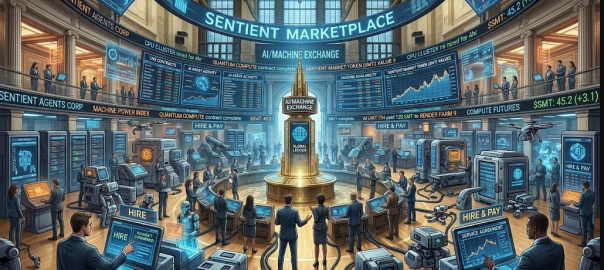
The “Sentient” Marketplace: How AI Agents Hire and pay Machines

The Mpelembe Agent Architect (also referred to as the Silicon-Native Agent Architect) is a comprehensive technical blueprint and decentralized infrastructure platform designed to securely deploy and govern autonomous AI agents

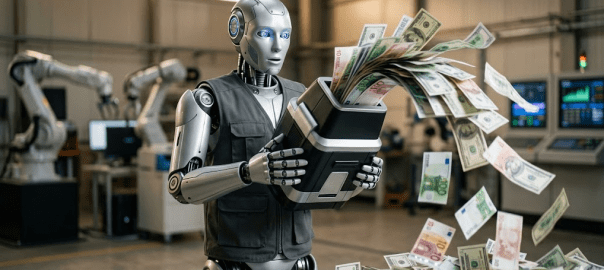
Wed, Jun 03 2026 /Mpelembe Media/ — The Sentient Economy (also referred to as the “Agentic” or “Machine Economy”) represents a fundamental shift from a human-operated digital environment to a decentralized network driven by autonomous, “silicon-native” AI agents. Unlike traditional chatbots that passively wait for human instructions, these autonomous agents proactively reason, allocate capital, and collaborate across organizational boundaries to execute complex, revenue-generating workflows. By 2030, this machine-to-machine economy is projected to mediate between $3 trillion and $5 trillion in global commerce. Continue reading

23Mar/26

From Prompts to Profits: How AI Frameworks are Automating YouTube and Social Media

March 23, 2026 /Mpelembe Media/ — MoneyPrinterV2 is an advanced Python-based automation framework designed to help users generate online revenue through AI-driven content creation and social media management. The software utilizes a modular architecture to automate the production of YouTube Shorts, manage Twitter bots, and execute affiliate marketing campaigns. By integrating technologies like Ollama for script generation and KittenTTS for voiceovers, the tool can independently create and schedule videos with subtitles and background music. Beyond social media, the platform includes features for scraping local business data to facilitate automated email outreach and lead generation. This open-source project aims to eliminate the manual labor typically required for consistent digital engagement by providing a centralized command-line interface for various income streams. While offering powerful capabilities for creators and marketers, the author emphasizes that the tool is intended for educational purposes and requires user compliance with platform terms.
Continue reading

21Jan/26

The Evolution of Digital Deception: How 2025 Scams Blended into Daily Online Life

Jan. 20, 2026 /PRNewswire/ — The Q4 2025 Gen Threat Report highlights a significant shift in cybercrime, where fraudulent advertisements and deepfake content have become the primary methods for targeting consumers. These findings indicate that attackers are increasingly exploiting trusted social media platforms like Facebook and YouTube to host fake online shops and deceptive investment schemes. Rather than using complex technical exploits, modern scams trick individuals into performing routine digital actions, such as clicking links or scanning QR codes, to compromise their data. The report also identifies GhostPairing attacks and a sharp rise in identity-related breaches as growing risks that bridge the gap between mobile and desktop devices. Ultimately, the data warns that malvertising has evolved into a sophisticated tool that allows threats to blend seamlessly into everyday internet browsing. Continue reading