Tag Archives: Cognitive science

01Nov/26

The Dangers of Counterfeit Humans

From Deadbots to Deception: How Hyper-Realistic AI Exploits Human Vulnerability

Sun, Nov 01 2026 /Mpelembe Media/ — Neuroscientist Anil Seth contends that engineering digital avatars that are indistinguishable from real human beings is a hazardous development with potentially catastrophic societal consequences. Sparked by the announcement of Griffin—a “human interaction model” from the company Tavus that reportedly passes a video-based Turing Test—Seth warns that hyper-realistic avatars will enable widespread financial fraud, exploit loneliness, and severely fracture the public’s ability to separate reality from fabrication. He traces the progression of this technology from early concepts designed to preserve survivor testimonies to commercialized “deadbots” that mimic deceased family members, emphasizing that such systems threaten to paralyze natural human grieving processes. Continue reading →

25Oct/26

How Choice Architecture Shapes Your Decisions

See the Prime, Break the Spell: Reclaiming Cognitive Agency in an Automated World

Sat Oct. 24, 2026 /Mpelembe Media/ — Joshua Chimakula Ngoma’s book, Primed: The Hidden Power That Shapes What We Do, Buy and Believe, explores how subtle environmental micro-cues shape human decision-making, commercial behavior, and socio-political beliefs. Rooted in dual-process cognitive theories, the text demonstrates that human choices are rarely unprompted acts of pure autonomous logic; instead, subtle sensory triggers—including color spectrums, ambient scents, acoustic frequencies, headline phrasing, and screen layouts—pre-activate associative neural networks below conscious awareness. This environmental priming targets System 1, the brain’s rapid, low-energy heuristic engine, allowing external choice architects to direct attention and steer behavior before System 2’s slow, reflective reasoning can engage. Drawing on three decades in subterranean mining engineering, his leadership at the Enterprising Africa Regional Network (EARN), and a Global South vantage point, Ngoma applies a structural lens to reveal how hidden behavioral architecture systematically engineers human actions across physical and digital spaces. Continue reading →

22Oct/26

Why Your Brain Fights Stillness

Altering the Relationship to Thought: How Zen and ACT Deconstruct the Narrative Self Without Thought Suppression

Thu Oct. 22, 2026 /Mpelembe Media/ — Non-conceptual awareness practices in Sōtō Zen Buddhism and Acceptance and Commitment Therapy (ACT) share the core premise that human psychological distress often stems from over-identifying with discursive thought and rigid cognitive labeling. In Sōtō Zen, formalized by Dōgen Zenji, this state of unfiltered perception is embodied in the principle of hishiryō (“non-thinking” or “beyond thinking”), representing a non-dual posture where thoughts and sensations arise and pass naturally without cognitive interference, measurement, or judgment. ACT, a third-wave cognitive behavioral therapy developed by Steven C. Hayes, operationalizes non-conceptual awareness through cognitive defusion and self-as-context. Cognitive defusion teaches individuals to view thoughts as transient verbal events rather than literal truths or mandatory instructions, while self-as-context accesses an observing self—frequently illustrated by the metaphor of a spacious sky holding passing weather patterns—that remains distinct and enduring from running self-narratives. Continue reading →

11Oct/23

How loneliness changes the way our brains process the world

Robin Kramer, University of Lincoln

If there’s one thing we as humans seem to have in common, it’s that most of us have felt lonely at one time or another. But is the pain that comes with feeling socially isolated simply a part of being human? Why does the world seem so different when we’re feeling lonely?

Recent research has begun to provide some answers. And it turns out that loneliness can affect your perception and cognition.

Continue reading →

20Jul/23

How having five friends boosts the adolescent brain – and educational performance<

Barbara Jacquelyn Sahakian, University of Cambridge; Christelle Langley, University of Cambridge; Chun Shen, Fudan University, and Jianfeng Feng, Fudan University

As most parents of teenagers are acutely aware, there comes a time when children start prioritising their friends over their parents. While young children rely on their parents for social interactions and influences, there’s a notable switch during adolescence, where the influence from peers and friends becomes more important.

Continue reading →

27Apr/23

Ways to keep your brain in top form as you age

April 26, 2023 /Lifestyle/ — The most important changes in cognition with normal aging are declines in performance on cognitive tasks that require one to quickly process or transform information to make a decision, including measures of speed of processing, working memory, and executive cognitive function.

However, not all thinking abilities decline with age. In fact, vocabulary, reading and verbal reasoning remain unchanged or even improve during the aging process.

There are many lifestyle choices that can help to maintain cognitive function as we age. Some of the most important include: Continue reading →

03Apr/23

AI will soon become impossible for humans to comprehend – the story of neural networks tells us why

David Beer, University of York

In 1956, during a year-long trip to London and in his early 20s, the mathematician and theoretical biologist Jack D. Cowan visited Wilfred Taylor and his strange new “learning machine”. On his arrival he was baffled by the “huge bank of apparatus” that confronted him. Cowan could only stand by and watch “the machine doing its thing”. The thing it appeared to be doing was performing an “associative memory scheme” – it seemed to be able to learn how to find connections and retrieve data.

Continue reading →

10Mar/23

Why does music bring back memories? What the science says

Kelly Jakubowski, Durham University

You’re walking down a busy street on your way to work. You pass a busker playing a song you haven’t heard in years. Now suddenly, instead of noticing all the goings on in the city around you, you’re mentally reliving the first time you heard the song. Hearing that piece of music takes you right back to where you were, who you were with and the feelings associated with that memory.

Continue reading →

21Feb/23

How your brain decides what to think

Valerie van Mulukom, Coventry University

You’re sitting on the plane, staring out of the window at the clouds and all of a sudden, you think back to how a few months ago, you had a heart-to-heart with a good colleague about the pressure you experience at work. How do thoughts seemingly completely unrelated to the present pop into our heads? Why do we remember certain things and not others? Why does our mind go off on tangents and why do we have daydreams?

Continue reading →

29Jan/23

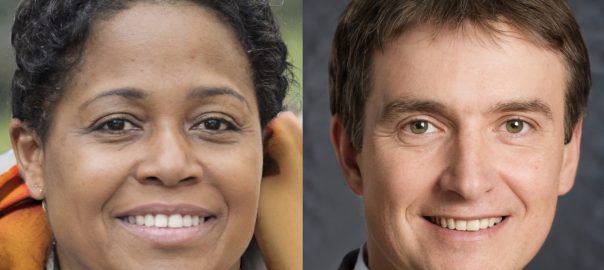
Deepfakes: faces created by AI now look more real than genuine photos

Manos Tsakiris, Royal Holloway University of London

Even if you think you are good at analysing faces, research shows many people cannot reliably distinguish between photos of real faces and images that have been computer-generated. This is particularly problematic now that computer systems can create realistic-looking photos of people who don’t exist.

Continue reading →