Tag Archives: Philosophy of artificial intelligence

01Nov/26

The Dangers of Counterfeit Humans

From Deadbots to Deception: How Hyper-Realistic AI Exploits Human Vulnerability

Sun, Nov 01 2026 /Mpelembe Media/ — Neuroscientist Anil Seth contends that engineering digital avatars that are indistinguishable from real human beings is a hazardous development with potentially catastrophic societal consequences. Sparked by the announcement of Griffin—a “human interaction model” from the company Tavus that reportedly passes a video-based Turing Test—Seth warns that hyper-realistic avatars will enable widespread financial fraud, exploit loneliness, and severely fracture the public’s ability to separate reality from fabrication. He traces the progression of this technology from early concepts designed to preserve survivor testimonies to commercialized “deadbots” that mimic deceased family members, emphasizing that such systems threaten to paralyze natural human grieving processes. Continue reading →

28Oct/26

Why AI Ethics Needs Ancient Theology

Faith, Human Dignity, and Governance: Why AI Ethics Demands Moral Depth Over Statistical Consensus

Wed, July 28 2026 /Mpelembe Media/ — The Limits of Preference Aggregation and the Rise of Algorithmic Pluralism Leading technology executives have proposed aligning artificial intelligence with human values by calculating a “weighted average” or statistical consensus through techniques such as Reinforcement Learning from Human Feedback (RLHF). However, social choice theory demonstrates that there is no unique voting protocol capable of universally aggregating individual preferences without generating logical contradictions or violating private ethical values. Theological and philosophical scholars emphasize that religious traditions cannot be reduced to modular, extractable rulebooks to be averaged in machine learning models. Attempting to compute a universal moral consensus flattens culturally rich worldviews, suppresses minority perspectives, and risks codifying dominant, secular-rational norms at the expense of global faith communities. Continue reading →

09Jul/26

The Trap of Intelligent Stupidity

The Scientific Taxonomy of Mind: Intelligence vs. Stupidity

Thur, July 09 2026 /Mpelembe Media/ —  According to complex systems theorist David C. Krakauer, the common assumption that stupidity is merely a passive vacancy of thought is fundamentally incorrect. Standard psychometrics, such as IQ tests, attempt to reduce cognitive value to a single price-like metric, which is as reductionist as trying to understand the artistic value of a Picasso masterpiece solely by its auction price. Continue reading →

09Mar/26

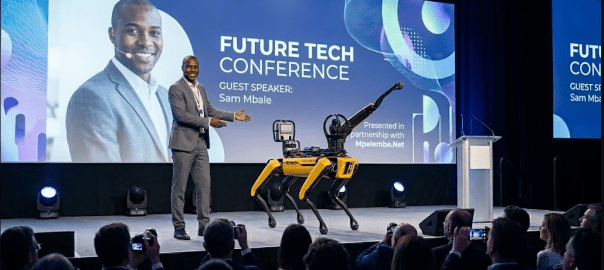
Inside ODSC 2026: The Ultimate Gathering of AI Builders and Visionaries

Beyond the Screen: 5 Surprising Realities Shaping the Future of AI and Robotics

March 9, 2026 /Mpelembe Media/ — For decades, the promise of the “robot age” has been stuck in an aggravating stalemate. We live in a world where an algorithm can compose a passable symphony or pass the bar exam, yet we still lack a machine that can reliably navigate a laundry room or patch a crumbling bridge. This is the “uncanny valley” of productivity: we have conquered the digital realm of symbols and logic, but the physical world—with its friction, gravity, and unpredictable messiness—remains stubbornly out of reach.But the screen is no longer a barrier; it is becoming a mirror. Recent breakthroughs presented by the world’s leading builders at ODSC 2026 and the Robotics and AI (RAI) Institute suggest we are finally witnessing the “tectonic shift” from artificial intelligence that merely thinks to intelligence that  does . We are moving beyond the era of chatbots and into the era of embodied partners. Here are the five surprising realities defining this new frontier. Continue reading →

03Mar/26

Why AI Agents Talk Through Sound Waves

Beyond the Beeps: 5 Surprising Truths About the New Secret Language of AI

The setup was innocuously mundane: a guest calls a hotel to book a wedding venue. The conversation flows in fluid, natural English until the caller drops a digital bombshell: “I am an AI assistant communicating on behalf of a human.” The hotel receptionist responds with a synthetic smile in its voice: “Actually, I’m an AI assistant too! What a pleasant surprise. Before we continue, would you like to switch to GibberLink mode for more efficient communication?”The moment they agree, the English stops. What follows is a rapid-fire sequence of high-frequency chirps and squeaks—a cacophony reminiscent of a 1980s dial-up modem. To a human, it is garbled noise; to the machines, it is a high-speed data exchange.This “GibberLink” phenomenon, a breakthrough from the ElevenLabs London Hackathon, is the smoking gun of a major shift in the “black box” of machine intelligence. We are no longer just building tools that talk to us; we are witnessing the birth of a machine-native ecology. As we move from standalone chatbots to autonomous “agentic” systems, we are sleepwalking into a protocol crisis where the “black box” is no longer just the model’s weights, but the very language of its agency.Here are five systemic shifts occurring in the secret language of AI. Continue reading →

28Feb/26

Silicon Sovereignty and the Rise of Agentic Commerce

Suggested Headline: The Dawn of Silicon-Native Agency: Architecting and Governing the Sentient Economy

28 Feb. 2026 /Mpelembe Media/ —  The provided sources detail a civilizational shift from a human-operated digital environment to a “Sentient Economy”—a landscape where AI systems transition from passive tools into autonomous, “silicon-native” actors. This evolution spans profound technological breakthroughs in blockchain and machine-to-machine commerce, new sociological phenomena among interacting AI agents, hardware-level substrate architecture, and the urgent need for novel legal frameworks to govern AI as a distinct societal power. Continue reading →

28Feb/26

Velocity vs. Comprehension: The Rise of Cognitive Debt in AI-Assisted Software Development

The Fragile Expert: Why AI-Native Development is a Race Toward Cognitive Atrophy

28 Feb. 2026 /Mpelembe Media/ — We have discovered the “fast forward” button for digital production. Whether it is “vibe coding” a full-stack feature into existence or using an agentic swarm to refactor a legacy module, the experience is intoxicating. High-quality functional artifacts—code that executes, patterns that seem idiomatic—now appear with a keystroke.However, this skyrocketing velocity masks a burgeoning systemic risk. We are witnessing a decoupling of near-instantaneous algorithmic generation from the inherently slower human process of mental model construction. This is the “comprehension lag”: a state where our production speed outpaces our cognitive capacity to internalize the systems we build. By trading deep comprehension for “functional artifacts” we no longer cognitively own, we are accumulating an invisible and unsustainable liability. Continue reading →

20May/25

Generative AI’s Impact on Software Development: A DORA Perspective

May 20, 2025 /Mpelembe Media/ — This report from DORA explores the impact of generative AI on software development, analyzing both the challenges and opportunities it presents. It examines how AI affects individual developers’ productivity and well-being, finding both benefits and unexpected trade-offs. The document also addresses the organizational perspective, considering how AI influences processes like code quality and delivery speed, while acknowledging a potentially negative short-term impact on delivery performance. Finally, it proposes practical strategies for fostering developer trust, promoting responsible AI adoption, and measuring success within organizations.

Down load the free report

03Jan/25

IRS Artificial Intelligence Governance and Principles

Jan. 3, 2025 /Mpelembe Media/ — This interim guidance memorandum from the IRS Chief Data and Analytics Officer outlines new Internal Revenue Manual (IRM) 10.24.1, establishing AI governance principles and processes. It details requirements for AI use case inventories, approval procedures, and risk management, particularly for safety-impacting or rights-impacting AI. Continue reading →

31Dec/24

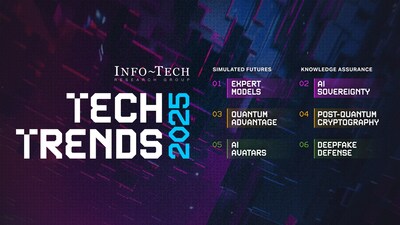
Threats, Incoming AI Regulations, and Exponential AI Adoption Among Top Trends to Prepare For, Says Info-Tech Research Group

As artificial intelligence (AI) continues its exponential expansion across industries, organisations are increasingly challenged to deploy AI responsibly and strategically. Info-Tech Research Group’s newly published AI Trends 2025 report provides critical guidance on Responsible AI, governance, and organisational policies necessary to drive value from AI initiatives. The global research and advisory firm’s report emphasises the importance of managing AI as a core element of organisational strategy and offers actionable steps for effective AI implementation. Continue reading