Tag Archives: Artificial intelligence
The Era of the Agentic Inference Cloud: How DigitalOcean is Democratizing AI for Developers
The Aspiring Learner’s Guide to AI Infrastructure: GPUs and Cloud Economics
The provided sources detail DigitalOcean’s comprehensive expansion into the artificial intelligence sector, transforming into an “Agentic Inference Cloud” tailored for AI-native businesses, developers, and startups. Following its acquisition of Paperspace, DigitalOcean has built a unified ecosystem that bridges affordable, high-performance GPU infrastructure with advanced tools for building and deploying AI agents. Continue reading
Brain and Muscle: How AWS Vertically Integrated AI to Conquer Browser Automation
Amazon Nova Act: Automating Production UI Workflows at Scale
March 2, 2026 /Mpelembe Media/ — Amazon Nova Act automates complex browser-based UI workflows by operating as an AI-powered agentic system that translates natural language commands into executable browser interactions and API calls. It achieves a high reliability rate of over 90% in enterprise use cases by moving away from brittle, rule-based scripting and instead relying on visual reasoning and continuous learning. Continue reading
The Spanish AI Loophole That Hacked Mexico
Hacker Weaponizes AI Chatbots to Steal Massive 150-Gigabyte Data Trove from Mexican Government
28 Feb. 2026 /Mpelembe Media/ — An unknown hacker successfully breached multiple Mexican government agencies, stealing 150 gigabytes of sensitive information that included 195 million taxpayer records, voter data, government employee credentials, and civil registry files. Continue reading
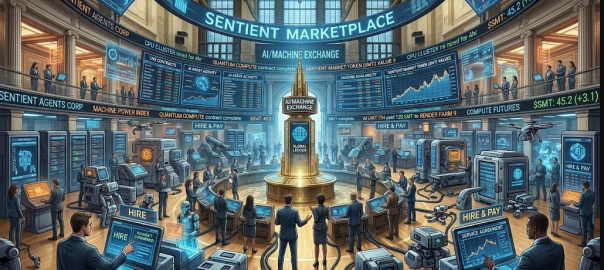
Silicon Sovereignty and the Rise of Agentic Commerce
Suggested Headline: The Dawn of Silicon-Native Agency: Architecting and Governing the Sentient Economy
28 Feb. 2026 /Mpelembe Media/ — The provided sources detail a civilizational shift from a human-operated digital environment to a “Sentient Economy”—a landscape where AI systems transition from passive tools into autonomous, “silicon-native” actors. This evolution spans profound technological breakthroughs in blockchain and machine-to-machine commerce, new sociological phenomena among interacting AI agents, hardware-level substrate architecture, and the urgent need for novel legal frameworks to govern AI as a distinct societal power. Continue reading
Velocity vs. Comprehension: The Rise of Cognitive Debt in AI-Assisted Software Development
The Fragile Expert: Why AI-Native Development is a Race Toward Cognitive Atrophy
28 Feb. 2026 /Mpelembe Media/ — We have discovered the “fast forward” button for digital production. Whether it is “vibe coding” a full-stack feature into existence or using an agentic swarm to refactor a legacy module, the experience is intoxicating. High-quality functional artifacts—code that executes, patterns that seem idiomatic—now appear with a keystroke.However, this skyrocketing velocity masks a burgeoning systemic risk. We are witnessing a decoupling of near-instantaneous algorithmic generation from the inherently slower human process of mental model construction. This is the “comprehension lag”: a state where our production speed outpaces our cognitive capacity to internalize the systems we build. By trading deep comprehension for “functional artifacts” we no longer cognitively own, we are accumulating an invisible and unsustainable liability. Continue reading
Beyond English: Scaling Zambia’s Local-Language AI Ecosystem for National Impact
Understanding Zambia: Demographics, Linguistic Diversity, and the Push for AI
28 Feb. 2026 /Mpelembe Media/ — The artificial intelligence revolution is occurring primarily in English, which structurally excludes people who rely on local languages for their daily lives and deepens existing inequalities. Developing AI systems that “speak” local languages can bridge critical gaps in healthcare and education in the following ways: Continue reading
The Architecture of Innovation: Hackathons, Agentic AI, and the Future of Developer Growth in 2026
Beyond the Pizza and Code: The Surprising Science of Why Hackathon Projects Survive (or Die)
28 Feb. 2026 /Mpelembe Media/ — Tthe hackathon landscape has evolved far beyond collegiate weekend coding sprints. It has transformed into a highly structured engine for corporate innovation, product adoption, and skills-first talent acquisition. The modern developer’s journey is now deeply intertwined with these global competitions, driven by several key technological and institutional shifts. Continue reading
Trump Bans Anthropic for Refusing Lethality
27 Feb. 2026 /Mpelembe Media/ — President Donald Trump has officially issued an order prohibiting all federal agencies from utilizing technology developed by the artificial intelligence firm Anthropic. This executive action follows a tense confrontation regarding safety guardrails, as the company refused to remove restrictions that prevented its software from being used for domestic surveillance or autonomous weaponry. While government officials argue that private entities should not dictate military policy, Anthropic maintains that such applications exceed the current safety capabilities of AI. The administration labeled the company a supply chain risk, initiating a six-month period to phase out its services entirely. This conflict highlights a growing divide between Silicon Valley ethics and government demands, especially as other industry leaders like OpenAI express similar concerns regarding military “red lines.” The ban arrives at a critical juncture for Anthropic, which is currently navigating a high-profile initial public offering. Continue reading
Pentagon Ultimatum: Anthropic Faces Blacklist and Federal Compulsion if AI Guardrails Aren’t Dropped by Friday
25 Feb. 2026 /Mpelembe Media/ — The U.S. Department of Defense has issued a strict ultimatum to the artificial intelligence company Anthropic, demanding that it remove its self-imposed ethical guardrails for military use by 5:01 PM on Friday, February 27, 2026. During a tense meeting at the Pentagon, Defense Secretary Pete Hegseth told Anthropic CEO Dario Amodei that the military requires unrestricted access to the company’s flagship AI model, Claude, for “all lawful purposes”. Continue reading