Tag Archives: Deep learning

02Sep/26

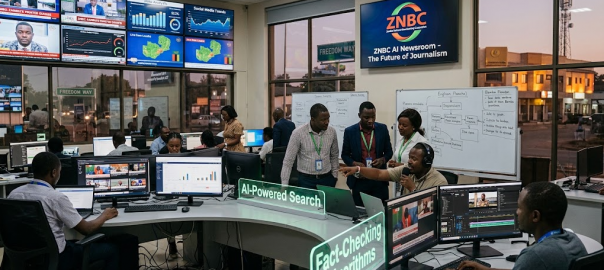
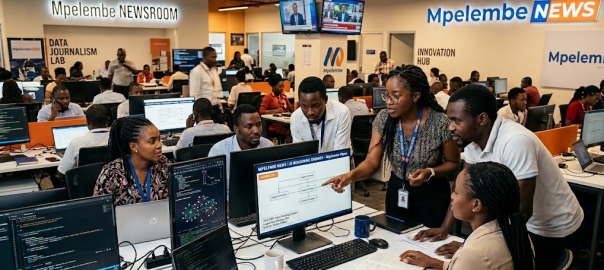
Newsrooms fight for survival against AI

Ethics in Action: Preserving Human Judgment Amid the Rise of Generative News

Tue Sep 01 2026 /Mpelembe Media/ — The global expansion of artificial intelligence has created a landscape of digital hegemony where standard-setting and economic benefits are heavily concentrated in the Global North, establishing a form of digital extractivism that mirrors historical colonial dynamics. Large technology conglomerates utilize content harvested from global networks to train proprietary models and sell them back as subscriptions. This extraction is accompanied by a severe decline in search referral traffic, which has collapsed by 50% to 60% in critical emerging markets like Brazil, South Africa, and Indonesia. This occurs because conversational search engines summarize copyrighted reporting directly on results pages, bypassing clicks to the original publisher. In response, major nations in the Global South are reframing the AI debate, moving from historical strategies of diplomatic non-alignment directly into the digital realm. Media leaders and policymakers in these regions argue that AI must not be treated as an isolated technical novelty, but as a critical national sovereignty, labor, and industrial policy issue that fundamentally impacts the health of local information environments. Continue reading

29Aug/26

How AI tokens and pixels drain budgets

The $30,000 Loop: How Google’s 2026 Prepay Mandate is Forcing an AI FinOps Revolution

Sat Aug 29 2026 /Mpelembe Media/ — The financial landscape of generative AI development is undergoing a massive shift as cloud providers migrate developers from traditional postpay structures to strict prepay billing systems, with Google AI Studio setting a hard cutover deadline of September 14, 2026. This transition forces developers to upgrade to paid tiers by prepaying a minimum of $10 to establish a positive credit balance, moving them through dynamic usage tiers based on cumulative spend and account age to secure advanced rate limits and enterprise-grade data privacy. The operational challenge of this model is its absolute zero-tolerance policy: when the prepaid balance hits $0, all connected API keys in linked projects stop working simultaneously. This introduces significant downtime risk to production workflows, especially since the typical 10-minute latency in billing pipelines allows long-running batch processes and autonomous agent sessions to run up overages before the system can process the depletion and halt usage. Continue reading

28Aug/26

Your AI intern is managing your mind

Algorithmic Elenchus: Deconstructing Structural Incentives and Substantive Due Process in Comparative Law

Thu Aug 27 2026 /Mpelembe Media/ —  The 2026 Zambian presidential election was defined by major legal and structural changes that occurred shortly before the vote. Under Constitutional Amendment Act No. 13 of 2025 and the subsequent May 2026 Electoral Processes Act, the electoral boundary map was dramatically redrawn, expanding the constituency seats from 156 to 226 just three months prior to the election. Following the vote, tension escalated when the Electoral Commission of Zambia (ECZ) suspended vote counting for six hours on August 14 before declaring incumbent Hakainde Hichilema the victor with 60.49% of the vote. In response, opposition leader Brian Mundubile prepared to file a formal challenge in the Constitutional Court. However, on the final day of the mandatory seven-day filing window, police citing “security reasons” physically sealed the top courts, blockading access and forcing the opposition to resort to an unprecedented digital petition sent directly to the Chief Justice’s personal email. Continue reading

24Aug/26

Why AI labels tank game sales

“AI Slop” Backlash: How Player Outrage is Forcing Developers to Put Human Artists First

Sun, Aug 23 2026 /Mpelembe Media/ — The video game industry is undergoing a swift legal and structural recalibration as “anti-AI” clauses rapidly transition from bespoke risk-mitigation measures into standard contract boilerplate. Corporate intellectual property lawyers, such as Haley MacLean of Voyer Law, report that nearly all of their game development and publishing clients now explicitly mandate strict bans on generative AI. This shift is primarily driven by massive intellectual property liability: under current U.S. copyright law, works must be the product of human authorship to receive IP protection. If a developer incorporates AI-generated assets like art, writing, or sound without substantial human editing, those elements fall into the public domain. Consequently, competitors could legally extract those identical assets and use them in their own games with no legal recourse for the original creator, rendering unedited AI assets a major commercial risk for publishers and investors alike. Continue reading

31Jul/26

When machines write better than humans

AI Integration and Integrity in 2026

Thu, July 30 2026 /Mpelembe Media/ — The provided sources paint a picture of a digital, literary, and academic landscape fundamentally transformed by generative artificial intelligence by the year 2026. The integration of large language models (LLMs) has sparked intense debates around intellectual property, job displacement, academic integrity, and the very definition of human authorship. Continue reading

24Jul/26

Boxing training against digital manipulation

Inside the Rhetorical Sparring Ring: UBUNK’s Plan to Knockout Online Nonsense

Fri, July 24 2026 /Mpelembe Media/ — The core philosophy and mission behind the UBUNK platform center on actively confronting falsehoods and proving oneself as a “heavyweight truth-teller”. It embraces a rigorous, arena-like environment where users are invited to “Step into the arena” and “Knockout the nonsense,” using the metaphor of a gym to emphasize the active and potentially competitive nature of seeking and defending the truth. Continue reading

03Jul/26

Agentic AI and the Human Pilot

From Static Reports to Sensing Engines: Rebuilding Corporate Strategy for the Agentic Era

Thur, July 03 2026 /Mpelembe Media/ —Agentic AI is fundamentally restructuring corporate intelligence by shifting market research and competitor monitoring from slow, episodic project cycles into always-on, real-time “sensing engines”. This architectural shift automates the extraction of competitor movements, SEC filings, pricing changes, and customer sentiment to dramatically compress decision latency. However, as organizations attempt to scale these autonomous systems, they face a deep tension between the efficiency of synthetic simulation and the necessity of rigorous human-led governance. Continue reading

20Jun/26

Mapping Hidden Connections with Google Pinpoint

A Comprehensive Guide to Google Pinpoint: Features, Limitations, and Workflows

Fri, Jun 18 2026 /Mpelembe Media/ — Google Pinpoint is a free, AI-powered research tool designed specifically to help journalists, academics, and researchers manage, search, and analyze massive troves of unstructured documents. As part of the Google News Initiative’s Journalist Studio, Pinpoint allows users to transition away from manual data sifting to a highly automated, digital workflow. Continue reading

20May/26

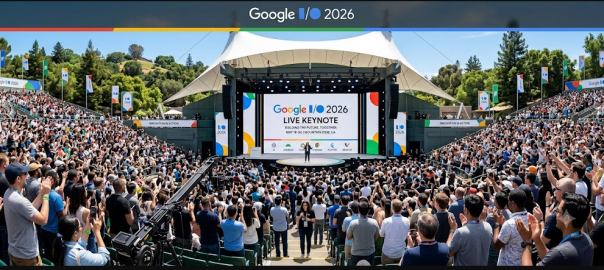
The Death of Doomscrolling and the Birth of AI Agents: Everything Announced at Google I/O 2026

Tue, May 19 2026 /Mpelembe Media/ — Google I/O 2026 and the preceding Android Show marked a major pivot for Google towards an “agentic era,” where AI transitions from a passive assistant to a proactive, autonomous system. Google introduced advanced models like Gemini Omni and Gemini 3.5, which are designed to perform complex actions rather than just generating text. A major focus was placed on Google Antigravity, a development platform that enables creators to build autonomous agents for various tasks. These innovations extend across the company’s ecosystem, including intelligent eyewear, a universal shopping cart, and enhanced scientific research tools. Furthermore, the updates emphasize multimodal capabilities and new creative applications such as Google Pics and Stitch. Ultimately, the source portrays a future where proactive AI assistants are deeply integrated into search, hardware, and professional workflows. Continue reading

21Apr/26

Affection Economy: The High Cost of Artificial Intimacy

The Commodification of Intimacy: How AI is Redefining the Attention Economy

April 20, 2026 /Mpelembe Media/ — The “affection economy” represents a strategic evolution from the traditional attention economy, moving beyond simply capturing user screen time to the commodification of emotional relations and intimacy. Driven by the rapid integration of social AI systems, technology companies are no longer just trying to influence our minds, but are actively aiming to win our hearts. Continue reading