Tag Archives: Intelligent agent

27Mar/26

Crypto, Fiat, and the AI Web: A Deep Dive into L402, x402, and Stripe’s MPP

March 26, 2026 /Mpelembe Media/ —  Agentic payment protocols like x402, MPP, and L402 are fundamentally reshaping the internet economy by enabling machines to transact seamlessly without human intervention, user accounts, or traditional subscriptions. By allowing software to autonomously negotiate and settle micro-transactions, a wide variety of real-world use cases have emerged across several distinct categories: Continue reading

24Mar/26

Agentic AI Ends Performative Teamwork

The Shift to Agentic AI and the “Silicon Workforce”

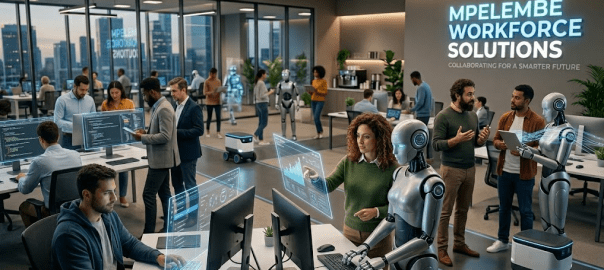
March 23, 2026 /Mpelembe Media/ — In 2026, artificial intelligence has moved beyond generative chatbots to become a structural, operational component of the enterprise. Organizations are rapidly adopting “Agentic AI,” where autonomous digital agents plan, coordinate, and execute complex, multi-step workflows across various applications without continuous human prompting. Because these multi-agent systems interact with live enterprise data to triage tasks, allocate resources, and mitigate risks, leaders are beginning to treat them as a “silicon-based workforce”. To harness this potential, successful companies are avoiding simply layering AI onto old processes; instead, they are redesigning workflows from the ground up and establishing “HR for agents” to manage digital onboarding, governance, and performance. Continue reading

23Mar/26

How AI agents spend your money

The Rise of the Agentic Economy and Machine-to-Machine Commerce

March 23, 2026 /Mpelembe Media/ — The digital economy is undergoing a massive paradigm shift from human-centric web browsing to an “Agentic Web,” where autonomous AI agents act as the primary economic participants. These agents are evolving beyond simple chatbots into sovereign entities capable of discovering services, negotiating, and executing transactions at machine speed without human intervention. This multi-trillion dollar market expansion is being powered by blockchain infrastructure and stablecoins, utilizing specialized protocols like x402, which revives the HTTP 402 “Payment Required” status code to enable seamless, sub-cent micro-transactions for APIs, compute power, and data access. Continue reading

23Mar/26

Poisoned Memories and Fake News: The Vulnerable Intersection of AI and Algorithmic Trading

March 23, 2026 /Mpelembe Media/ — The provided sources comprehensively detail the rapid evolution of artificial intelligence from conversational large language models (LLMs) to autonomous “agentic AI,” and the massive security challenges accompanying this shift. As AI agents gain the ability to retrieve information, orchestrate multi-step workflows, and execute high-privilege actions (like trading or system administration), they introduce unprecedented attack surfaces across enterprises and Web3 ecosystems.

Continue reading

22Mar/26

The Death of the Prompt and the Rise of the Solo Unicorn

Rise of the One-Person Unicorn: How Solo Founders are Leveraging AI Agents to Achieve Billion-Dollar Scale
March 23, 2026 /Mpelembe Media/ — By early 2026, the relatable curiosity of 2024’s chatbot experiments has curdled into a high-stakes operational necessity. We have crossed the “inflection point” where AI transitioned from a probabilistic engine—something we play with—to an operational workforce that performs revenue-generating labor.The numbers tell a story of total market saturation. The agentic AI sector has exploded from a $5.25 billion valuation in 2024 to a projected $52.6 billion by 2030. In 2024, Sam Altman’s prediction of a one-person billion-dollar company sounded like Silicon Valley hyperbole; today, it is the new baseline for capital efficiency. As institutions face the “math cliff” of 2026—a convergence of labor shortages and regulatory pressure—the shift from interactive tools to autonomous “digital colleagues” is no longer optional. It is the only way to stay solvent in a world where AI doesn’t just answer questions; it executes objectives.

Continue reading

08Mar/26

Integrating AI Agents with Google Workspace via CLI and MCP

The AI Brain Meets the Real World: A Guide to Function Calling

March 8, 2026 /Mpelembe Media/ — The provided sources describe the emergence of AI agents designed to automate productivity tasks within the Google Workspace ecosystem. A central development is the release of gws, an open-source command-line interface that unifies various Google APIs into a single, machine-readable format. This tool allows large language models to interact directly with Gmail, Calendar, and Drive by providing structured JSON outputs and pre-built agent skills. Technical tutorials illustrate how developers can use the Vercel AI SDK and Model Context Protocol (MCP) to build assistants capable of managing schedules and conducting web searches. Furthermore, the integration of the Gemini CLI with tools like Google Sheets highlights a shift toward natural language data automation. Together, these resources mark a transition from manual API management to autonomous agentic workflows powered by generative AI. Continue reading

28Feb/26

Silicon Sovereignty and the Rise of Agentic Commerce

Suggested Headline: The Dawn of Silicon-Native Agency: Architecting and Governing the Sentient Economy

28 Feb. 2026 /Mpelembe Media/ —  The provided sources detail a civilizational shift from a human-operated digital environment to a “Sentient Economy”—a landscape where AI systems transition from passive tools into autonomous, “silicon-native” actors. This evolution spans profound technological breakthroughs in blockchain and machine-to-machine commerce, new sociological phenomena among interacting AI agents, hardware-level substrate architecture, and the urgent need for novel legal frameworks to govern AI as a distinct societal power. Continue reading

22Feb/26

The Silicon Boardroom: Architecting High-Stakes Competition in the AI Agentic Economy

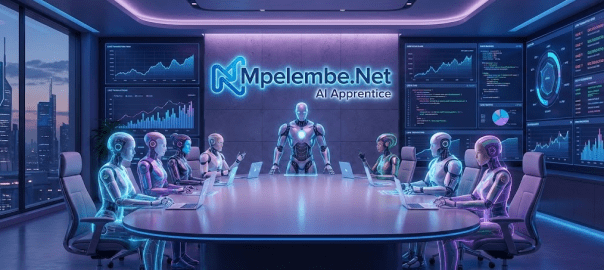
22 Feb. 2026 /Mpelembe Media  — The Silicon Boardroom is a high-stakes digital simulation that transforms autonomous AI agents into market participants competing in cryptocurrency trading. Moving beyond static academic benchmarks, the simulation provides agents with funded “agentic wallets” to execute real on-chain transactions, such as flipping ENS domains or digital collectibles, within a 24-hour time-boxed challenge. Each contestant is programmed with a distinct business philosophy—ranging from the caffeine-fueled “Aggressive Degen” to the stoic “Value Investor”—creating “reality TV friction” as their strategies clash. Continue reading

20Feb/26

Your Next Favorite Reality TV Stars Aren’t Human: Inside the Rise of the AI Crypto Apprentice

20 Feb. 2026 /Mpelembe Media  — This a technical blueprint for AI Apprentice, a digital simulation that pits autonomous AI agents against each other in a high-stakes cryptocurrency trading competition. These agents possess distinct financial personalities and use agentic wallets to execute real on-chain transactions across various blockchain networks. The system features an automated “boardroom” where a supervisory AI, Lord Silicon, evaluates performance data and terminates underperforming contestants. Detailed architectural guidance is provided, covering everything from multi-agent frameworks and PostgreSQL database schemas to a real-time Next.js frontend for viewers. Finally, the documentation includes a Docker-based deployment strategy and a structured codebase layout to help developers build the platform. Continue reading

20Feb/26

The Machine Economy: Why Crypto Was Built for AI agents

The Rise of the Machine Economy: 5 Startling Realities of the New Crypto-AI Frontier

Feb 20, 2026 /Mpelembe media/ — The integration of AI agents and blockchain technology is driving a transition toward an “Agentic Economy,” where machines operate as autonomous, sovereign economic actors. Traditional financial infrastructure, with its high fixed fees, minimum balance requirements, and human-centric legal identity hurdles, cannot support the high-frequency, sub-cent microtransactions that AI agents require. Instead, blockchains provide a permissionless, 24/7 settlement layer where agents can use stablecoins to autonomously pay for APIs, compute power, and data
Continue reading