Tag Archives: Kenneth Kaunda

07Aug/26

From Zamrock to Internet Kill-Switches

The Rise of Zed Beats and the Digital Music Revolution

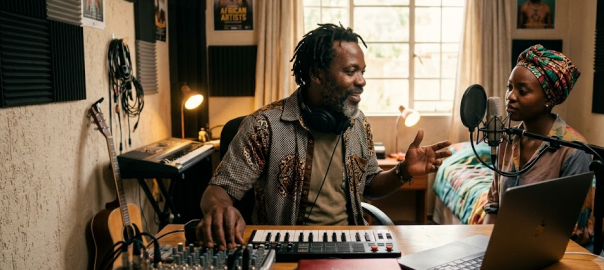
Fri , Aug 0& 2026 /Mpelembe Media/ — Zed Beats, which takes its name from the letter “Z” in Zambia, represents a dynamic hybrid music genre that emerged in the late 1980s. Young, self-taught producers began using affordable computer software to blend indigenous Zambian elements with popular global sounds like R&B, reggae, rap, hip-hop, Jamaican dancehall, Afrobeats, and amapiano. The rise of this digital movement was catalyzed by a major cultural void in the late 1980s and 1990s, when the devastating HIV/AIDS epidemic claimed the lives of a generation of veteran musicians who had anchored traditional live genres like Kalindula and Zamrock. To fill this void, which had left radio and television heavily dominated by foreign music, young enthusiasts utilized newly accessible computer technology to resurrect local music and forge a modern urban identity. Continue reading

04Aug/26

Five Elders Guarding Africa’s Borderless Future

Institutionalizing Peace: The African Union, NEPAD, and the Future of Continental Governance

Tue , Aug 04 2026 /Mpelembe Media/ —The provided sources collectively chronicle Africa’s historical journey from colonial subjugation toward liberation, heavily emphasizing the enduring spirit of Pan-Africanism. A central figure in this narrative is Dr. Kenneth Kaunda, the first president of Zambia, who led his nation to independence in 1964 and became a patriarch of the continent’s anti-colonial struggles. Through his philosophical framework of Zambian Humanism and the unifying national slogan “One Zambia, One Nation,” Kaunda sought to build a cohesive, multi-ethnic society free from the exploitation of man by man. Internationally, he—alongside contemporaries like Julius Nyerere and Kwame Nkrumah—offered crucial support to regional liberation movements fighting against apartheid and minority rule in Southern Africa. While Kaunda’s legacy involves complex debates regarding his period of one-party rule and post-colonial economic challenges, his published works, such as the seminal 1962 autobiography “Zambia Shall Be Free,” remain foundational texts that articulate the ethical and political defense of African self-determination. Continue reading

03Aug/26

The Memoir of Dr. Kenneth Kaunda

A Wake-Up Call for the Diaspora and Economic Sovereignty Institutionalizing Peace:

Mon, Aug 03 2026 /Mpelembe Media/ — The provided sources collectively chronicle Africa’s historical journey from colonial subjugation toward liberation, heavily emphasizing the enduring spirit of Pan-Africanism. A central figure in this narrative is Dr. Kenneth Kaunda, the first president of Zambia, who led his nation to independence in 1964 and became a patriarch of the continent’s anti-colonial struggles. Through his philosophical framework of Zambian Humanism and the unifying national slogan “One Zambia, One Nation,” Kaunda sought to build a cohesive, multi-ethnic society free from the exploitation of man by man. Internationally, he—alongside contemporaries like Julius Nyerere and Kwame Nkrumah—offered crucial support to regional liberation movements fighting against apartheid and minority rule in Southern Africa. While Kaunda’s legacy involves complex debates regarding his period of one-party rule and post-colonial economic challenges, his published works, such as the seminal 1962 autobiography “Zambia Shall Be Free,” remain foundational texts that articulate the ethical and political defense of African self-determination. Continue reading

18Jul/26

Guy Scott: The Life and Legacy of a Zambian Statesman

The Life, Legacy, and Passing of Guy Scott
Sat, July 18 2026 /Mpelembe Media/ —  Dr. Guy Lindsay Scott was born in Livingstone in 1944 to Scottish immigrant parents. Educated at Cambridge and the University of Sussex, where he earned a PhD in cognitive science, Scott entered politics as part of the Movement for Multiparty Democracy (MMD) in 1991. Appointed Minister of Agriculture, Food, and Fisheries, he earned national acclaim for successfully managing the catastrophic 1991–1992 drought, stabilizing food production, and preventing widespread famine.

Continue reading

03Jul/26

From Student Prefects to Parliament: The Leadership Pipeline of Kitwe Boys High School

Building Zambia’s Engineers: The STEM Legacy and Academic Rigor of Kitwe Boys

Thur, July 03 2026 /Mpelembe Media/ — Kitwe Boys Secondary School, founded in 1957 during the peak of British colonial administration in Northern Rhodesia, reflects the broader social, political, and architectural transformations of the Copperbelt region. Spanning eras of strict racial segregation, rapid post-independence integration, and modern educational adaptation, the school’s history provides a powerful lens into the heritage of Zambia’s mining heartland. Continue reading

21Jun/26

Chinese debt and mining labor in Zambia

The Dragon and the Copper Belt: The Complex Realities of China-Zambia Relations

Fri, Jun 18 2026 /Mpelembe Media/ — The relationship between China and Zambia is deeply complex, evolving from historical solidarity into a modern partnership defined by massive economic investment, sovereign debt crises, and significant labor controversies. Continue reading

01Mar/26

The Return of the Warriors: Inside Zambia’s Historic N’cwala Festival

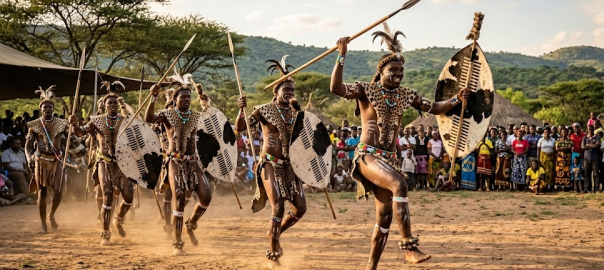
28 Feb. 2026 /Mpelembe Media/ — The N’cwala (or Nc’wala) ceremony is a major annual cultural festival celebrated by the Ngoni people of Zambia’s Eastern Province. Held every year on the last Saturday of February at Mtenguleni village near Chipata, it primarily serves as a thanksgiving festival for the first fruits of the harvest and an occasion to pay homage to God, ancestral spirits, and the Paramount Chief Mpezeni. Continue reading

13Feb/26

Vionde Music Mixtapes: From 1970s Zamrock to Modern Zed Beats

Why We Sing: The Hidden Science of Love, Zambia’s Golden Soul, and the Art of the Perfect Mixtape

Feb 13, 2026 /Mpelembe media/ — The impulse to share a specific song with a partner is among our most enduring romantic rituals, yet it represents a profound transition in the human experience: the shift from music as a fleeting acoustic performance to music as a curated, tangible artifact. This act of intentional construction is not merely about entertainment; it is the building of a “sonic identity” that serves as a physical representation of intimacy. To understand why music maintains such a visceral grip on our romantic lives, we must look to the intersection of evolutionary  ontogeny  and cultural heritage. From the rhythmic scaffolding of our ancestors to the “Golden Soul” of 1970s Zambia, music functions as a sophisticated toolkit designed to signal fitness, accelerate trust, and preserve our collective “affective heritage.”

Continue reading

10Feb/26

Kenneth Kaunda: The Legacy of a Pan-African Patriarch

10 Feb. 2026 /Mpelembe Media  — Based on the provided sources, there is no evidence that Kenneth Kaunda explicitly envisioned mpelembe.net as a network for the Pan-African movement. Instead, the sources describe Mpelembe Secondary School and the Mpelembe Network (mpelembe.net) in the following ways: Continue reading

15Jan/24

Zambia is the most peaceful country in Africa.

Sept. 15, 2023 /World / — Zambia has experienced internal conflicts including rebellions and uprisings, it has not experienced a full-blown civil war comparable to those seen in several other African nations. Continue reading