Tag Archives: Rwanda

24Aug/26

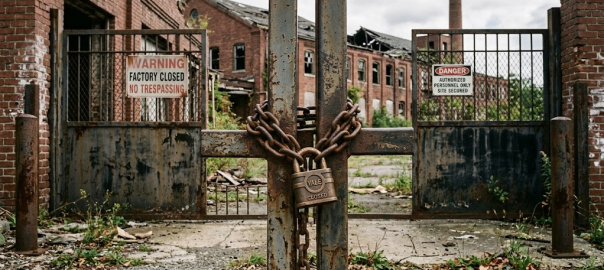
Why joblessness and diamonds fuel civil war

The Dual Private Sector Dilemma: Why IMF Market-Led Growth Models Fail to Create Jobs in Fragmented African Economies

Mon, Aug 24 2026 /Mpelembe Media/ — The economic relationship between sub-Saharan Africa and the International Monetary Fund (IMF) has its roots in the 1944 Bretton Woods Conference, where the few developing nations present failed to secure explicit references to their development financing needs in the Articles of Agreement. From its inception, the IMF maintained a rigid, short-term balance-of-payments focus, famously denying Ethiopia’s first request for financial assistance on the grounds that its needs were neither immediate nor temporary. By the 1980s and 1990s, this short-term framework was formalized into neoliberal Structural Adjustment Programs (SAPs), which mandated strict conditionalities such as market deregulation, extensive privatization of state-owned enterprises, and rapid trade opening. Although promoted as pathways to long-term macroeconomic stability, these interventions frequently triggered severe adverse social consequences, including declining real wages, heightened poverty, and the systematic deterioration of basic health and social welfare systems. In response to widespread critique in the late 1990s, the IMF purported to shift its operational model, replacing traditional SAPs with the Enhanced Structural Adjustment Facility (ESAF) and, subsequently, various credit facilities under the Poverty Reduction and Growth Trust (PRGT). However, empirical evidence indicates that these contemporary programs represent “SAPs in disguise,” with loan conditionalities and stringency steadily rising, and core prescriptions of fiscal consolidation and state retrenchment remaining largely unchanged. Continue reading

19Aug/26

Zambia’s Afronauts and the Modern Circus

From Cosmic Footnote to Global Stage: The Bold Legacy of Zambia’s First Afronauts

Wed, Aug 19 2026 /Mpelembe Media/ — In the early 1960s, the African continent was caught in a magnificent, swirling “Wind of Change,” as British Prime Minister Harold Macmillan famously described the inevitable end of colonial rule. For the people of Zambia, 1964 was not just the year of independence; it was a psychological rebirth. It was an era where the impossible suddenly seemed achievable. Amidst this atmosphere of newborn sovereignty, one man dared to suggest that African intellectual power should not just reclaim its land, but stake a claim in the cosmos itself.Edward Mukuka Nkoloso was more than just a dreamer; he was a veteran and an activist who understood that for Zambia to be truly free, it had to assert its scientific and intellectual sovereignty on the global stage.
Continue reading

15May/26

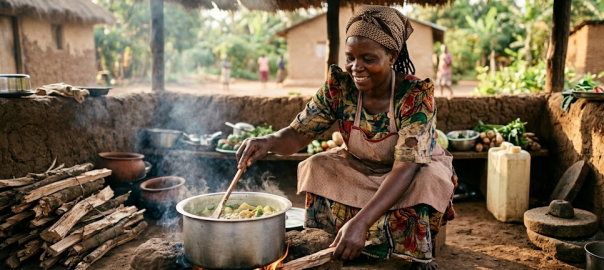
Why Giving Away Clean Stoves Fails

Fri, May 15 2026 /Mpelembe Media/ —The global reliance on traditional, polluting cooking fuels remains a critical health and environmental crisis, with over 2 billion people lacking access to clean alternatives like liquefied petroleum gas (LPG), biogas, and electricity. This dependence generates severe household air pollution (HAP), which is linked to nearly 3 million premature deaths annually and disproportionately impacts women and children, who also suffer the economic and educational toll of “time poverty” from daily fuel collection. Continue reading

02Dec/25

Fraud’s New Frontier: AI, Deepfakes, and Global Networks

Dec. 02, 2025 /Mpelembe Media/ — The Sumsub Fraud Report 2025-2026 focuses on the “Sophistication Shift,” which describes the fundamental change in identity fraud from high-volume, basic attempts to fewer, more targeted, and financially damaging AI-enabled operations. This shift is driven primarily by the industrialisation of deception via generative AI, leading to an explosion in deepfakes and highly realistic synthetic identities across all major digital ecosystems. The analysis provides comprehensive regional breakdowns for Europe, Asia-Pacific, Latin America, Africa, and North America, demonstrating that even in markets where overall fraud rates are stabilising, the remaining attacks are significantly more complex and harder to detect. Continue reading

03Jan/24

Africa Cup of Nations showcases the continent’s finest footballers – and China’s economic clout

Simon Chadwick, SKEMA Business School and Chris Toronyi, Loughborough University

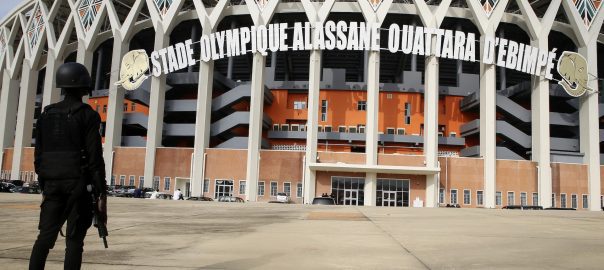
When the Africa Cup of Nations begins on January 13, the opening match between Guinea Bissau and the hosts, Ivory Coast, will be played at the Alassane Ouattara Stadium in Abidjan. The state-of-the-art venue is one of six stadiums being used during the football tournament.

Continue reading

30Sep/23

Suella Braverman is wrong about the UN refugee convention being ‘not fit for purpose’ – here’s why

Robert Oakes, United Nations University and Talitha Dubow, United Nations University

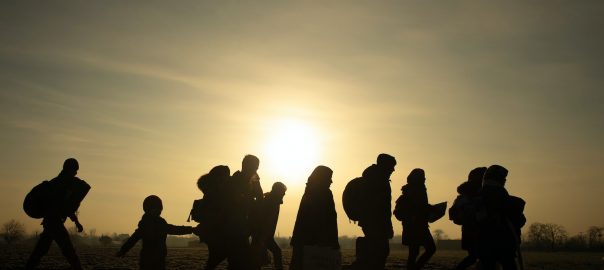
The UK’s home secretary, Suella Braverman – the minister responsible for setting immigration policy – has said the United Nation’s refugee convention is not “fit for our modern age” and should be renegotiated.

Continue reading

20Jun/23

Africa is not a jungle, it’s an innovation hub

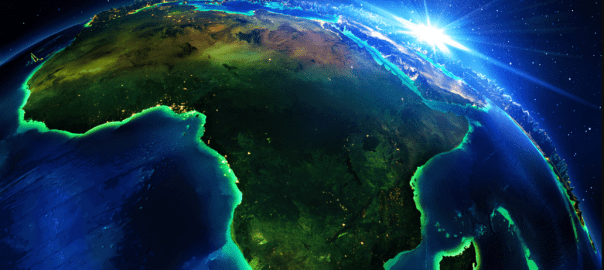
June 20, 2023 /Business/ — Africa is the second-most populous continent in the world, with over 1.3 billion people. The continent’s economy is also growing rapidly, with an average annual growth rate of 5.5%. This means that there is a huge potential market for African startups. Africa is a continent with a lot of diversity, both in terms of its people and its economies. This can present both challenges and opportunities for businesses. However, the opportunities are significant, and there are a number of government initiatives in place to support innovation. Continue reading

31May/23

It is not illegal to be LGBTQ

May 31, 2023 /Lifestyle/ –Uganda is a relevant country on the global scale for a number of reasons, including its strategic location in East Africa, its large population, and its natural resources. The country is also a member of the United Nations and the African Union, and it plays an important role in regional security and development.

However, Uganda’s anti-LGBTQ laws have made it a target of international criticism. In 2014, the Ugandan Parliament passed a bill that would have made same-sex sexual activity punishable by life in prison. The bill was met with widespread international condemnation, and it was eventually withdrawn. However, the country’s anti-LGBTQ laws remain in place, and LGBTQ people in Uganda continue to face discrimination and violence. Continue reading

30May/23

‘They just ignored my tears, they ignored my unhappiness’: former Irish nuns reveal accounts of brainwashing and abuse

Karen Hanrahan, University of Brighton

Any thoughts of escaping to a more natural life was regarded as being sinful. The idea of being unfaithful to your vocation was a step on the way to hell. It would be a mortal sin.

These are the words of Mary, my mother. She was just 15 when she entered a convent in Ireland in 1950 and 34 by the time she finally managed to leave. She had been expressing doubts to her superiors since her early twenties but years of “brainwashing” and the very real fear of her and her family facing eternal damnation made breaking her vows seem impossible.

Continue reading

01May/23

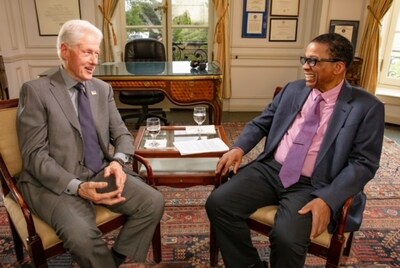
International Jazz Day 2023 Worldwide Celebration Concludes with Extraordinary All-Star Global Concert

The 12th annual International Jazz Day came to a thrilling close with a spectacular All-Star Global Concert featuring performances from Beijing, Beirut, Johannesburg, New York, Rio de Janeiro, Vienna and beyond. The All-Star Global Concert showcased celebrated jazz artists including Cyrille Aimée (France), Ambrose Akinmusire (USA), Thana Alexa (Croatia), John Beasley (USA), Dee Dee Bridgewater (USA), Musekiwa Chingodza (Zimbabwe), Emmet Cohen (USA), Kurt Elling (USA), Oran Etkin (Israel), Tom Gansch (Austria), Christian McBride (USA), Sérgio Mendes (Brazil), Marcus Miller (USA), Thandi Ntuli (South Africa), Dianne Reeves (USA), Antonio Sánchez (Mexico), Somi (Rwanda) and many others. Continue reading