
Tag Archives: United Kingdom

11Apr/26

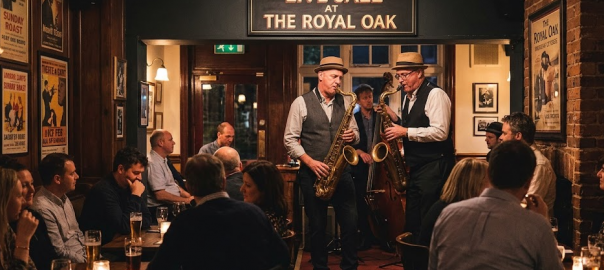
How Radio DJs Built Community Before Algorithms

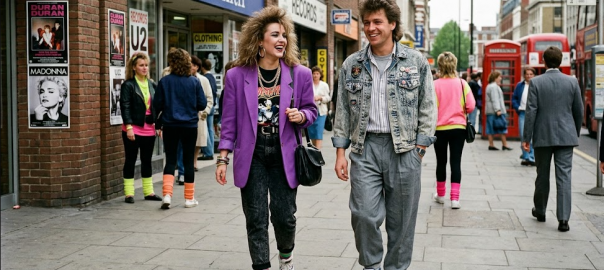
The Soul Frontier: Robbie Vincent, the ‘Soul Mafia,’ and the Integration of British Broadcasting (1970–1985)

Continue reading →

09Apr/26

Between Invisible Loneliness and Suffocating Control

Invisible Prisons: Escaping High-Control Groups, Stalking, and Mental Abuse

April 9, 2026 /Mpelembe Media/ — Distinguishing loneliness from objective social isolation. This analysis highlights that you can experience profound loneliness even when surrounded by people. This often happens in environments like busy cities due to “stimulus overload,” where a constant barrage of noise and interactions causes people to emotionally withdraw to protect themselves. To combat this hollow feeling, humans rely on “shared reality”—the perception of having common feelings, beliefs, or attitudes with others about the world. Establishing a shared reality with even just one person helps reduce uncertainty and fosters a genuine sense of connection and meaning, which acts as a powerful buffer against the pain of loneliness.
Continue reading →

09Apr/26

From Doret Legore to Kemi Badenoch: Unpacking Britain’s Post-Racial Paradox

The Bureaucratic Class and the Culture War: Kemi Badenoch’s Vision for Britain

April 9, 2026 /Mpelembe Media/ —  The provided sources revolve around the contemporary British political and cultural landscape, specifically focusing on debates over race, institutional power, and conservative ideology. The material can be summarized across three interconnected themes: Continue reading →

09Apr/26

Leading Global Teams with Cultural Intelligence

Managing the World’s Biggest Tournament: A Guide to the Absurdities of ‘Twenty Twenty Six’

April 9, 2026 /Mpelembe Media/ —  Twenty Twenty Six is a six-part mockumentary comedy series created by John Morton, serving as a spiritual sequel to his previous comedies Twenty Twelve and W1A. The series follows the return of the amiably vexed Ian Fletcher (Hugh Bonneville), who takes on a new role as the incoming director of integrity and head of the oversight team for the world’s largest football tournament. Due to legal reasons, the words “Fifa” and “Cup” are bleeped out throughout the show.

Continue reading →

06Apr/26

Richmond as a demographic time machine

Aging Well in Richmond: Healthcare, Extra Care Housing, and Social Wellbeing

April 6, 2026 /Mpelembe Media/ — Demographics and the Housing Market Richmond upon Thames is an affluent borough characterized by an aging population and some of the highest property values in London. The median age has risen to 41, and projections indicate that the 80+ age group will be the fastest-growing demographic over the next decade. In the housing market, average house prices saw a slight year-on-year correction, dropping 2.4% to £795,000 in early 2026, while private rental costs surged by 5.7% to an average of £2,276 per month. To address the specific needs of the aging demographic, there is a strategic local push to expand “Extra Care” housing, which enables older adults to live independently while receiving flexible, on-site support. Continue reading →

01Apr/26

April Fools’ in the Science Classroom: Using Pranks to Build Media Literacy

From Moon-Bats to Deepfakes: How Scientific Hoaxes Expose the Flaws in Our Information Ecosystem

April 1, 2026 /Mpelembe Media/ — The Evolution and Impact of Scientific Deception Throughout history, scientific hoaxes and misinformation have challenged our epistemological frameworks and tested the limits of institutional authority. While these deceptions have occasionally caused public harm, they also paradoxically serve as vital catalysts for improving methodological rigor, journalistic standards, and public media literacy. Continue reading →

28Mar/26

Shadow Governments and Hit Squads: The Weaponization of Masonic Lodges

March 28, 2026 /Mpelembe Media/ —  Organized crime groups, particularly the Calabrian ‘Ndrangheta and the Sicilian Cosa Nostra, have transformed from regional racketeers into sophisticated global enterprises. Central to their modern success is the “submersion” strategy—a tactical move away from overt, bloody violence toward the silent infiltration of the legal economy, public administration, and global financial systems.

Continue reading →

27Mar/26

The UN Resolution on Slavery Reparations

UN General Assembly Makes History: Declares Transatlantic Slave Trade the “Gravest Crime Against Humanity”

March 27, 2026 /Mpelembe Media/ — On March 25, 2026, coinciding with the International Day of Remembrance of the Victims of Slavery and the Transatlantic Slave Trade, the United Nations General Assembly adopted a historic resolution declaring the transatlantic trafficking of enslaved Africans and racialized chattel enslavement as “the gravest crime against humanity”. Spearheaded by Ghana and heavily supported by the African Union and Caribbean Community (CARICOM), Resolution A/80/L.48 marks a significant shift in international human rights by calling for a comprehensive framework of reparatory justice.

Continue reading →

24Mar/26

The Anatomy of Disintegration: Madness, Blindness, and Nihilism in King Lear

Historical Context and Sources
March 24, 2026 /Mpelembe Media/ — Shakespeare adapted King Lear from a variety of historical and literary texts, most notably Geoffrey of Monmouth’s 12th-century Historia Regum Britanniae, Raphael Holinshed’s Chronicles, and an anonymous 1605 play titled The True Chronicle History of King Leir. While these earlier legends traditionally featured a happy ending where the king is restored to power by his loyal daughter, Shakespeare radically altered the narrative by introducing a bleak, catastrophic conclusion. This shift allowed Shakespeare to explore the political anxieties of Jacobean England, specifically the fears surrounding succession, the division of kingdoms, and the “Divine Right of Kings” following the death of Queen Elizabeth I. 

Continue reading →

22Mar/26

Live from London: Can SNL UK Thread the Needle Between American Spectacle and British Cynicism?

March 21, 2026 /Mpelembe Media/ — The premiere episode hosted by Tina Fey generated a highly polarized response. Professional critics offered mixed-to-positive reviews, noting that while the opening was “stilted,” the show ultimately “didn’t fail”. Reviewers praised the zingy “Weekend Review” segment, a surreal Paddington sketch, and Jack Shep’s accurate Princess Diana impression. However, critics also felt the production played the traditional SNL formula too safely, resulting in what some described as “tepid cosplay”.
Audiences were similarly divided. Some viewers reported “switching off” just moments into the political cold open mocking Prime Minister Keir Starmer, taking to social media to brand the debut as “excruciating” and “awful”. Conversely, other viewers were pleasantly surprised, praising the young cast for smashing it under pressure and delivering wonderfully British, laugh-out-loud moments.

Continue reading →