Tag Archives: Economy

24Oct/26

How Foreign Investors Trade in Zambia

Investing in the Lusaka Securities Exchange: Comparative Pathways, Settlement Mechanics, and Treaty Tax Relief for UK Residents

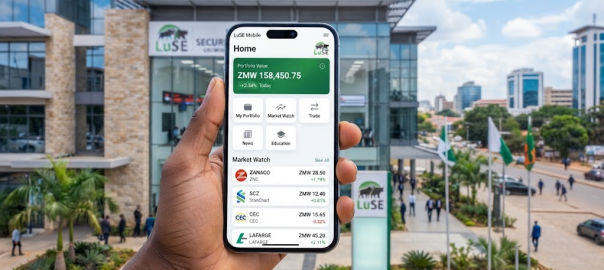
Sat Oct. 24, 2026 /Mpelembe Media/ — The Lusaka Securities Exchange (LuSE) operates under the regulatory supervision of the Securities and Exchange Commission (SEC) of Zambia pursuant to the Securities Act No. 41 of 2016, providing a centralized capital market with an equity market capitalization of approximately USD 2.30 billion. To prevent off-market fragmentation, Zambian law mandates that all public companies with 50 or more shareholders must register with the SEC and trade exclusively on a recognized stock exchange, effectively prohibiting Over-The-Counter (OTC) equity markets. The exchange functions across a two-tier market structure comprising the Main Board (Official List) for established public enterprises and the Quoted Tier for growth-phase entities. Zambia maintains a fully liberalized foreign exchange regime with no exchange controls, permitting up to 100% foreign ownership in private and listed assets—with narrow statutory exceptions, such as domestic cellular network operators required to float 10% of their shares on the exchange—and guaranteeing the repatriation of investment capital, dividends, and profits through the Bank of Zambia. Continue reading →

23Oct/26

How War and Climate Break Supply Chains

Global Economic Impacts of the 2026–2027 Super El Niño

The Severity of the Climate Shock in a Fragile Macro Context

Fri Oct. 23, 2026 /Mpelembe Media/ — The 2026–2027 El Niño climate event is developing into one of the most severe episodes on record, with equatorial Pacific sea-surface temperature anomalies projected to exceed +2°C to +3°C. Meteorological authorities assign a greater than 90% probability to a very strong event, with a 75% likelihood of exceeding the intensity of historical benchmarks recorded since 1950. Unlike previous cycles, this climate phenomenon collides with an exceptionally fragile macroeconomic environment characterized by historically elevated public debt, high interest rates, ongoing geopolitical tensions, and pre-existing supply chain frictions. Continue reading →

19Oct/26

Why Zambia National Budget Needs Local Accounting

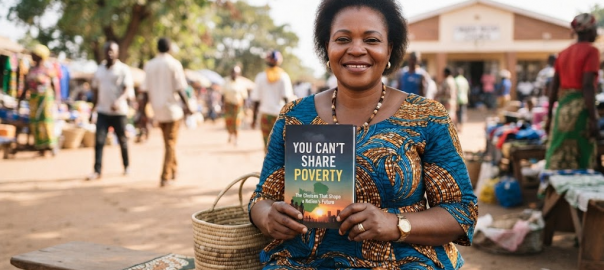
You Can’t Share Poverty: Reconciling Fiscal Discipline with Local Empowerment in Emerging Economies

Mon Oct. 19, 2026 /Mpelembe Media/ — Hakainde Hichilema’s political memoir and reform playbook, You Can’t Share Poverty: The Choices That Shape a Nation’s Future, sets forth a structural growth doctrine that redefines the social contract in developing nations. The foundational premise argues that state-driven wealth redistribution in low-income or heavily indebted economies serves merely to socialize scarcity and dilute existing capital without building productive capacity. Sustainable poverty reduction and employment creation cannot be achieved through consumption subsidies or state patronage, but require expanding national output (GDP) by attracting foreign direct investment, expanding the industrial tax base, and establishing predictable regulatory frameworks where the state acts as a facilitator rather than a controller of commercial enterprise.
Continue reading →

20Sep/26

XRP Powers Stripe’s New Payment Standard

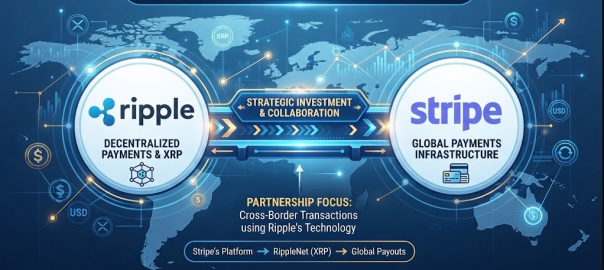
Ripple Connects XRP Ledger to Stripe via Machine Payments Protocol

Sun 20 Sept 2026 /Mpelembe Media/ — The XRPL AI Starter Kit version 1.1 serves as the software framework enabling this connection by adding support for both the Machine Payments Protocol (MPP) and the Open Wallet Standard. Originally launched in June, this updated developer resource incorporates MPP—a protocol co-authored by Stripe and Tempo, a payment-focused blockchain that launched its mainnet in March. Continue reading →

08Sep/26

African Payment Pitfalls and $25,000 Tax Traps

The Three Pillars of African Payments

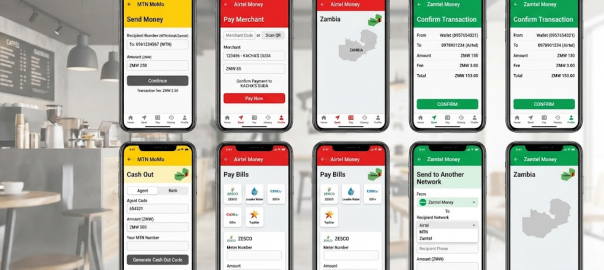
Tue Sep 08 2026 /Mpelembe Media/ — For a student entering the world of fintech, the African payment landscape can initially seem overwhelming. Unlike Western markets where credit cards are the standard, the African ecosystem is built on a “Hybrid Imperative.” In markets like Zambia, global tools like Stripe are often used for international billing, but they lack localized settlement and struggle with poor conversion rates due to bank-side fraud rules. To reach the actual local consumer, businesses must tap into the infrastructure that people already use: mobile money.The ecosystem is supported by three primary players:

  1. Mobile Network Operators (MNOs):  The foundational infrastructure providers that issue digital wallets and manage the movement of local currency.
  2. Payment Gateways:  Intermediaries that bridge the gap between global standards and local methods across multiple countries.
  3. Payment Aggregators:  Specialized “simplifiers” that bundle multiple mobile money connections into a single, developer-friendly interface.Learning Insight: The “So What?”  While credit and debit cards are the global gold standard for SaaS, they represent only a minor fraction of transactional volume in many African nations. In the retail ecosystem of Southern Africa, mobile money is the dominant force. Understanding how to connect to these networks is the key to unlocking the market.While these three pillars work together, the journey starts at the foundational “source”: the MNOs.

Continue reading →

09Feb/26

The Rise of the Autonomous Economy: AI Agents and Blockchain Converge to Redefine Finance in 2026

10 Feb. 2026 /Mpelembe Media  — Ripple will unveil its 2026 Roadmap on February 11, focusing on integrating XRP into capital markets. Key updates include smart contracts, zero-knowledge proofs for privacy, and cross-chain liquidity. These advancements aim to drive institutional adoption and utility. Continue reading →

23Jun/23

Is zambia the cinderella of Africa, poor indebted by wicked China and saved by the western prince?

23 June 2023 /Economy/– Zambia’s recent debt restructuring deal with its creditors is a major step forward for the country’s economy. The deal will allow Zambia to access much-needed financial resources to help it recover from the COVID-19 pandemic and stimulate economic growth.

In the short term, the deal will likely lead to a decrease in Zambia’s debt servicing costs, which will free up funds that can be used for other purposes, such as infrastructure development and social programs. This will help to boost economic growth and improve living standards for Zambians. Continue reading →

21Jun/23

Europe cannot survive without Africa

June 21, 2023 /World/ — The statement that “Europe cannot survive without Africa” is a bit of an exaggeration. While Europe does rely on Africa for a number of resources, it is not entirely dependent on the continent. However, it is true that Africa plays an important role in the European economy.

Here are some of the ways in which Africa contributes to the European economy: Continue reading →

20Jun/23

Anyone.com unveils new mortgage model, unleashing the transformative potential of a more inclusive path to homeownership for millions of people

In response to the global housing affordability crisis, Anyone.com today unveiled a groundbreaking solution that aims to redefine the future of the housing market: The Anyone Mortgage. This novel model, designed to bridge the ever-widening gap between income stagnation and skyrocketing house prices, promises to make homeownership accessible again, especially for the often currently neglected demographic of first-time buyers and lower-income households. Continue reading

20Jun/23

Africa is not a jungle, it’s an innovation hub

June 20, 2023 /Business/ — Africa is the second-most populous continent in the world, with over 1.3 billion people. The continent’s economy is also growing rapidly, with an average annual growth rate of 5.5%. This means that there is a huge potential market for African startups. Africa is a continent with a lot of diversity, both in terms of its people and its economies. This can present both challenges and opportunities for businesses. However, the opportunities are significant, and there are a number of government initiatives in place to support innovation. Continue reading →