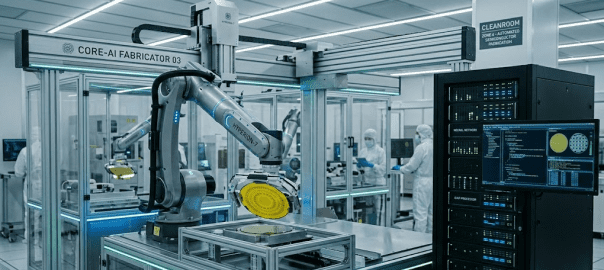
Jan. 27, 2026 /Mpelembe Media/ — A report from Equity Insider details how a massive $900 billion Pentagon budget is fueling a rapid transformation in the defense technology sector. This shift emphasizes the integration of artificial intelligence and edge computing to improve electronic warfare, missile tracking, and battlefield decision-making speed. Highlighting several key industry players, the text specifically focuses on VisionWave Holdings and its strategic efforts to develop radio-frequency sensing and computational acceleration tools. Other major firms like Leonardo DRS and L3Harris are also noted for their contributions to advanced satellite payloads and intelligence aircraft. Collectively, these developments aim to secure a technical advantage by collapsing response times and enhancing threat detection across air, space, and land domains. Continue reading
Category Archives: Technology
The Science of Sex and the Fiction of Gender
Jan. 26, 2026 /Mpelembe Media/ — This source features a multidisciplinary discussion hosted by the Institute of Art and Ideas regarding the biological and social definitions of sex. A panel of experts, including a journalist, a biologist, and a sociologist, examines whether traditional scientific classifications of male and female are influenced by cultural gender biases. By referencing the work of Judith Butler, the program questions if even evolutionary narratives are shaped by human fiction rather than objective fact. Ultimately, the debate seeks to determine if reimagining human identity beyond these binary constraints is a necessary progression or a misguided political objective. Continue reading
The Biological Mind vs. The Digital Machine: Cracking the Code for Thought
Jan. 26, 2026 /Mpelembe Media/ — This theory explores the philosophical and scientific debate regarding whether the human mind functions like a digital computer. While neuroscience traditionally views the brain as a computational machine, the text highlights significant biological differences, such as the complex, fluid nature of neurons compared to rigid logic gates. Distinguished experts, including Roger Penrose and Max Tegmark, examine if consciousness and perception can be truly captured through mathematical models or if living thought is fundamentally unique. Ultimately, the discussion questions whether artificial intelligence reflects the true essence of the cosmos or if it remains a limited imitation of organic sophistication. This inquiry serves as a centerpiece for the Institute of Art and Ideas, bringing together elite thinkers to bridge the gap between physics and philosophy. Continue reading
The “Locked In” Era: Why Silicon Valley Founders are Trading Intimacy for Innovation
Jan. 26, 2026 /Mpelembe Media/ — There is a growing cultural trend where young tech entrepreneurs are intentionally choosing celibacy to maximize their professional output. By adopting a monastic lifestyle, these founders prioritize product development and company growth over romantic relationships or dating. Being “locked in” to their work requires removing the distractions of personal intimacy to remain competitive in Silicon Valley. Ultimately, this movement reflects a radical shift in work-life balance where emotional fulfillment is sacrificed for technological innovation. Continue reading
Empowering Educators and Students: The Next Generation of AI Integration in Google Classroom
Jan. 22, 2026 /Mpelembe Media/ — Google has announced a series of technological enhancements to its Gemini and Google Classroom platforms to improve the academic experience for both staff and pupils. Students can now access complimentary SAT practice examinations and use sophisticated AI models to generate visual study aids like infographics. For educators, the updates introduce streamlined administrative tools that assist with drafting lesson plans, tracking student engagement, and providing automated feedback. The Classroom interface has been redesigned into an interactive dashboard that highlights upcoming deadlines and essential learning metrics. Furthermore, new multimedia capabilities allow users to integrate audio and video recordings directly into their digital coursework. These innovations aim to personalise learning while reducing the time teachers spend on repetitive organisational tasks. Continue reading
The Evolution of Digital Deception: How 2025 Scams Blended into Daily Online Life
Jan. 20, 2026 /PRNewswire/ — The Q4 2025 Gen Threat Report highlights a significant shift in cybercrime, where fraudulent advertisements and deepfake content have become the primary methods for targeting consumers. These findings indicate that attackers are increasingly exploiting trusted social media platforms like Facebook and YouTube to host fake online shops and deceptive investment schemes. Rather than using complex technical exploits, modern scams trick individuals into performing routine digital actions, such as clicking links or scanning QR codes, to compromise their data. The report also identifies GhostPairing attacks and a sharp rise in identity-related breaches as growing risks that bridge the gap between mobile and desktop devices. Ultimately, the data warns that malvertising has evolved into a sophisticated tool that allows threats to blend seamlessly into everyday internet browsing. Continue reading
The Urgent Need for Post-Quantum Cryptography (PQC)
This report examines the growing security risks posed by the rapid evolution of quantum computing and artificial intelligence within the financial sector. Experts warn that advanced quantum systems could soon dismantle current cryptographic standards, necessitating an immediate transition to quantum-resistant protection. Furthermore, the rise of AI-driven fraud, such as deepfakes and synthetic identities, is increasingly compromising the verification gateways of traditional and digital banks. To combat these emerging threats, the text advocates for rigorous technical standards and collaborative governance to ensure long-term financial stability. Ultimately, the findings emphasize that institutions must proactively update their security frameworks to defend against the impending “key apocalypse.” Continue reading
The Future of Personal AI: A Guide to Gemini’s Cross-App Integration
Jan . 11, 2026 /Mpelembe Media/ — Google has launched Personal Intelligence, a new beta feature that allows users in the United States to link the Gemini AI with various Google applications like Gmail and Photos. By integrating these services, the assistant can provide highly tailored answers by cross-referencing private emails and images to retrieve specific details, such as vehicle information or travel preferences. Users maintain full control over their data, as the feature is disabled by default and allows for the selective connection of specific apps. To protect individual privacy, the AI does not train its core models directly on private libraries; instead, it uses the data only to answer individualised prompts. This update is currently available for AI Pro and Ultra subscribers on mobile and web platforms, with plans for a broader release in the future. The system is designed to be proactive and helpful, though it still requires user feedback to improve its understanding of complex human nuances and relationships. Continue reading
From Classrooms to the Cloud: Pioneering the Agentic Era on Mpelembe.net
Jan. 9, 2026 /Mpelembe Media/ — Built on the power of the Google ecosystem, mpelembe.net is more than a platform—it is a bridge between the local excellence of Mpelembe Secondary School and the global tech frontier. Through real-time AI collaboration and cloud-driven social impact projects, we are turning the collaborative spirit of the Copperbelt into a world-class laboratory for human-centered technology. While they share a name and a deep history, mpelembe.edu.zm and mpelembe.net represent two different “dimensions” of the Mpelembe ecosystem. One is the physical foundation of education, while the other is the digital frontier of innovation. Continue reading
Intent Recognition (The “Mood” Factor)
Jan. 9, 2026 /Mpelembe Media/ — When we talk about Grok in the context of physical robots (like Tesla’s Optimus humanoid), we aren’t just talking about a chatbot. We are talking about the “brain” that translates digital sentiment into physical action. The reason “mood swings” and sentiment analysis matter for robots is that they move AI from being a calculator to being a collaborator. For a robot to operate safely and naturally around humans, it must “grok” (deeply understand) the emotional context of its environment. Continue reading