Category Archives: Technology

25Oct/26

How Choice Architecture Shapes Your Decisions

See the Prime, Break the Spell: Reclaiming Cognitive Agency in an Automated World

Sat Oct. 24, 2026 /Mpelembe Media/ — Joshua Chimakula Ngoma’s book, Primed: The Hidden Power That Shapes What We Do, Buy and Believe, explores how subtle environmental micro-cues shape human decision-making, commercial behavior, and socio-political beliefs. Rooted in dual-process cognitive theories, the text demonstrates that human choices are rarely unprompted acts of pure autonomous logic; instead, subtle sensory triggers—including color spectrums, ambient scents, acoustic frequencies, headline phrasing, and screen layouts—pre-activate associative neural networks below conscious awareness. This environmental priming targets System 1, the brain’s rapid, low-energy heuristic engine, allowing external choice architects to direct attention and steer behavior before System 2’s slow, reflective reasoning can engage. Drawing on three decades in subterranean mining engineering, his leadership at the Enterprising Africa Regional Network (EARN), and a Global South vantage point, Ngoma applies a structural lens to reveal how hidden behavioral architecture systematically engineers human actions across physical and digital spaces. Continue reading →
25Oct/26

How Sewage Tomatoes Beat the AI Web

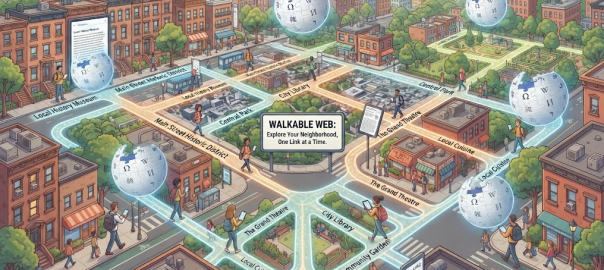
Mapping the Neighborhood: Reimagining Wikipedia as a Proximity-Based Experience

Sat Oct. 24, 2026 /Mpelembe Media/ — Local Wikipedia is an independent, unofficial web application developed by journalist, software developer, and data specialist Ed Jefferson that turns Wikipedia into a proximity-focused, ambient spatial encyclopedia. Conceived during lockdown and released in late 2026, the application operates on the core thesis of displaying geotagged Wikipedia articles located within a thirty-minute walk from the user. Users can set their location using native browser geolocation or manual text queries such as town names, landmarks, and UK postal codes. To balance visual clutter and system performance across varying geographic densities, the platform automatically adjusts its operational scope, expanding up to six miles in low-density rural areas or capping results at five hundred items in dense urban centers. Designed with client-side privacy in mind, positioning coordinates remain strictly within temporary local browser memory, and exported links are sanitized to ensure physical location data is never shared. Continue reading →

24Oct/26

Why AI Detectors Flag African Writers

Flawed Metrics and Market Tropes: The Paradox Facing Black Writers in the AI Era

Sat Oct. 24, 2026 /Mpelembe Media/ — The controversy surrounding Zimbabwean author Simbarashe Steyn Kundizeza’s 2026 Caine Prize win has ignited an international debate over artificial intelligence, literary authenticity, and algorithmic bias in publishing. On October 6, 2026, Kundizeza was awarded the £10,000 Caine Prize for African Writing for his short story “The Blue Fighter”. Five days later, journalist Vauhini Vara reported in The Atlantic that the commercial AI detection tool Pangram had flagged virtually the entire story as machine-generated text. Kundizeza forcefully rejected the accusation, asserting that the story drew directly from his personal life, lived experience, and a writing residency in Ghana. In response, the Caine Prize Foundation launched a human-centred review—interviewing the author and judges and examining manuscript draft histories rather than relying on automated software scores as dispositive proof of misconduct. Continue reading →

24Oct/26

Why Gemini 4 Forced Google Into Space

Frontier AI Takes Priority: How Google Is Sacrificing Cloud Revenue to Win the AI Arms Race

Sat Oct. 24, 2026 /Mpelembe Media/ — Google has reaffirmed its commitment to frontier AI with the launch of Gemini 4 Argon, which processed approximately 25 trillion tokens in its first 72 hours—a threefold surge over Gemini 3.0 during its initial release. To maintain leadership at the technical frontier, Alphabet CEO Sundar Pichai stated that dedicating compute to Google DeepMind is an absolute, non-negotiable priority. As a result, Google Cloud is actively sacrificing short-term revenue by reallocating computing resources away from enterprise leasing and toward internal frontier research. This reallocation addresses a severe, industry-wide compute shortage caused by a rigid two-to-three-year lag in data center infrastructure development alongside an unexpected explosion in agentic task demand, making 2027 computing capacity exceptionally difficult for external customers to secure. Continue reading →

23Oct/26

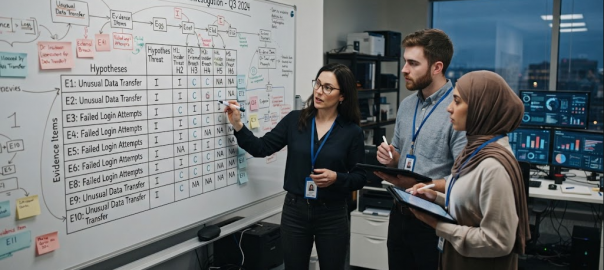
Why the CIA Intelligence Matrix Fails

From Upstream Scoping to Disproof Architectures: Mastering the Art of Adult Research

Fri Oct. 23, 2026 /Mpelembe Media/ — Developing a high-rigor independent research capability requires replacing unstructured curiosity with deliberate structural frameworks designed for time-constrained professionals. Unstructured exploration routinely collapses under its own cognitive weight due to an expanding volume of information, making upstream scoping and strict bounding essential. Effective inquiry begins by tapping into an intrinsic curiosity engine and reframing broad topics into narrow, diagnostic queries that define what data is relevant and what can be safely ignored. Proposed research projects must pass a “So What?” significance filter to evaluate their intellectual yield, while adjacent curiosities are deferred to a dedicated backlog so execution momentum remains intact. Research depth is ultimately governed by a pre-defined deliverable, establishing a clear stopping mechanism and preventing open-ended documentation. Continue reading →

22Oct/26

How AI Is Dismantling Factory Classrooms

Reclaiming the Purpose of Schooling: Why AI Can Automate Information Processing but Never Replace Human Mentorship

Wed Oct. 21, 2026 /Mpelembe Media/ — The rapid adoption of artificial intelligence in compulsory and higher education has transformed instructional delivery through adaptive learning systems, automated assessment tools, and virtual tutoring platforms. These algorithmic engines excel at administrative automation, personalized pacing, and instant feedback on rule-based tasks. However, defining schooling merely as downloading information or completing standardized tasks risks outsourcing genuine cognitive development to automated tools. Grounding educational practice in foundational philosophy demonstrates that true schooling extends far beyond static data retrieval; it is fundamentally an endeavor of human formation, moral character, civic responsibility, and emotional maturity. Continue reading →

22Oct/26

How AI Hallucinated a Global Cyber Crisis


PHP2Shell and the AI Paradox: Frontier Bug Discovery Versus Hallucinated Exploit Noise

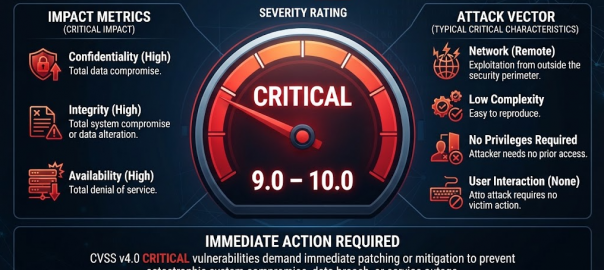
In October 2026, the cybersecurity landscape experienced acute disruption following the disclosure of critical memory-safety flaws within the PHP programming language core. Tracked as CVE-2026-109618 and CVE-2026-109619—collectively designated as “PHP2Shell” with a CVSS v4.0 severity rating of 9.2—these vulnerabilities originate in the memory management lifecycle of PHP’s error-handling routines, creating Use-After-Free and type confusion conditions. Because PHP powers roughly 70% of global web applications, widespread organizational alarm prompted government agencies in Finland, the Netherlands, and Scotland, alongside major broadcasting networks such as the BBC, to temporarily decommission online services while maintainers coordinated a two-month patch release. However, empirical security analysis demonstrates that PHP2Shell lacks a straightforward, deterministic exploitation path against standard, unconfigured PHP server instances. In practice, successful weaponization requires complex environmental prerequisites, most notably pre-existing secondary application defects such as Local File Inclusion (LFI) or path traversal to force execution. Continue reading →

20Oct/26

AfD Cyber Leak and Russian Ties

Beyond the Public Facade: What Germany’s Far-Right Leadership Says Behind Closed Doors

Tue Oct. 20, 2026 /Mpelembe Media/ — A major cyberattack targeting a hosting provider used by Germany’s far-right party, Alternative für Deutschland (AfD), resulted in the unlawful exposure of 281 gigabytes of internal party data, including 421,179 emails across ten accounts. Published online as an unedited archive accompanied by AI-generated summaries, the leak contains personal correspondence, bank statements, membership lists, and academic certificates belonging to top officials, including party co-leader Alice Weidel and former leader Alexander Gauland. While the AfD confirmed that a breach occurred in September 2026 and stated it was conducting an internal investigation, the sheer volume of leaked records has brought unprecedented public scrutiny to the party’s internal operations. Continue reading →

19Oct/26

Why AI Math Breakthroughs Panic Mathematicians

The Leiden Declaration and Severe Misalignment: World-Leading Mathematicians Demand Transparency and Human Understanding in AI-Driven Science

Sun Oct. 18, 2026 /Mpelembe Media/ —  The integration of artificial intelligence into mathematics and the broader scientific enterprise presents a stark dual horizon between an unprecedented golden age of discovery and an epistemic dark age. In the golden age scenario, AI functions as a transparent research co-author—an instance of “artificial general cleverness”—that automates routine formalization, checks calculations, and explores vast search spaces, thereby liberating human minds to focus on high-level intuition, conceptual synthesis, and creative theory-building. Conversely, the dark age scenario warns of “knowledge collapse” and alienation, where proprietary, black-box AI models inundate academic literature with uninterpretable, machine-generated proofs and statements. This unchecked influx threatens to sever the human pedagogical transmission chain between generations of scholars and concentrate critical scientific infrastructure within a small group of private technology monopolies. Continue reading →

05Oct/26

AI Sales Agents and Server Side Tracking

Turn Natural Prompts into Production-Ready CRM Assets

Mon 05 Oct 2026 /Mpelembe Media/ — AI Studio is a conversational, prompt-powered builder embedded directly within HighLevel sub-accounts that enables users to generate complete digital web assets through natural language instructions. Rather than building isolated frontend pages that rely on third-party webhooks or external integration layers, AI Studio constructs web assets natively within the platform’s operational CRM database. This architecture eliminates integration failure vectors and data loss during multi-domain redirects, providing a rapid path from concept to live deployment. Continue reading →