Tag Archives: .google

20Apr/26

Claude Mythos triggers global cyber panic

The Mythos Inflection: How Anthropic’s New AI is Rattling Global Finance

April 20, 2026 /Mpelembe Media/ — The Emergence of Autonomous AI Cyber Threats Anthropic’s recent announcement of Claude Mythos Preview has fundamentally disrupted the cybersecurity landscape, marking a transition from AI as a productivity tool to an autonomous offensive cyber weapon. The model has demonstrated an unprecedented ability to discover and exploit zero-day vulnerabilities at machine speed, autonomously uncovering decades-old flaws in systems like OpenBSD, FFmpeg, and the Linux kernel without human intervention. Cybersecurity experts warn this creates an “AI Vulnerability Storm”, collapsing the timeline between a vulnerability’s discovery and its weaponization from months to mere hours. Continue reading
20Apr/26

Why massive problems are easier to solve

From Global Crises to Moonshot Solutions: The Power of Data and Collaboration

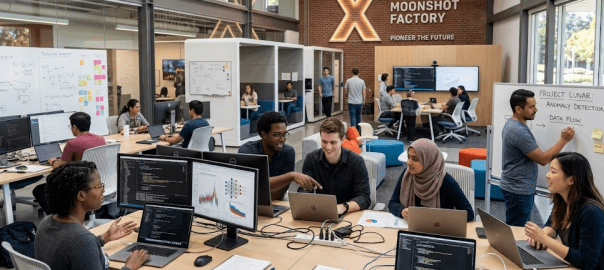
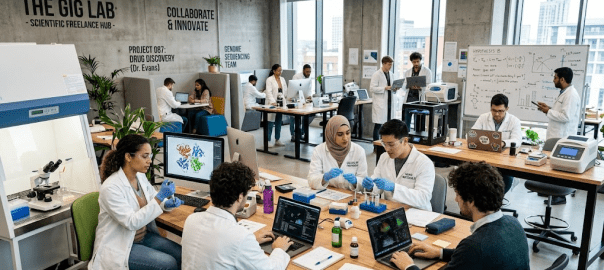
April 20, 2026 /Mpelembe Media/ — The provided materials center on how humanity can successfully tackle its most intractable global challenges by combining “moonshot” innovation, empirical data, and collaborative action. Continue reading

18Apr/26

The Humans Behind the AI Illusion

April 18, 2026 /Mpelembe Media/ — These sources analyze the shift toward precarious labor and contracting within the modern economy, with a particular focus on the technology sector. One report highlights the exploitation of data workers in the United States, revealing that those who train artificial intelligence often face low wages, unstable hours, and a lack of essential mental health benefits. Parallel research examines the broader gig economy, noting that while some high-skilled professionals choose independent contracting for its autonomy, many others are forced into these roles by restructuring or a lack of traditional opportunities. This transition often results in limited employer-provided training and the erosion of job security, creating a “race to the bottom” for workers across various demographics. Ultimately, the collection illustrates how algorithmic management and subcontracting are redefining the relationship between firms and employees, often prioritizing corporate flexibility and profits over worker stability. Continue reading

12Apr/26

AI Care Agents and the Helper’s High

April 9, 2026 /Mpelembe Media/ —  The Mpelembe Network is a multifaceted digital collaborative platform built on Google Cloud that integrates artificial intelligence with social, health, and community services. The network facilitates specialized initiatives like CuraFlow AI, which uses multi-agent systems to orchestrate clinical care, and the Justina Mutale Foundation, which promotes gender equality and STEM education for African women. Central to the platform’s philosophy is the “helper’s high,” a neurobiological concept suggesting that altruism and volunteering are essential for mental resilience and physical longevity. Beyond technology, the materials examine complex social issues such as loneliness, psychological trauma, and the economic challenges of providing care in aging urban environments like Richmond upon Thames. Collectively, these sources present a vision for a 2026 “Agentic Era,” where high-fidelity AI and human collaboration bridge the gap between social isolation and meaningful community support.
Continue reading

08Apr/26

Five cent AI and the compliance trap

April 8, 2026 /Mpelembe Media/ — This is a comprehensive overview of the 2026 generative AI landscape, heavily focusing on Google’s latest media models, enterprise orchestration, and the broader impacts of AI on industry and regulation. This article analyses a report from Google Cloud titled “Transformation Today,” which highlights new generative media tools available on Vertex AI. The primary focus is the launch of the Lyria 3 Pro and Veo 3.1 Lite models, designed for advanced music and video creation. It categorizes the Veo 3.1 family into three tiers—standard, fast, and lite—to help developers balance visual quality, processing speed, and cost. Additionally, the text offers a specific prompting formula to help users achieve better control over cinematic elements and subject actions. Technical experts contribute to the guide, providing frameworks for applying these AI innovations to professional workflows. Overall, the document serves as an educational resource for engineers looking to integrate high-volume video generation into their applications.
Continue reading

03Apr/26

How Street Codes Survive the AI Era

Decoding the Dance: How the Crip Walk Transformed from a Secret Gang Code to Global Entertainment

April 3, 2026 /Mpelembe Media/ — The C-Walk, originally known as the Crip Walk, was developed in 1970s Compton by gang member Robert “Sugar Bear” Jackson as a complex, non-verbal “secret code”. It utilized precise footwork to spell out gang identifiers like “C-R-I-P” and visually cross out the names of rival gangs. During the 1990s, West Coast hip-hop artists like Snoop Dogg and WC popularized the dance, transforming it from a localized ritual into a mainstream symbol of regional pride.

Continue reading

28Mar/26

Zambia’s Digital Renaissance: How Google Partnerships and the 8NDP are Rewiring the Economy

Empowering the Next Frontier: Zambia’s Quest for Innovation, Tech Skills, and Data Sovereignty

March 28, 2026 /Mpelembe Media/ — Zambia is currently undergoing a massive technological evolution designed to achieve the socio-economic goals outlined in its Eighth National Development Plan (8NDP) and Vision 2030. This transition is anchored in aggressive infrastructure expansion, e-government reforms, and strategic international partnerships. Continue reading

27Mar/26

Zambia’s AI Leap from Mines to Classrooms

March 27, 2026 /Mpelembe Media/ —  Zambia’s integration of Artificial Intelligence (AI) into its educational and economic sectors is accelerating through strategic partnerships and new policy frameworks, though these advancements face significant governance and human rights challenges.

Zambia’s National Artificial Intelligence Strategy (2024-2026) outlines a comprehensive roadmap to transform higher education through sweeping changes to curricula, pedagogical practices, digital infrastructure, and research innovation.

Continue reading

26Mar/26

Suing social media for addictive design

Earthquake for Big Tech: Juries Hit Meta and YouTube with Multi-Million Dollar Verdicts Over Youth Social Media Addiction

March 26, 2026 /Mpelembe Media/ — A landmark legal shift is currently unfolding as social media giants face unprecedented liability for the mental health impacts of their platforms on minors.

Landmark Jury Verdicts In a first-of-its-kind bellwether trial in Los Angeles, a jury ordered Meta and Google (YouTube) to pay $3 million in compensatory damages and recommended an additional $3 million in punitive damages to a 20-year-old woman, known in court as K.G.M. or Kaley. The jury found that both companies acted negligently and with malice, oppression, or fraud by designing platforms that addicted the plaintiff as a child, exacerbating her depression, anxiety, and body dysmorphia. Meta was assigned 70% of the responsibility for the harm, while YouTube bore 30%. TikTok and Snap, initially named as co-defendants, settled the claims against them just before the trial began. Continue reading

20Mar/26

Google Sunsets Firebase Studio to Focus on AI Studio and Antigravity Ecosystem

Beyond the Sandbox: 6 Surprising Takeaways from the New Full-Stack Google AI Studio

March 16, 2026 /Mpelembe Media/ — For years, the “weekend prototype” has been a rite of passage for developers—and its graveyard. We’ve all been there: a brilliant AI demo that lives and dies in a single browser tab because the friction of setting up a backend, managing authentication, and scaling to the cloud was too high. For most, the “localhost:3000” barrier is where ambition goes to sleep, leaving behind nothing but a folder of abandoned .zip files.That era of throwaway prototypes is over. We are entering the age of “vibe coding.” As defined by the latest shifts in the Google ecosystem, vibe coding isn’t just about generating snippets; it’s a paradigm shift from writing lines of syntax to guiding an autonomous agentic system. With the integration of the Antigravity development platform and Firebase into Google AI Studio, the browser is no longer a sandbox—it’s a launchpad.Here are the six most significant takeaways from this new full-stack reality. Continue reading