
Why the “Money Printer Goes Brrr”: The Ancient Roots of Modern Inflation
Tag Archives: United States
Starlink Direct-to-Cell: Global Deployment and Performance Analysis
Your Smartphone’s Next Roaming Partner is 350 Miles Up: 5 Surprising Realities of Starlink’s “Cell Towers in Space”
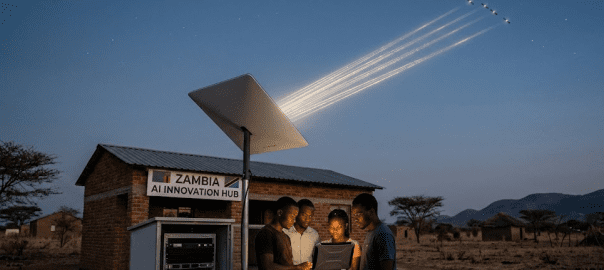
March 8, 2026 /Mpelembe Media/ — The provided sources examine the emergence and rapid expansion of Direct-to-Cell (D2C) technology, specifically focusing on Starlink’s efforts to provide Supplemental Coverage from Space (SCS). Research highlights that these satellite-based networks allow unmodified 4G LTE smartphones to connect directly to orbiting satellites, effectively eliminating terrestrial dead zones in remote areas like national parks. While initial commercial services in the United States and New Zealand focused on text messaging and emergency alerts, the technology is evolving to support voice, high-speed data, and IoT applications. Significant milestones include Airtel Africa and MTN Zambia partnering with SpaceX to launch services across the African continent, successfully piloting the first satellite-based fintech transactions. Despite technical hurdles like lower signal power and Doppler shifts, regulatory bodies worldwide are modernizing frameworks to accommodate this hybrid orbital-terrestrial model. Ultimately, these sources position D2C as a transformative tool for global digital inclusion, promising near-universal connectivity without the need for traditional ground infrastructure.
MetaMask’s 2026 Evolution: The Ultimate Web3 Gateway for Crypto, Trading, and Real-World Spending
More Than a Wallet: 5 Surprising Ways MetaMask is Redefining Your Digital Life
March 7, 2026 /Mpelembe Media/ — These sources provide a comprehensive overview of the MetaMask and Solana wallet ecosystems as of 2026, focusing on user security, functionality, and rewards. The documentation emphasizes the critical importance of protecting Secret Recovery Phrases and managing token approvals to defend against evolving AI-powered scams and phishing threats. Recent updates highlight the expansion of the MetaMask Card across the United States and the introduction of Season 1 Rewards, which incentivizes on-chain activity through a points-based system. Technical advancements such as MetaMask Snaps are also detailed, showing how users can now access non-EVM networks like Solana and StarkNet from a single interface. Additionally, the guides compare popular hot wallets like Solflare and Phantom against cold storage solutions like Ledger and the Solflare Shield. By integrating hardware wallets with mobile applications, these platforms aim to balance everyday usability with the robust protection required for long-term digital asset management. Continue reading
How is the U.S.-Israel-Iran conflict reshaping the global economy?
March 7, 2026 /Mpelembe Media/ — Geopolitical Risk Report: The 2026 West Asian Realignment and the Collapse of Regional Diplomacy
The U.S.-Israel-Iran conflict is triggering severe shocks across the global economy, primarily through disruptions to energy supplies, international trade routes, financial markets, and critical technology infrastructure.
Energy Market Upheaval The most immediate economic threat stems from rising energy prices due to the disruption of the Strait of Hormuz—a crucial maritime chokepoint that normally handles about one-fifth of the world’s oil and liquefied natural gas (LNG). Following Iranian threats, commercial shipping through the strait has slowed to a near-standstill, with tanker traffic dropping by about 90% and multiple insurance firms canceling coverage for Gulf vessels. Continue reading
A Region on the Brink: Stranded Civilians, Evacuation Chaos, and Suspended Aid in the Middle East
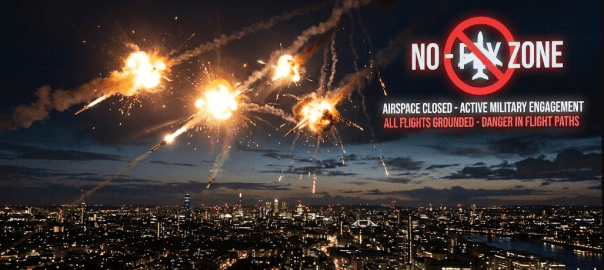
Hundreds of Thousands Stranded: Middle East Airspace Shutdown and Strait of Hormuz Closure Paralyze Global Transit
March 2, 2026 /Mpelembe Media/ — The United States and Israel launched a massive, coordinated military campaign—codenamed Operation Epic Fury and Operation Lion’s Roar—against the Islamic Republic of Iran. The coalition conducted nearly 900 strikes in the first 12 hours, targeting Iranian air defenses, missile production facilities, and IRGC command centers. The strikes successfully assassinated Supreme Leader Ali Khamenei and dozens of top Iranian military and government officials. In retaliation, Iran launched “Operation True Promise 4,” firing waves of ballistic missiles and drones at Israel and US military installations across the Persian Gulf, including bases in Qatar, Bahrain, Kuwait, and the UAE.
Global Transit in Chaos: War in Iran Triggers Massive Airspace Closures and Threatens Energy Markets
Middle East in Turmoil: US-Israeli Strikes Kill Khamenei, Triggering Iranian Retaliation and Global Transit Paralysis
March 2, 2026 /Mpelembe Media/ — On February 28, 2026, the United States and Israel launched a massive, coordinated military campaign against Iran, targeting the country’s leadership, nuclear facilities, and military infrastructure. The strikes resulted in the assassination of Supreme Leader Ali Khamenei and dozens of top Iranian military and government officials, severely degrading the regime’s command-and-control structure. Continue reading
The Decapitation Strike on Supreme Leader Khamenei
Middle East in Flames: US-Israeli Strikes on Tehran Prompt Massive Iranian Counterattack
28 Feb. 2026 /Mpelembe Media/ — These reports detail a massive joint military operation by the United States and Israel against Iran on February 28, 2026, aimed at dismantling its nuclear program and security apparatus. President Donald Trump and Prime Minister Benjamin Netanyahu confirmed the strikes, with the later claiming that Supreme Leader Ayatollah Ali Khamenei was likely killed in an attack on his compound. In response, Iran and its regional allies launched retaliatory missile and drone barrages at Israel and several U.S. military bases in the Persian Gulf. International reactions vary, as Western leaders support the effort to prevent a nuclear-armed Iran while Oman, Russia, and China warn of a catastrophic regional war. Domestic chaos has gripped Iran, characterized by infrastructure damage, internet blackouts, and civilians attempting to flee the capital amidst calls for regime change. Continue reading
The Board of Peace is Bombing Iran for the Gaza Riviera
5 Radical Realities Reshaping the Middle East
The 2026 Geo-Economic Fault Line: Energy, Logistics, and the Great Divergence
Contextualizing the 2026 Escalation: From Trade Tensions to Kinetic Warfare
28 Feb. 2026 /Mpelembe Media/ — The global strategic landscape has transitioned from the “unpredictable” trade volatility of 2024–2025—characterized by a century-high effective tariff rate and fiscal “haze”—into a state of “major combat operations” initiated in February 2026. This shift represents an existential threshold for regional stability; geopolitical risk is no longer an occasional variable but a foundational structural baseline. The previous era’s focus on trade countermeasures has been superseded by a period of kinetic escalation that fundamentally alters the movement of global capital and commodities.The tactical environment of the 2026 conflict was defined by the U.S. and Israeli “preventative strikes” launched on February 28, targeting Iranian nuclear and missile infrastructure. These operations necessitated the immediate closure of Iranian, Israeli, and Iraqi airspace to civilian traffic. The U.S. administration has adopted a posture of total naval dominance, explicitly declaring an intent to “annihilate” the Iranian navy and “raze” its missile industry to the ground. This transition to high-intensity warfare aims to neutralize regional proxies and prevent nuclear breakout, yet its execution has invalidated previous economic projections. The April 2025 “haze” projections—which anticipated a gradual decline in oil prices toward $65 per barrel—have been rendered obsolete by supply-side shocks that prioritize hard security over soft demand fundamentals. Continue reading
Global Markets Brace as US-Israeli Strikes on Iran Compound Tariff and Inflationary Pressures
The 2026 Global Pivot: 5 Surprising Realities Reshaping the Middle East and Beyond
28 Feb. 2026 /Mpelembe Media/ — The geopolitical landscape has drastically deteriorated, culminating in joint “pre-emptive” military strikes launched by the United States and Israel against Iran in late February 2026. The US military announced “major combat operations” aimed at razing Iran’s missile industry and naval capabilities. This severe escalation follows a previous 12-day war in June 2025, during which Israel and the US targeted Iranian nuclear facilities, including Fordow and Natanz, fundamentally altering the region’s risk profile. Continue reading